Sulphur Springs Photos And The Best Angles In The Crater
Sulphur Springs photographs differently depending on where you stand inside the Qualibou caldera, what time of day you arrive and whether you reach the park by road or by sea. Here is what each angle gives you, and which tours get you there.
Short answer
The strongest Sulphur Springs photos come from the steaming vents, the grey mud pools and the mud bath pools themselves; the park opens 9:00 am to 5:00 pm daily, bath entry is US$12 for adults and the tourism authority suggests morning or late afternoon visits. Road tours and boat tours reach different angles, so the best tour depends on the shots you want.
This guide sits inside the attraction coverage on St Lucia Mud Bath; for the wider picture of the drive-in volcano itself, see the drive-in volcano overview.
Quick Facts For Photographers
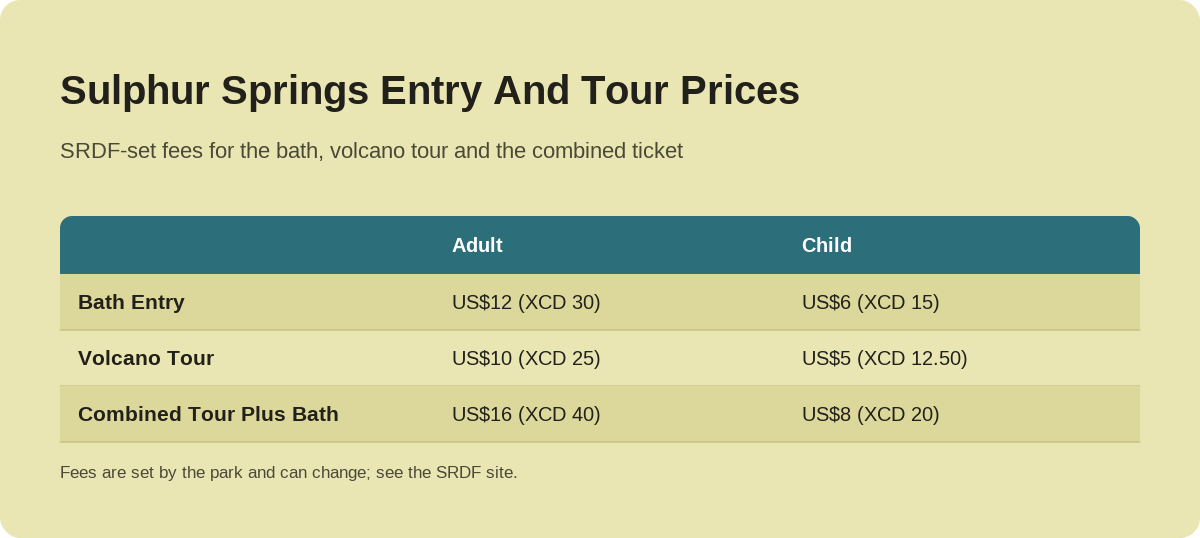
Everything a photographer needs to plan the visit sits in one short list: the park runs 9:00 am to 5:00 pm every day of the year except the first Friday of September, bath entry costs US$12 for adults and US$6 for children, and the drive is about 45 minutes from Hewanorra or roughly 1 hour from Castries to Soufriere. The Soufriere Regional Development Foundation operates the site and publishes the schedule.
| Detail | Figure |
|---|---|
| Park operator | Soufriere Regional Development Foundation (SRDF) |
| Opening hours | 9:00 am to 5:00 pm daily, weekends and holidays included |
| Annual closure | First Friday of September |
| Bath entry, adult | US$12 (XCD 30) |
| Bath entry, child | US$6 (XCD 15) |
| Volcano tour, adult | US$10 (XCD 25) |
| Volcano tour, child | US$5 (XCD 12.50) |
| Combined tour plus bath, adult | US$16 (XCD 40) |
| Combined tour plus bath, child | US$8 (XCD 20) |
| Drive from Hewanorra (UVF) | About 45 minutes |
| Drive from Castries | About 42 km, roughly 1 hour |
Fees are set by the park and can change; the SRDF site is the operator's own page. The last recorded eruption in Saint Lucia was in 1766, a phreatic event in the Sulphur Springs area, and the geothermal features you will photograph, boiling springs at 70 to 90 °C and fumaroles reaching up to 172 °C, are why the park looks the way it does. Those temperatures belong to the springs and vents, never to the bathing pools.
What Sulphur Springs Actually Looks Like Through A Lens
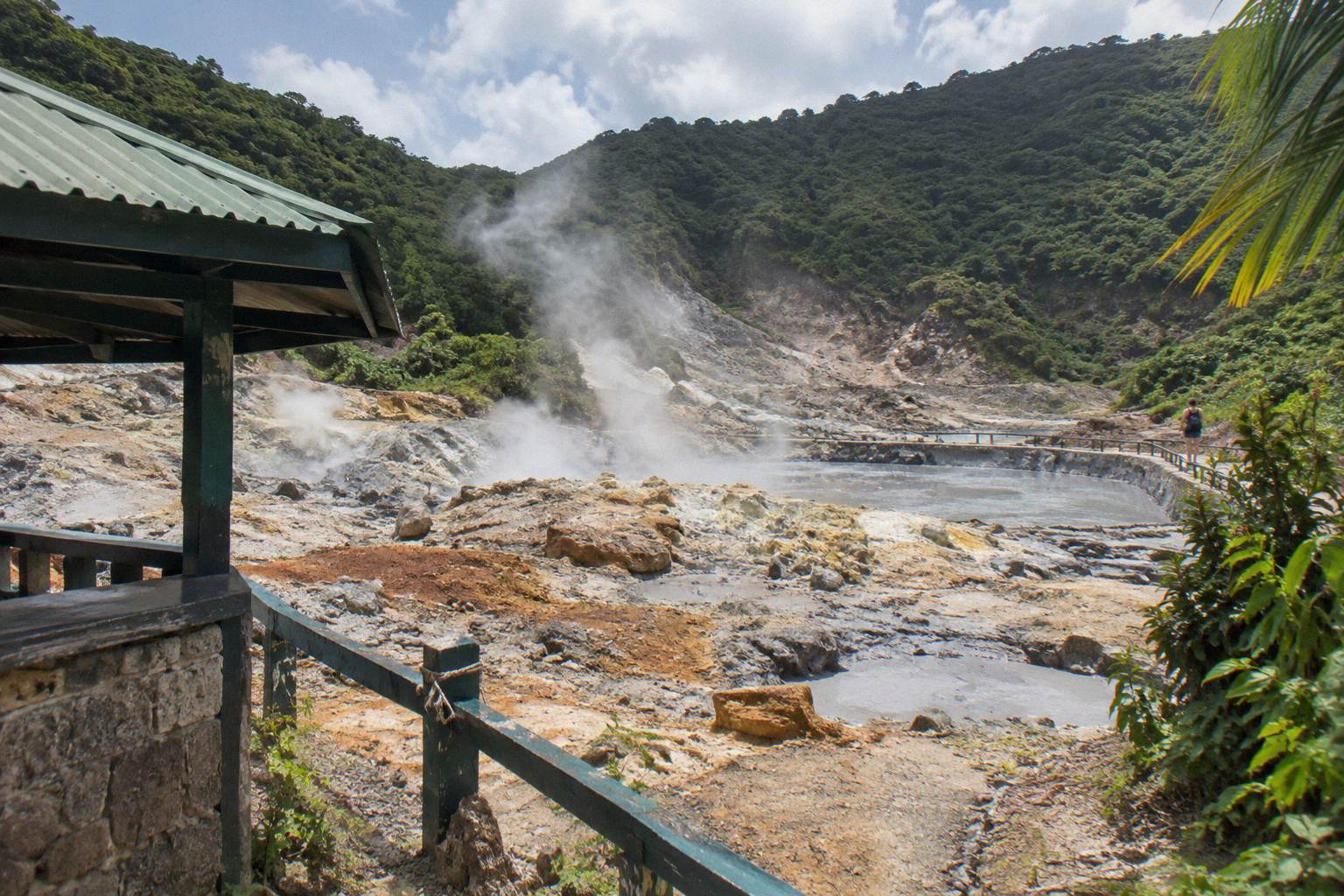
Through a lens, Sulphur Springs delivers four distinct subjects in one compact frame: a steaming geothermal zone you can drive into, boiling springs and bubbling grey mud pools, mineral bath pools where visitors coat themselves in volcanic mud, and forested caldera walls framing all of it. The tourism authority's description follows the same sequence, and most of it rewards a wide lens rather than a long one.
The crater zone is small enough that you walk it slowly. Steam is the recurring visual: it drifts across the vents, thins in heat, thickens when the air is cool. On a bright midday the steam can look washed out against pale sky; earlier or later, when the sun is lower, the same vents photograph with far more shape and contrast. That is one reason the Saint Lucia Tourism Authority suggests morning or late afternoon, and photographers get the same benefit as bathers from that timing.
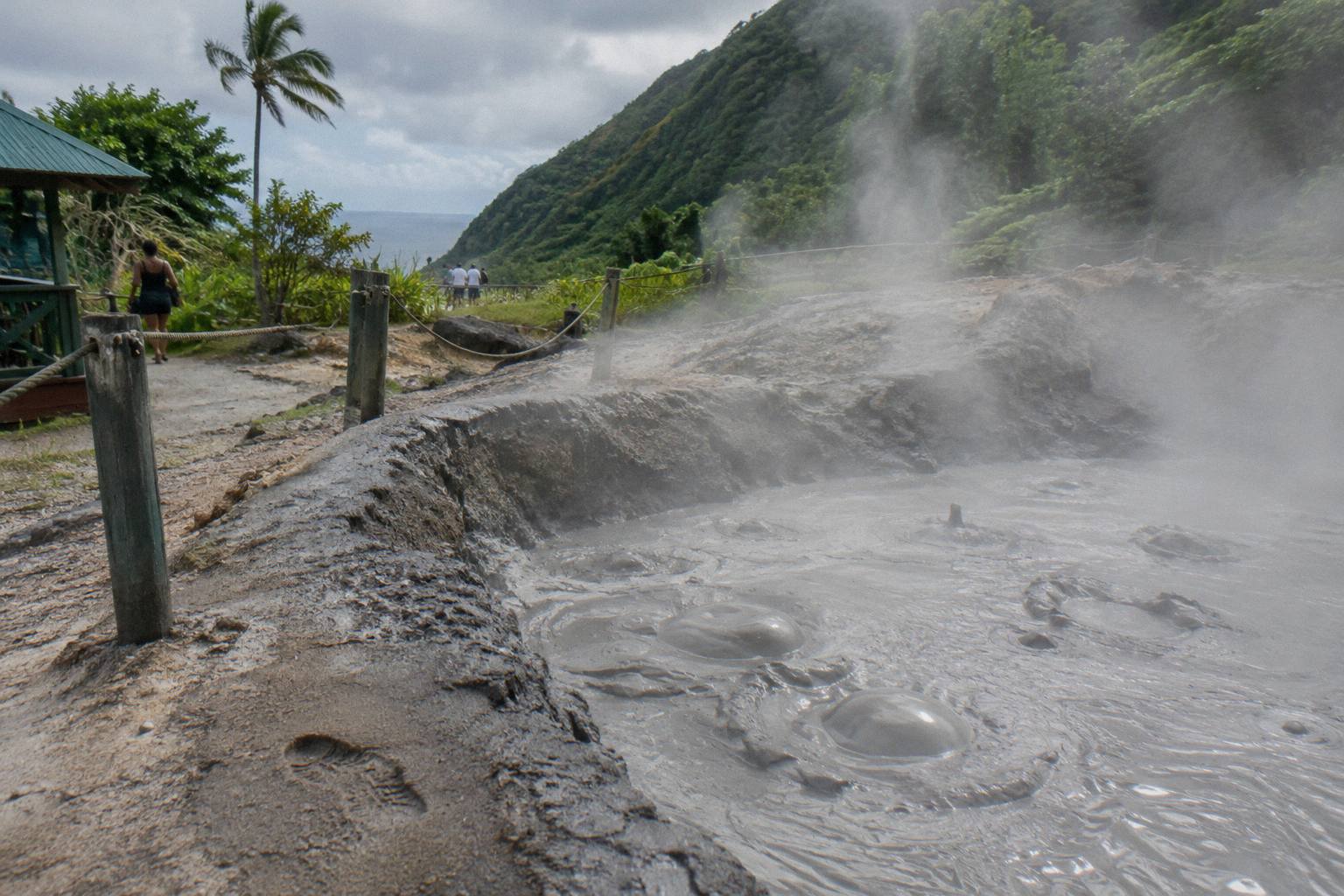
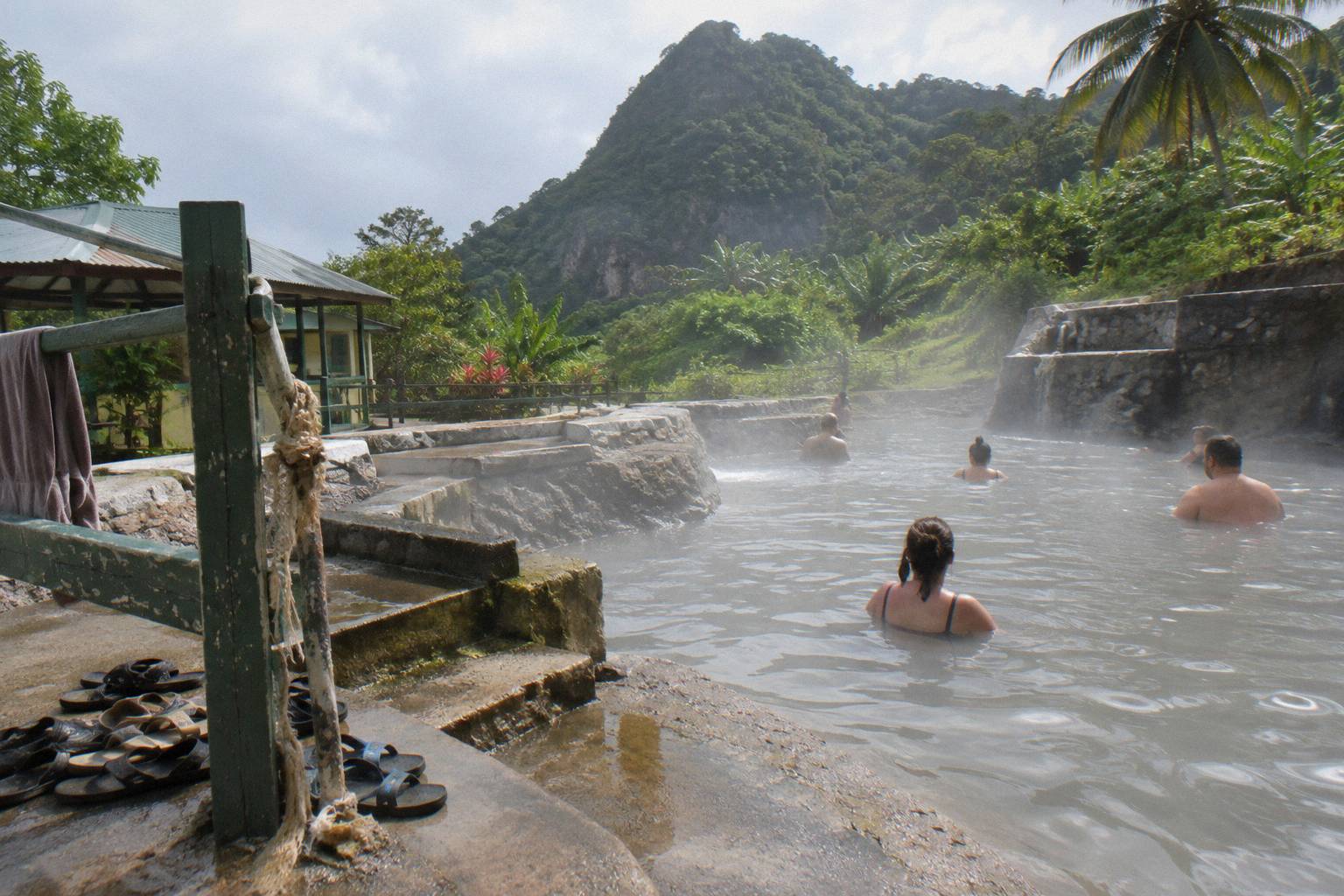
The mud itself is grey, not the black many first-time visitors picture. Against the mineral-stained ground and the green caldera slopes it reads strongly in colour and even better in black and white, where the steam and the texture carry the frame. If a wide shot of the bath pools is the goal, arrive when the pools are busy and you get the human element: people covered head to toe in grey mud, laughing, which is the image most visitors actually want to take home.
What no photograph can prepare you for is the scale of the Qualibou caldera as you approach it. The road from either direction drops through forest and banana country before the geothermal zone appears, and the steam column is visible well before the park entrance. For the geological background, the Qualibou caldera history guide covers how the depression formed and why the springs sit where they do.
The Best Angles Inside The Crater
The four strongest angles are the steaming vents shot low against the caldera walls, the boiling springs framed with the fumarole field behind them, the mud pools from the walkway edge as the bubbles break the surface, and the bath pools from slightly raised ground beside them. All sit within a few minutes' walk of one another, so a patient visitor can cover all four in one visit.
Work the vents from more than one distance. A close, low shot makes the steam the subject; a step back with a wider lens puts the steam in context against the stained rocks and the green ridge, which is the composition that says "drive-in volcano" to anyone who sees it. There is no single sanctioned spot, so be careful of barriers and follow whatever the park staff indicate about where visitors may stand, and never leave a walkway for a composition.
The mud pools reward patience more than position. The bubbles rise intermittently, and a short burst of frames will usually catch one breaking at its peak. Keep the horizon out of these frames: the story is the surface, not the landscape. For the bath pools, the raised ground at the side gives a cleaner line of sight over the whole pool than standing at water level, and the classic shot, a row of mud-covered people mid-laugh, needs a slightly longer focal length so you are not pointing a camera into anyone's face.
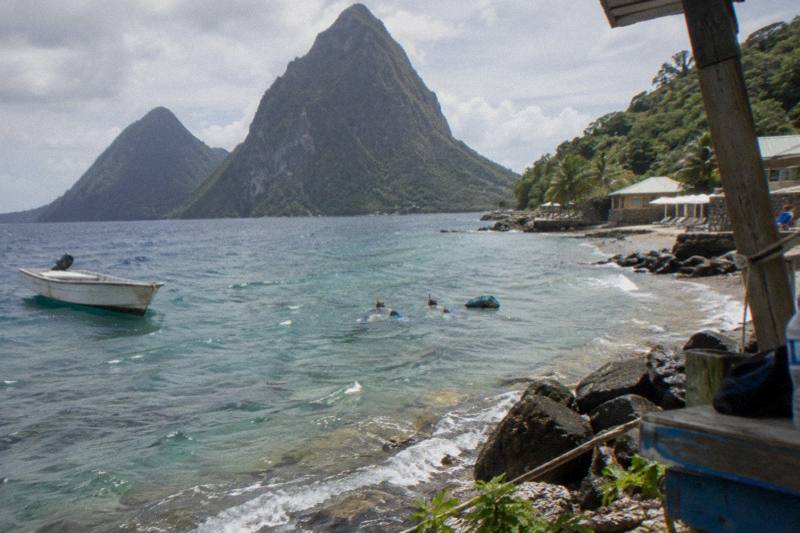
Approaching by sea changes the angle entirely. Edmund Tours Land And Sea, a guided group boat tour rated 4.7 across 2,085 reviews, from US$125 per person with free cancellation within 24 hours, includes snorkelling gear and lunch and reaches Soufriere from the water, so the Pitons and the coastline become part of the day's frame before the crater does. If the photo essay you want includes both the caldera and the coast, that sea-plus-springs shape is the one to look at.
Light, Timing And When The Steam Cooperates
Steam photographs best in cool air, so the park's opening hour and the late afternoon are the two windows when the vents show the most definition, while midday heat flattens the contrast and washes white steam against a bright sky. The park runs 9:00 am to 5:00 pm daily except the first Friday of September, making an opening-time arrival your coolest workable light of the day.
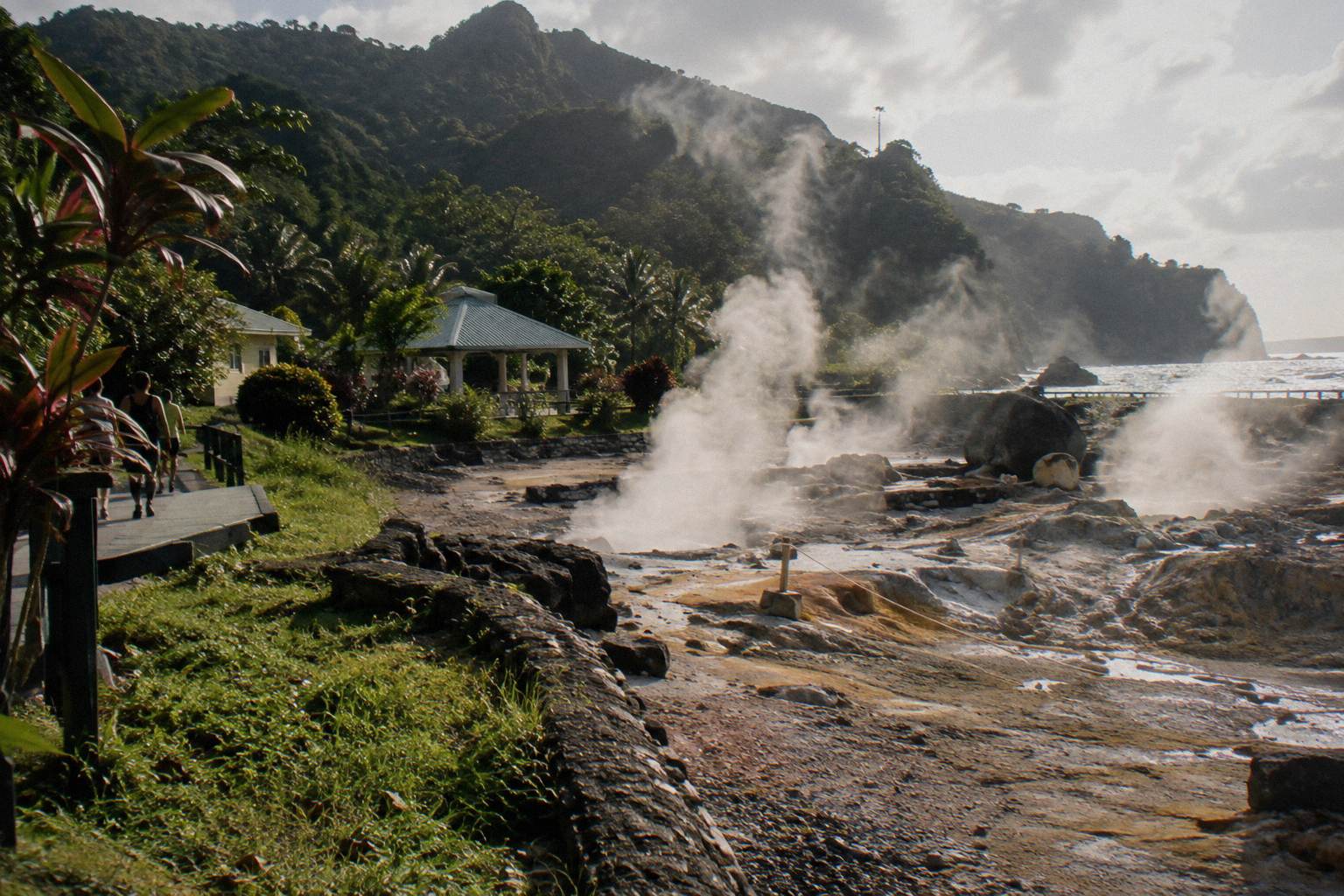
Tours pin the clock more than the park does. A booked duration covers transfers, stops and lunch included, never time at the mud bath, so a 7 to 8 hour road day and a 4 to 5 hour road day can both contain a similar stretch at the springs. The Volcano Experience, 7 To 8 Hours from Island Adventures St. Lucia, rated 5 across 533 reviews and from US$135 per person, is the long-form version with buffet lunch and drinks included; it picks up at hotels and the cruise port and makes a full day of the Soufriere side of the island. Shorter days simply trade stops for time.
Weather does not ruin this park photographically the way it ruins a beach shoot. Overcast skies act as a soft box on the steam, and light rain often thickens the steam column because the air cools. The one condition that genuinely fights the camera is strong midday glare on pale steam, which is the same argument the authority makes for morning or late afternoon visits, just stated in photographic terms. Bring the towel and swimwear the tourism authority recommends for the baths, and comfortable shoes for the walkways.
Camera Gear And Protecting It From The Mud
A single weather-sealed body with one wide-to-standard zoom covers Sulphur Springs; a telephoto helps only for candid pool shots and distant vents, and anything not sealed or bagged is at some risk from mud, steam and mineral water. No official camera rules appear on the park's pages, so treat gear protection as a field problem rather than a regulation problem. Phones photograph the pools and vents perfectly well and are far easier to rinse cases on.
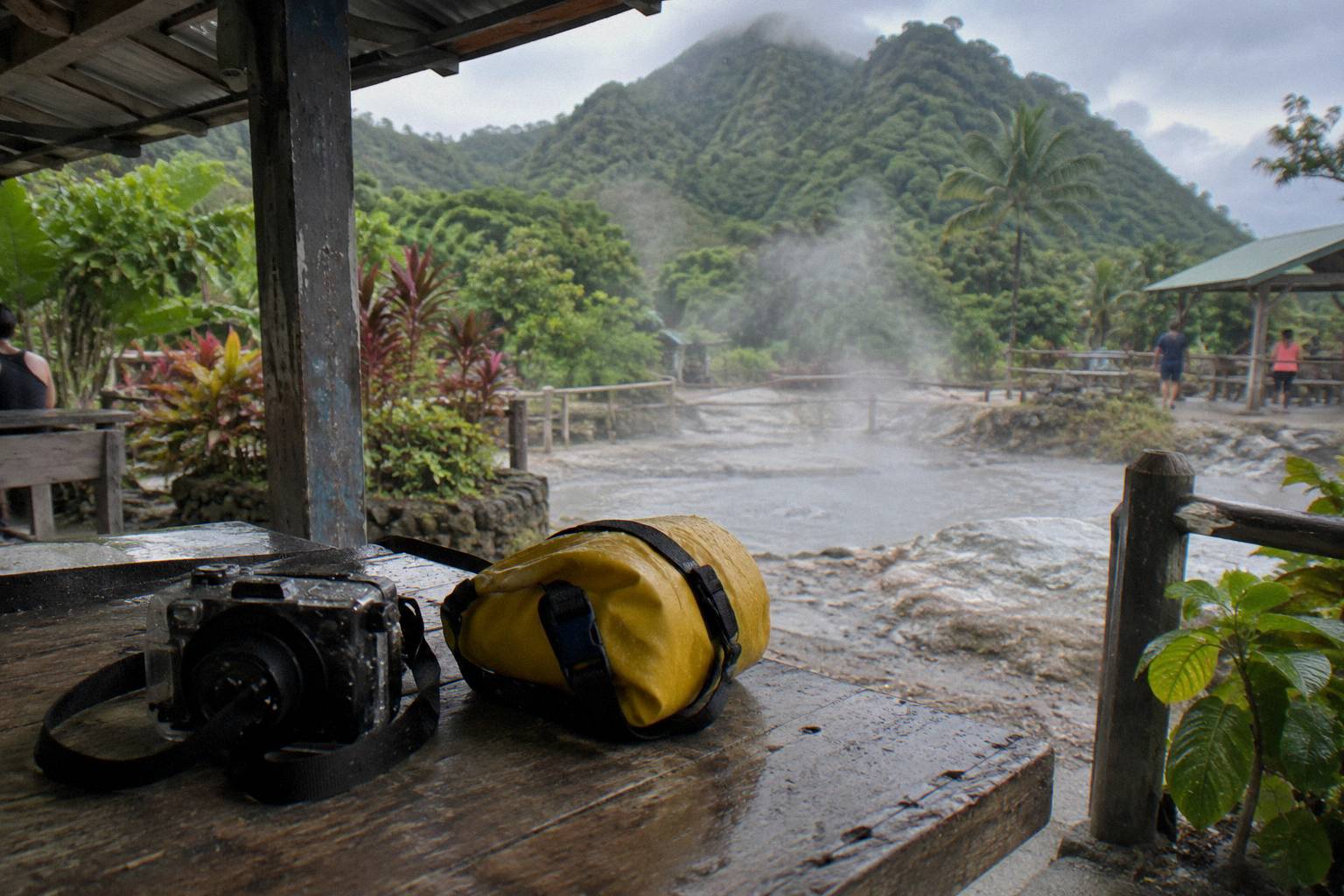
The practical failure mode is not the camera, it is the hands. Anyone who takes a mud bath will have grey volcanic mud on their fingers afterwards, and the mud is the whole point of visiting, so either shoot the bath first and clean up before handling gear, or hand the camera to whoever stayed dry. Microfibre cloths get saturated quickly in steam; carry two. A dry bag inside a daypack handles the rest.
| Gear | Why It Earns Its Slot |
|---|---|
| Wide zoom | Vents, caldera walls and busy bath pools all want width |
| Standard zoom | Mud pool detail and mid-distance steam shapes |
| Dry bag or sealed case | Steam, rain and splash protection on the walkways |
| Two microfibre cloths | One gets damp fast in steam, the second is the one that works |
| Phone as backup | Rinse-safe, instant sharing, and the pools forgive its lens |
If the mud bath itself is the main event on the itinerary, the step-by-step mud bath guide walks through the apply-and-rinse sequence, and the what to wear guide covers the clothing that survives grey mud, which matters if photographs of people, not just landscapes, are the goal. Swimwear that dyes is swimwear that photographs. The same logic applies to towels and to anything else that goes into the daypack: keep the clean kit and the muddy kit physically separated, because grey volcanic mud transfers on contact and does not respect good intentions.
Photo Stops On Road Tours Vs Boat Tours
Road tours photograph the approach: the descent through the hills, coastal pull-offs and, on several itineraries, the Tet Paul Nature Trail and Toraille Waterfall, while boat tours photograph the arrival, the Pitons from the water and snorkel stops, with the crater as the land leg in between. Neither shape is better; they simply collect different frames, and the strongest photo days often combine both.
The road side of the ledger is deep. The FRAM Rejuvenating Mud Bath tour from FRAM Tours & Taxi Services, rated 4.8 across 338 reviews and from US$132 per person, includes the mud bath entrance fee at Sulphur Springs itself and picks up at hotels and the cruise port, which keeps the transit frames coming from the start. The Volcano Jeep Safari from Island Routes, rated 4.7 across 95 reviews from US$165.85, runs an open-top jeep down the coast to Soufriere with a stop at Marigot Bay for scenic views, and an open top is a rolling camera platform on that road. Wow Tours Island Drive, rated 4.9 across 603 reviews from US$92, is the budget-friendly road shape with hotel pickup included.
Boat tours build the day around the water frames. The Private Speedboat, Beach Time tour from Captain Cliff Adventure Tours, rated 4.9 across 107 reviews from US$260 per person, includes port pickup and drop-off, docking fees, the taxi in Soufriere to the volcanic mud bath and waterfall, and beverages on board. On the group side, the All Inclusive Land And Sea day from Julian Boat Tours, rated 4.9 across 498 reviews from US$175, runs 5 hours by sea with lunch and snorkelling gear. Water first, crater second, water again on the way home.
| Approach | Signature Frames | Example Tour | Rating And Price |
|---|---|---|---|
| Road, guided group | Coastal descent, Marigot Bay stop, open-top driving | Volcano Jeep Safari, Island Routes | 4.7 across 95 reviews, from US$165.85 |
| Road, budget day | Hotel pickup, Sulphur Springs entry | Half-Day Island Delight, Barefoot Holidays | 4.7 across 27 reviews, from US$90 |
| Sea, guided group | Pitons from the water, snorkelling, lunch | Edmund Tours Land And Sea | 4.7 across 2,085 reviews, from US$125 |
| Sea, private | Speedboat approach, beach time, waterfall taxi | Private Speedboat, Beach Time, Captain Cliff Adventure Tours | 4.9 across 107 reviews, from US$260 |
| Road, private | Toraille waterfall fee and park entrance in the price | Private Drive-In Volcano And Mud, H&A Tours | 4.9 across 124 reviews, from US$140 |
Combo tours thread photo stops together deliberately. The Creole Lunch, Toraille Waterfall tour from Treasure Tours Ltd. St. Lucia, rated 4.6 across 220 reviews from US$100 per person, includes the entrance fee, lunch, a driver-guide and hotel or port pickup, and a waterfall beside a volcano in one booked duration of 5 to 6 hours is two strong albums by itself. The mud bath and waterfall combo shape is common enough on this island that it has its own combo tours guide, which compares the main itineraries stop by stop.
The Pitons Backdrop And Other Nearby Photo Stops
The Pitons are not visible from inside the geothermal zone, but they dominate the approaches, with the road from Castries and the boat runs into Soufriere framing them repeatedly, and the nearby photo stops tour itineraries actually name include Toraille Waterfall, the Tet Paul Nature Trail, and Marigot Bay, each adding a different texture to a photo set.
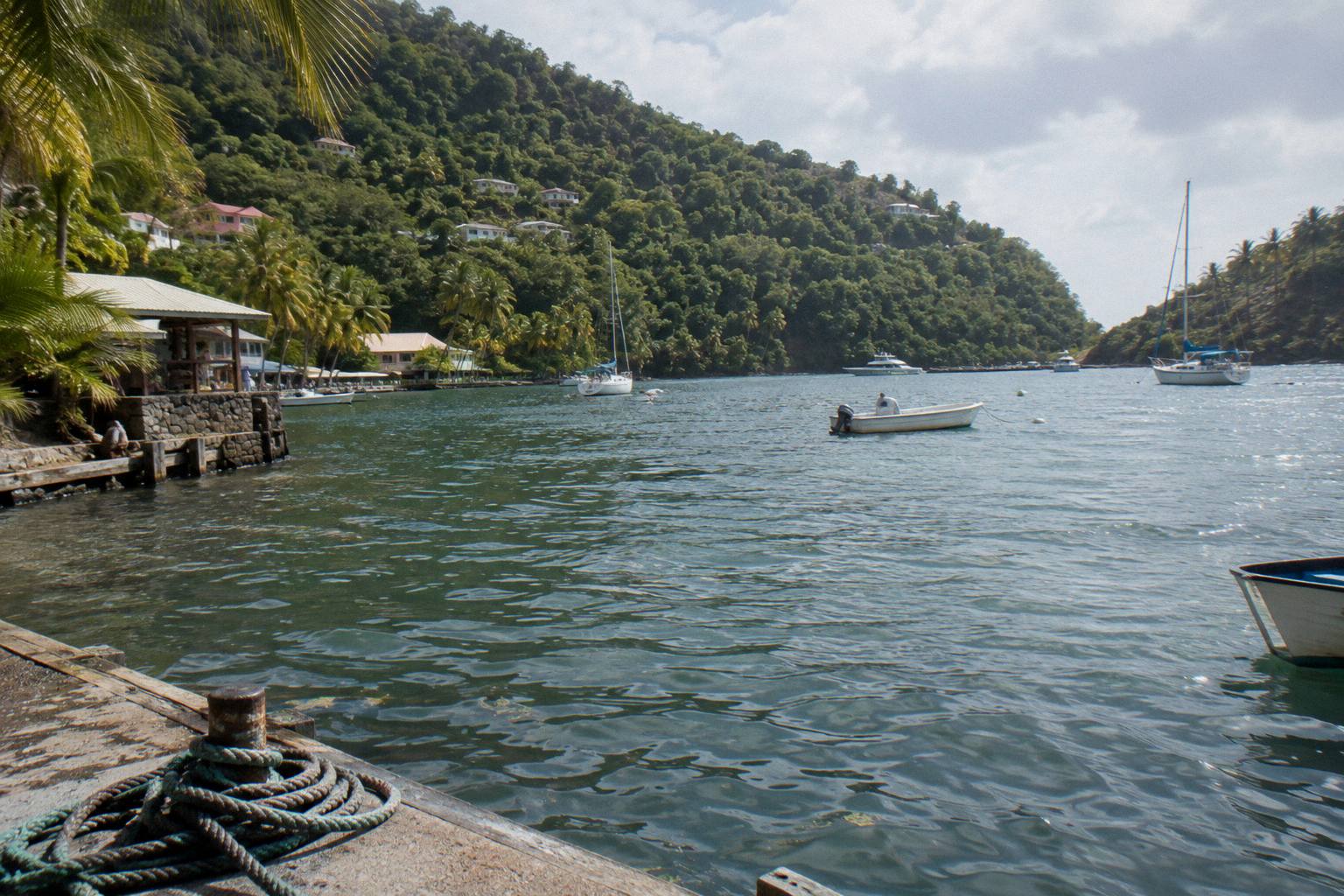
The Pitons viewpoints have their own coverage in the Pitons viewpoints on a mud bath tour guide, which maps which itineraries stop where. Mud Baths And Waterfall By Road from Cool Vibes Taxi and Tours, rated 4.3 across 96 reviews from US$160 per person, includes a hike on the scenic Tet Paul Nature Trail, which is the trail most associated with the classic twin-peaks frame. Diamond Falls Botanical Gardens is another pairing; entry is US$7 for adults, children half price, and the gardens open 10 am to 4 pm Monday to Saturday and 10 am to 3 pm on Sundays and public holidays, every day of the year, per the official Diamond St Lucia page. The UNESCO listing covers the Pitons Management Area, which is the reason the landscape around Soufriere carries World Heritage status.
For anyone weighing the economics of touring versus going alone, the tour price vs going alone guide does the arithmetic. Half-Day Island Delight from Barefoot Holidays, from US$90 per person and the cheapest priced tour of the 48 tracked here, includes hotel pickup and entry to Sulphur Springs, so even the floor price buys transport plus the gate. At the other end, Snorkel, Mudbath And Lunch Boat from The Real Deal Boat Tours, from US$537 per person and rated 5 across 110 reviews, is the most expensive priced trip on the books, and it buys a full private-feeling sea day rather than a gate.
Sequencing the stops is straightforward because of the closing times: the gardens shut an hour before the springs on weekdays and Saturdays, and two hours before on Sundays and public holidays, so doing Diamond Falls first and the baths second works on any day of the week. The one date to watch is the first Friday of September, when the springs close but the gardens stay open.
For the album itself, the three named stops cover different ground: Toraille Waterfall for falling water, the Tet Paul Nature Trail for the walk behind the classic twin-peaks frame, and Marigot Bay for a waterfront setting, so all three earn their place rather than competing.
On fees, the step up from bath entry to the combined volcano tour plus bath is US$4 per adult and US$2 per child, a small premium for the crater portion, and it keeps an independent visit far below even the US$90 tour floor.
Common Photo Mistakes At Sulphur Springs
The most common mistakes at Sulphur Springs are shooting only at midday when the steam flattens out, leaving gear unprotected near mud and mineral water, expecting Piton views from inside the geothermal zone, and booking a tour shape that does not match the frames wanted. A quieter one is treating the booked duration as time at the springs, since it covers the whole tour, and almost all of these are avoidable with timing and a dry bag.
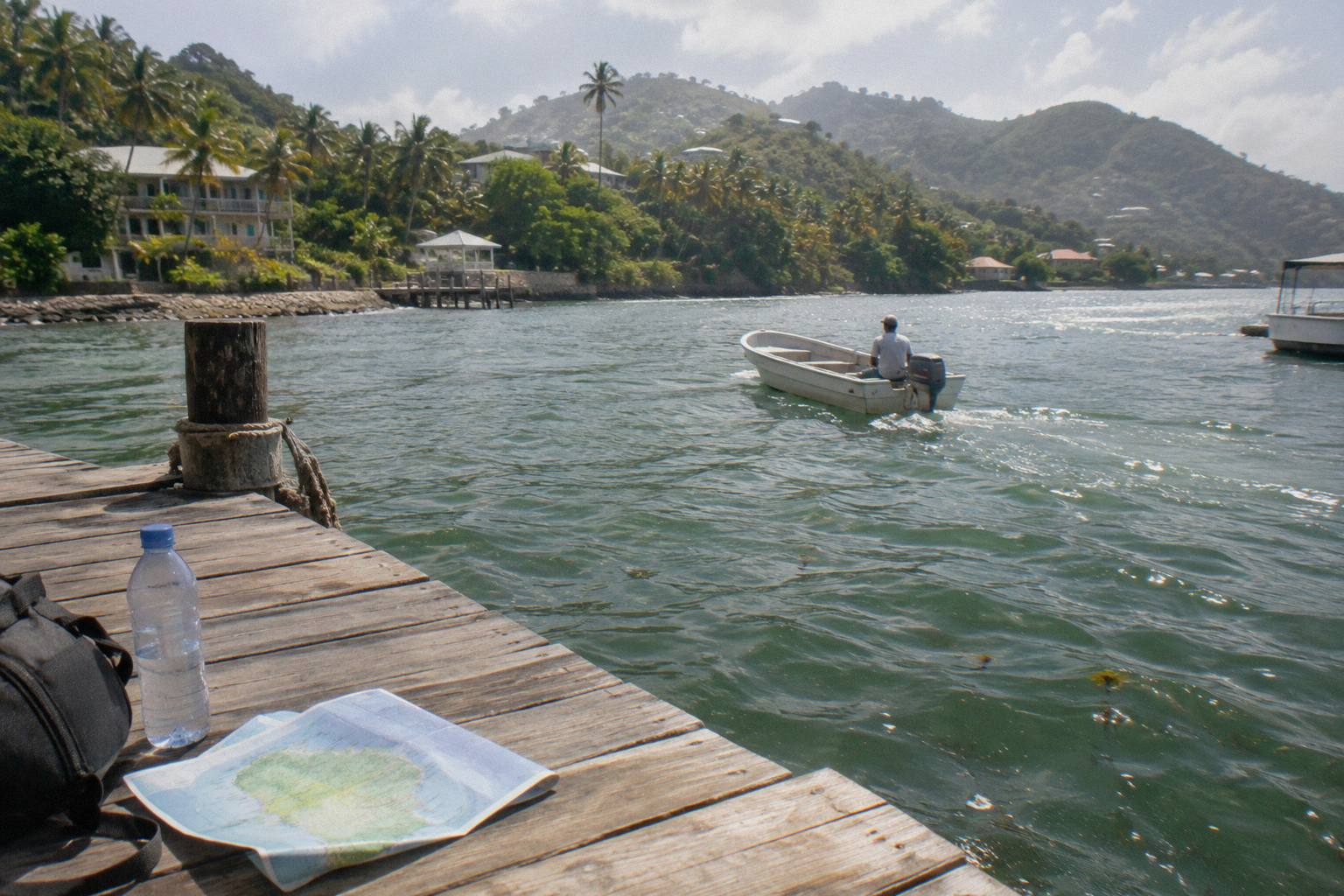
The midday problem is the most common. Visitors arriving on a late transfer shoot the vents in flat glare, conclude the park is not photogenic, and leave before the afternoon improves. The fix costs nothing: aim for the opening hour or the last two, exactly the window the tourism authority suggests for the baths. The gear problem costs a little: a dry bag and a spare cloth. The expectation problem costs the most, because it is booked in advance. Someone whose dream frame is the Pitons from the water will not get it from a minivan, and someone who wants waterfall frames should check that the itinerary names one before paying.
Two final trip-ups. First, mud-covered hands and camera controls do not mix; sequence the bath after the landscape shots, or hand the camera off. Second, the smell question is real and answerable, and it is covered in full in the sulphur smell guide; no promise about intensity belongs here, only the pointer. If crowds are the worry, the best time of day guide runs through it, and if the forecast looks wet, the rainy season guide explains why an overcast Soufriere day can still photograph well.
Common Questions About Sulphur Springs Photos
Can You Take Photos At Sulphur Springs?
Yes, photography is part of a normal visit, and the park's own description centres on the visuals: steaming vents, bubbling mud pools and grey volcanic mud. No camera rules appear on the park's official pages, so follow staff directions and stay on walkways. Protect gear from steam, rain and mud with a dry bag and cloths.
What Time Of Day Is Best For Sulphur Springs Photos?
Morning, near the 9:00 am opening, or late afternoon. The Saint Lucia Tourism Authority suggests morning or late afternoon for visits generally, and photographically the cooler air makes the steam read with more contrast. The park closes at 5:00 pm daily and is closed the first Friday of September.
Can You See The Pitons From Sulphur Springs?
Not from inside the geothermal zone. The Pitons frame up from the approach roads, the sea crossing into Soufriere and stops such as the Tet Paul Nature Trail that some itineraries include. The Pitons Management Area is UNESCO World Heritage, inscribed in 2004.
Do You Need A Tour To Photograph The Mud Baths?
No. The park can be visited independently; bath entry is US$12 for adults and US$6 for children, and it is about 45 minutes by car from Hewanorra or roughly 1 hour from Castries to Soufriere. Tours add transport, guides and combined stops, which is the trade the tour price versus going alone arithmetic works through.
Which Tours Give The Best Photo Variety?
Sea-and-land combinations. Edmund Tours Land And Sea, 4.7 across 2,085 reviews from US$125, reaches Soufriere by boat with snorkelling and lunch; road options such as the Volcano Jeep Safari add an open-top coastal drive with a Marigot Bay stop. Neither shape is superior, they simply collect different frames.
Is The Mud Bad For Cameras?
Treat it as a real hazard, not a trivia question. Grey volcanic mud on hands transfers straight to buttons and grips, and steam dampens cloths fast. Shoot landscapes before the bath, carry a dry bag and spare microfibre cloths, and keep the camera strapped short near railings over the pools.