The Qualibou Caldera And The History Of Sulphur Springs
Sulphur Springs sits inside the Qualibou caldera near Soufriere, and its bubbling pools, steaming vents and warm mineral baths are the surface evidence of a volcanic story that most recently made itself felt in 1766.
Short answer
Sulphur Springs is a geothermal field inside the Qualibou caldera near Soufriere, St Lucia. The last recorded eruption in Saint Lucia was a phreatic event there in 1766. Today the Soufriere Regional Development Foundation runs the park, open 9:00 am to 5:00 pm daily, with bath entry at US$12 for adults and a combined tour and bath ticket at US$16.
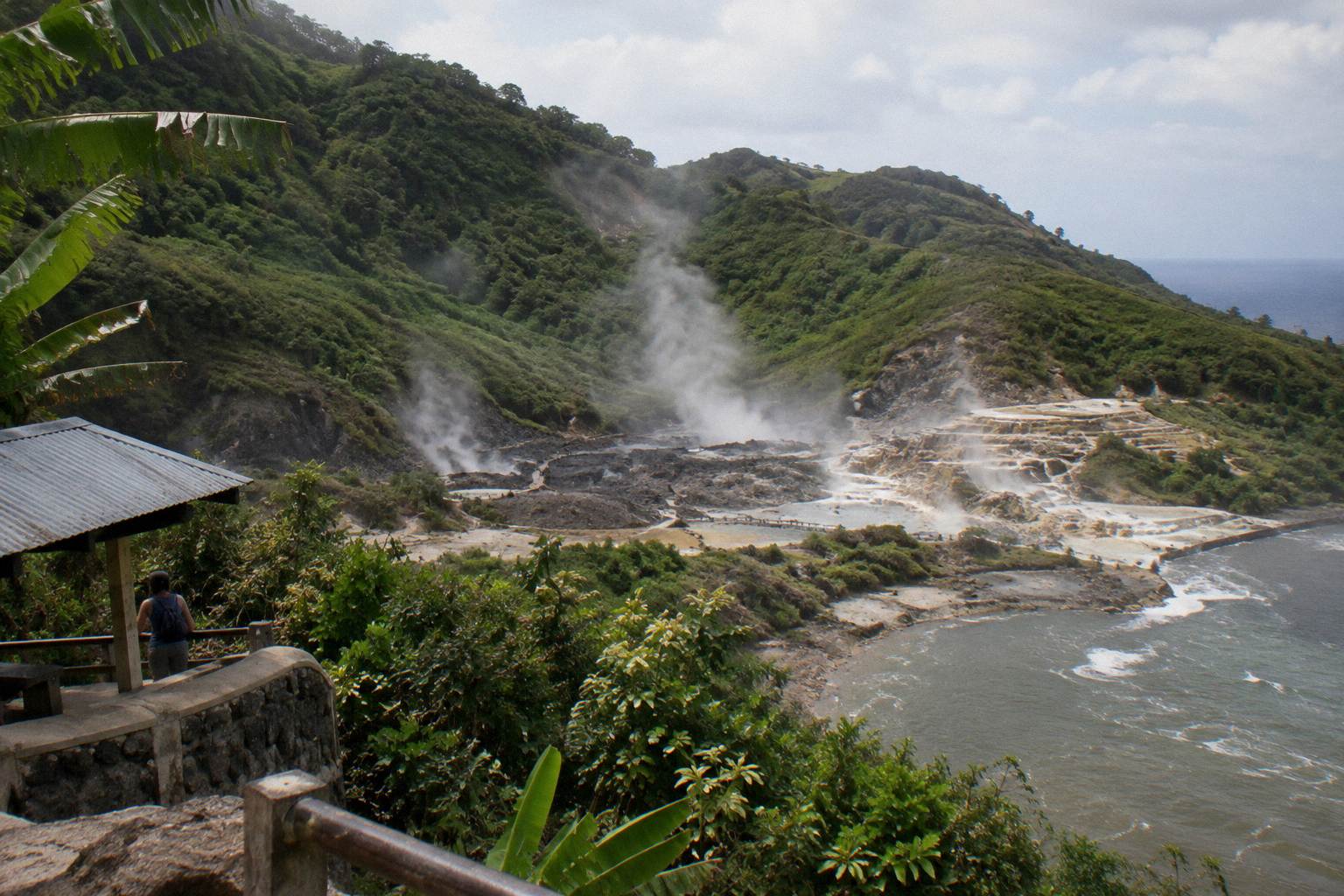
The grey mud that visitors smear over their arms at Sulphur Springs comes from one of the most geologically active corners of the Caribbean. The springs sit inside the Qualibou caldera, a collapsed volcanic depression on St Lucia's southwest coast near the town of Soufriere, where boiling springs run at 70 to 90 °C and fumaroles vent steam at up to 172 °C. The last recorded eruption anywhere in Saint Lucia was a phreatic, steam-driven event in this same area in 1766. Everything a modern visitor does here, from the drive through the steaming volcanic zone to the rinse in warm spring water after a mud coat, sits on top of that history.
Quick Facts
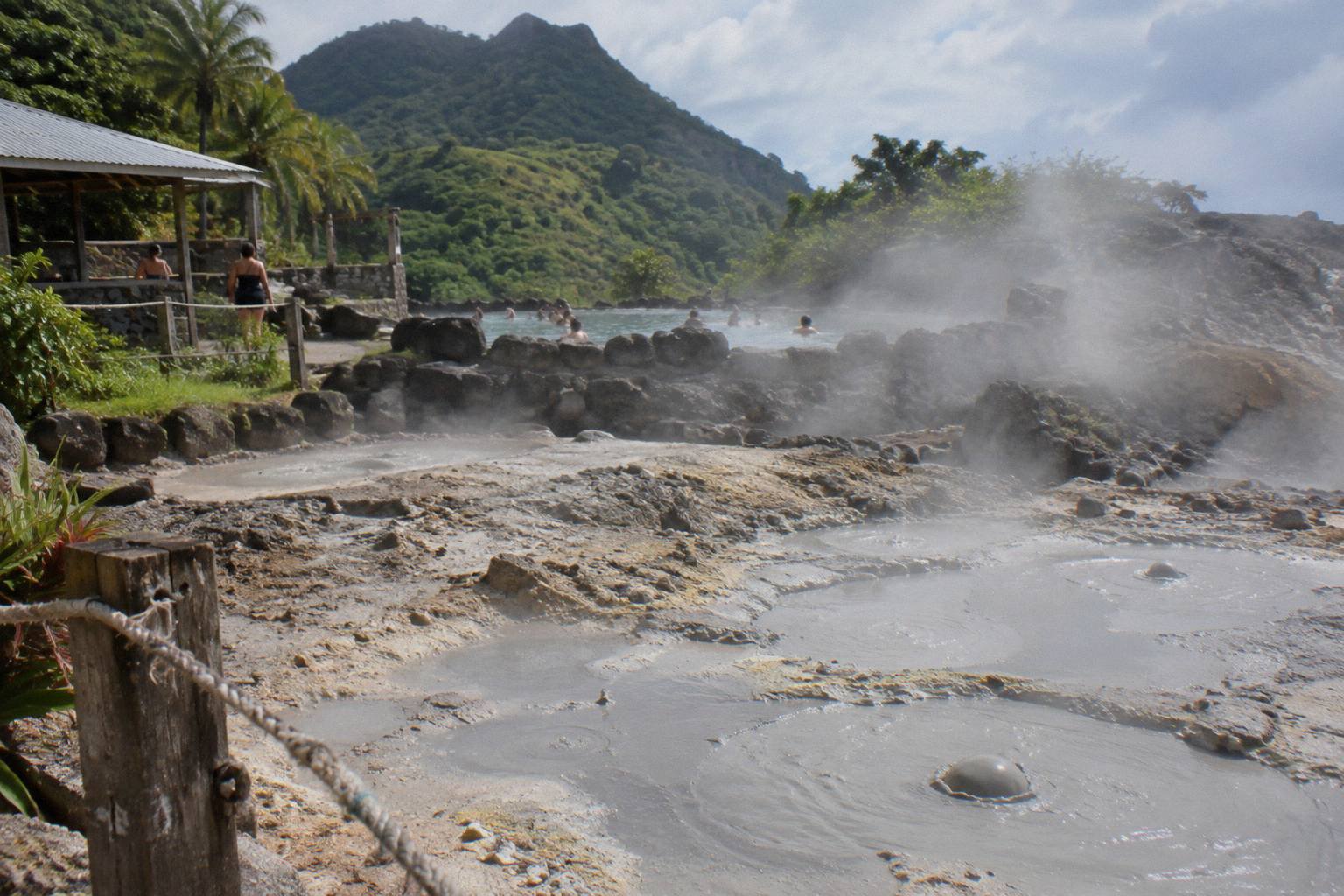
The essentials fit in one table: the park opens 9:00 am to 5:00 pm daily, closes only on the first Friday of September, and charges US$12 per adult for the bath under the schedule effective 1 June 2025. The volcanic features run far hotter than anything visitors touch, with boiling springs at 70 to 90 °C and fumaroles up to 172 °C. The drive is about 45 minutes from Hewanorra airport and roughly 1 hour from Castries.
| Question | Answer |
|---|---|
| Where is it | Inside the Qualibou caldera, near Soufriere, southwest St Lucia |
| Park operator | Soufriere Regional Development Foundation (SRDF) |
| Opening hours | 9:00 am to 5:00 pm daily, including weekends and holidays |
| Annual closure | First Friday of September each year |
| Bath entry, adult | US$12 (XCD 30) |
| Bath entry, child | US$6 (XCD 15) |
| Volcano tour, adult | US$10 (XCD 25) |
| Combined ticket, adult | US$16 (XCD 40) |
| Last recorded eruption | 1766, phreatic, in the Sulphur Springs area |
| Boiling spring temperatures | 70 to 90 °C |
| Fumarole temperatures | Up to 172 °C |
| Drive from Hewanorra (UVF) | About 45 minutes by car |
| Drive from Castries | About 42 km, roughly 1 hour |
What Is The Qualibou Caldera?
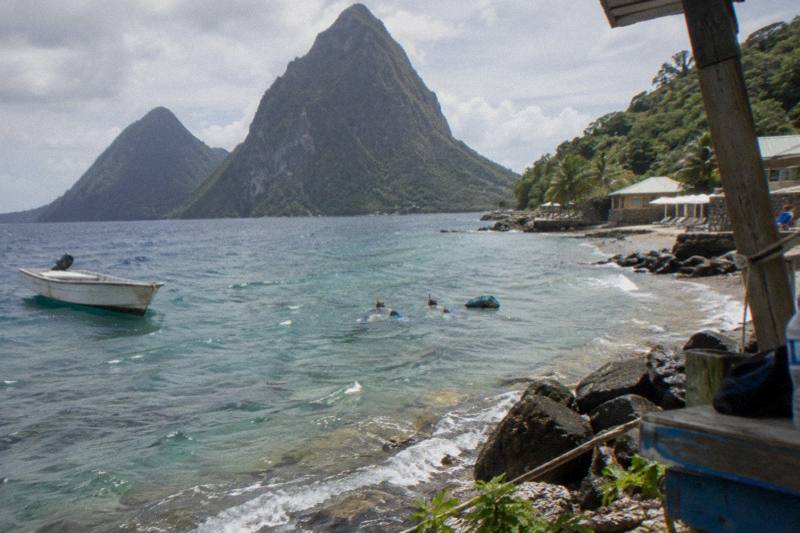
A caldera is a large depression formed when a volcano collapses into its own emptied magma chamber, and Qualibou is the collapsed structure that holds Soufriere town, parts of the Pitons landscape and the Sulphur Springs geothermal field. The springs are not a separate volcano sitting apart from everything else; they are the active geothermal vent of this larger collapsed system. Steam, hot water and volcanic gas appear across a walking-scale area rather than from a single cone.
The practical consequence for visitors is geographic. Soufriere, the springs, the Pitons and several waterfalls all sit within a compact corner of the island's southwest, which is why so many tours bundle them into a single day. The Saint Lucia Tourism Authority describes the experience as a drive into the geothermal zone past bubbling mud pools and steaming vents, followed by the bath ritual itself, on its official Sulphur Springs page. The road literally enters the volcanic area, which is where the "drive-in volcano" nickname comes from.
Geothermal activity is the caldera's ongoing signature. The Soufriere Regional Development Foundation, which operates the park, documents the science behind the features. The important distinction is between the heat of the geothermal features and the heat of the bathing pools. Boiling springs at 70 to 90 °C and fumaroles reaching 172 °C belong to the volcanic features that visitors view from a safe distance; the bathing pools are a separate, human-scale experience, and no official figure for pool temperature has been verified, so none is printed here. For how the bathing ritual itself works, step by step, the site's volcanic mud bath walkthrough covers it in detail.
What Happened In The 1766 Eruption?
The last recorded eruption in Saint Lucia was a phreatic eruption in the Sulphur Springs area in 1766, and "phreatic" means it was driven by steam rather than fresh magma reaching the surface. Groundwater, heated by the geothermal system, flashed to steam and burst outward. No eruption has been recorded on the island since, and the geothermal field remains active, which is why the springs still boil and steam today.
That distinction matters for how the site should be described, and this page chooses its words carefully. Sulphur Springs is neither written up as extinct nor casually called dormant in official material; it is an active geothermal field whose last eruptive event was 260 years ago. The steam visitors see is the same process, at a much gentler scale, that produced the 1766 event. Guides on the volcano tour explain the features as visitors move through the zone, and the park's own geology material is the source for the temperature figures quoted throughout this guide.
For travellers, the eruption story adds a layer that most first-time visitors miss. Standing at the vents, you are looking at the caldera's continuing output, not a relic. Several operators lean into this narrative. The Volcano Experience, 7 To 8 Hours, run by Island Adventures St. Lucia, is a guided shared tour with hotel and cruise-port pickup, rated 5 across 533 reviews, from US$135 per person, with a buffet lunch, drinks and all fees included. On the water side, the Edmund Tours Land And Sea trip, 6 hours 30 minutes by sea, rated 4.7 across 2,085 reviews, pairs the Sulphur Springs stop with snorkelling, lunch and a bat cave visit, from US$125 per person. Both can be checked on the operator's booking page.
A third route suits readers who want the caldera explained without a group timetable. The Private Drive-In Volcano And Mud tour from H&A Tours Ltd is a genuinely private, hotel and cruise-port pickup experience, rated 4.9 across 124 reviews, from US$140 per person, with the Sulphur Springs Park entrance fee and the Toraille Waterfall fee included. And for a low-cost shared introduction, the Wow Tours Island Drive, rated 4.9 across 603 reviews and from US$92 per person with hotel pickup, covers the same southwest geography on a 5 to 7 hour loop. The choice is mostly about format: private, shared by road, or shared by sea.
Who Runs The Park, And What Does Entry Cost?
The Soufriere Regional Development Foundation (SRDF) runs Sulphur Springs as a public attraction, and its fees, effective 1 June 2025, are US$12 for adults and US$6 for children for the bath, US$10 and US$5 for the volcano tour, and US$16 and US$8 for a combined ticket, though the park sets prices and they can change.
The rate structure rewards the combined ticket for anyone with more than passing interest. A visitor who pays separately for the bath and the tour spends US$22 against the US$16 combo, so the pairing is the default recommendation unless time is tight. Many guided tours already bundle entrance fees: the FRAM Rejuvenating Mud Bath tour, for instance, a shared road tour rated 4.8 across 338 reviews from US$132 per person, includes the mud bath entrance fee at Sulphur Springs in its price, along with snacks, drinks and a local Piton Beer. Checking what a tour covers before booking saves double-paying at the gate.
| Ticket | Adult | Child | Notes |
|---|---|---|---|
| Bath only | US$12 (XCD 30) | US$6 (XCD 15) | Access to the mineral and mud bath pools |
| Volcano tour only | US$10 (XCD 25) | US$5 (XCD 12.50) | Guided access to the geothermal features |
| Combined tour and bath | US$16 (XCD 40) | US$8 (XCD 20) | Best value for a full visit |
One schedule detail catches out very few people but is worth knowing: the first-Friday-of-September closure is the only day in a normal year when the park does not open at all. Cruise passengers and hotel guests planning around that date should simply shift the visit a day. The entrance fee, hours and booking guide on this site goes deeper on ticketing practicalities.
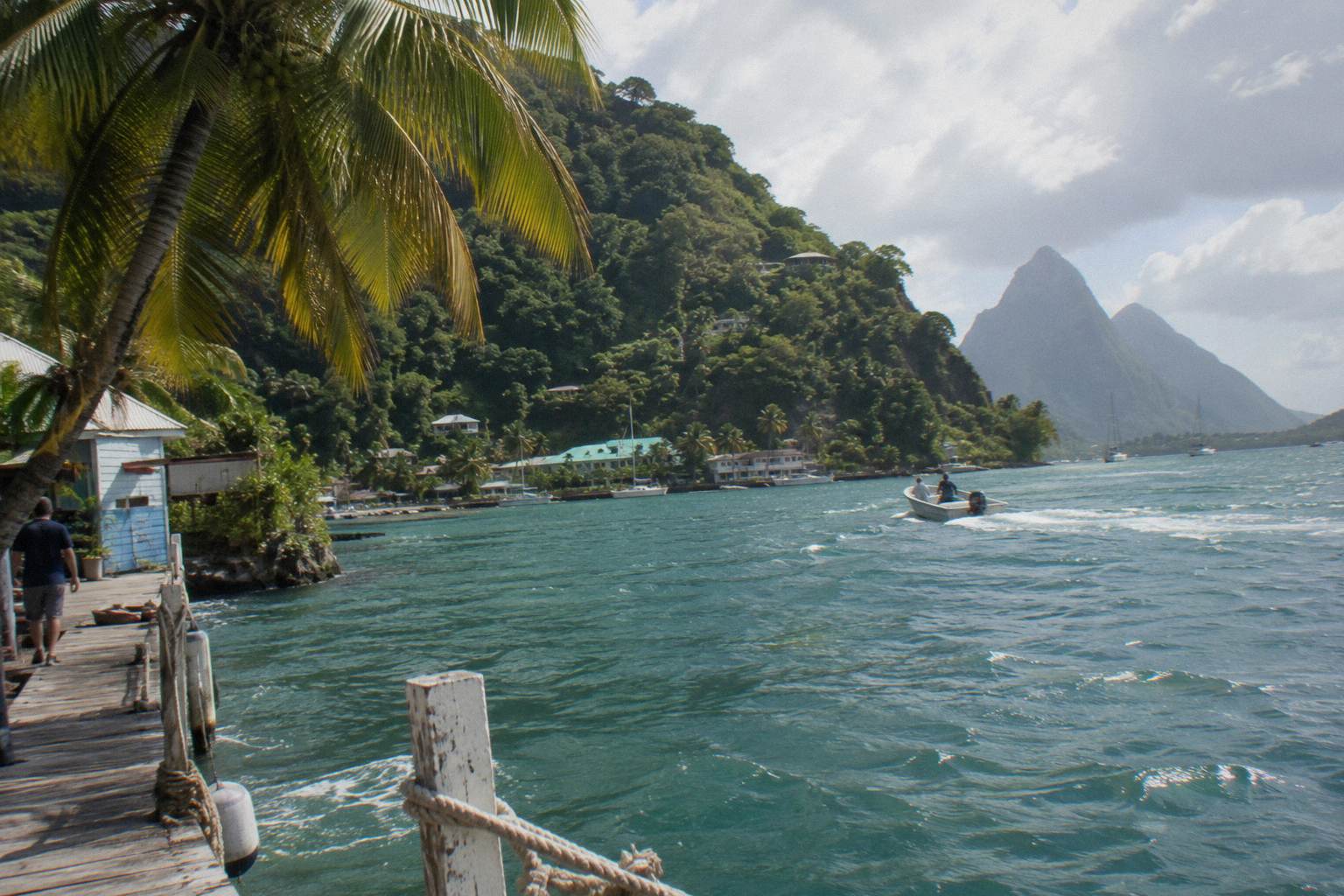
How Does Sulphur Springs Relate To The Pitons World Heritage Area?
For visitors, the practical effect is mostly one of landscape. The same southwest corner that holds the caldera also holds the Pitons, and many tours treat them as a single photographic itinerary. The UNESCO listing page for the Pitons Management Area describes the property's boundaries and the basis for inscription, which is a useful read before claiming "I visited a World Heritage Site" without nuance. You did, in the sense that the springs sit within the management area; the Gros Piton and Petit Piton peaks are the headline features.
One caution on trail claims: whether the Tet Paul Nature Trail falls inside the World Heritage property is not verified in the official material, so this page does not claim it either way. What is verified is the hiking fee schedule set by the park operator, which prices the Gros Piton Nature Trail at US$50 (XCD 125) for adult hikers, a figure unchanged in the most recent SRDF rate review. Hikers comparing a mud bath day against a Gros Piton climb should note that difference in scale: the bath costs US$12, the big hike US$50, and they serve very different ambitions.
What Can You Actually See Of The Geothermal Field?
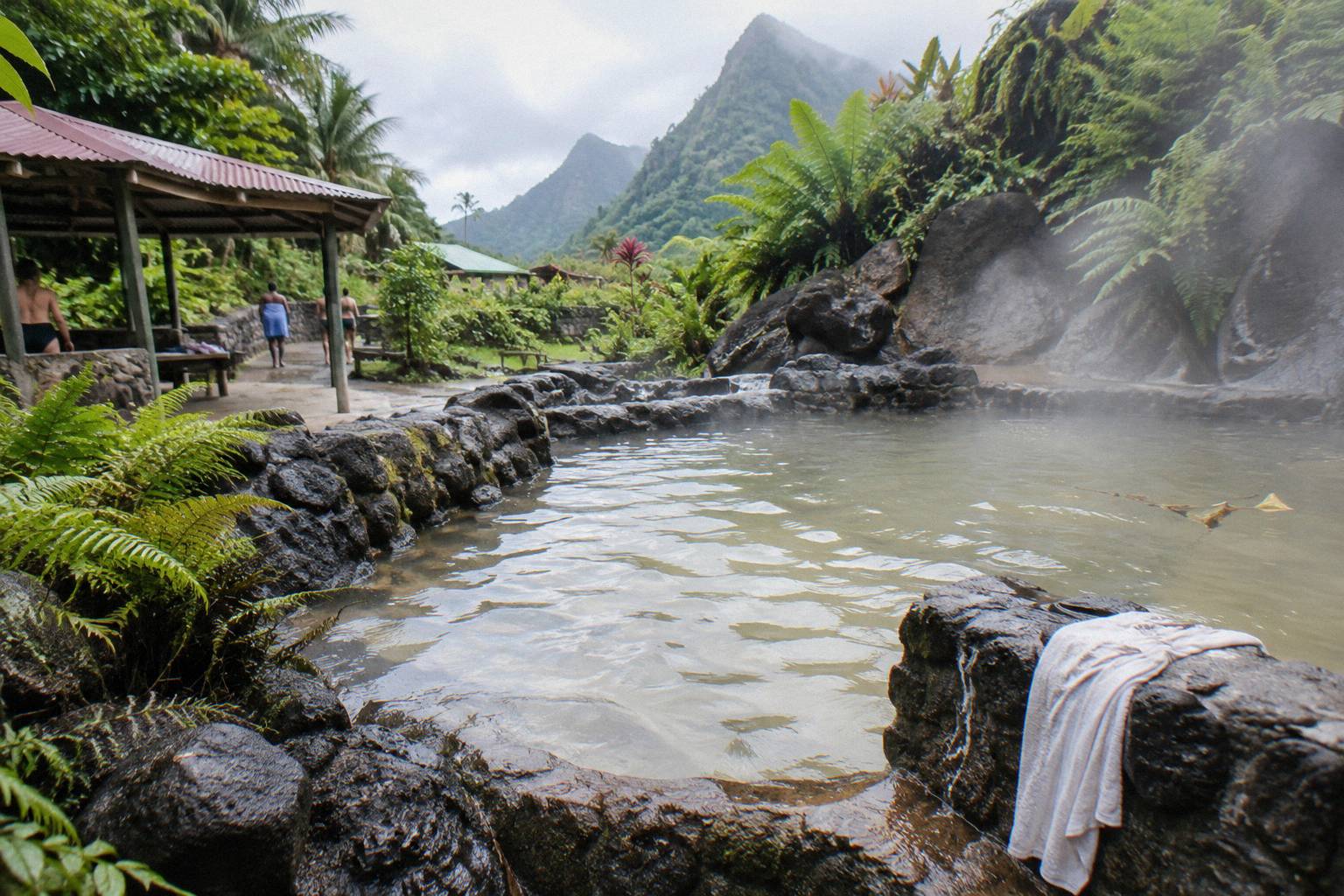
You can see two distinct sights at Sulphur Springs: the volcanic features on a guided walk or drive through the geothermal zone, including boiling springs running 70 to 90 °C, fumaroles venting steam at up to 172 °C, and bubbling mud pools on the caldera floor. The gentler counterpart is the bathing pools, where you apply grey volcanic mud, let it dry, and rinse in warm spring water, sold on separate or combined tickets.
The volcano tour portion is the history lesson made physical. Walking the zone with a guide, the 1766 event and the ongoing geothermal process stop being brochure language and become the steam in front of you. The park's own material describes the tour as guided access to the boiling springs, the fumaroles and the drive-in volcano section, with the bath covering the mineral and mud pools such as the Black Water Pool. Photography around the vents rewards early or late light, and the site's guide to the crater walk experience covers where the angles are.
Comfort matters more than style for this half of the visit. The tourism authority's packing advice is plain: comfortable shoes, swimwear and a towel if the mud baths are on the itinerary, and morning or late afternoon as the more comfortable times of day. Claims about jewelry, time limits in the mud, lockers, showers and who should avoid the bath circulate widely online but are not verified in official park material, so this page states none of them; the on-site staff set and enforce the actual rules. Questions about clothing and comfort are handled in full in the site's what to wear guide.
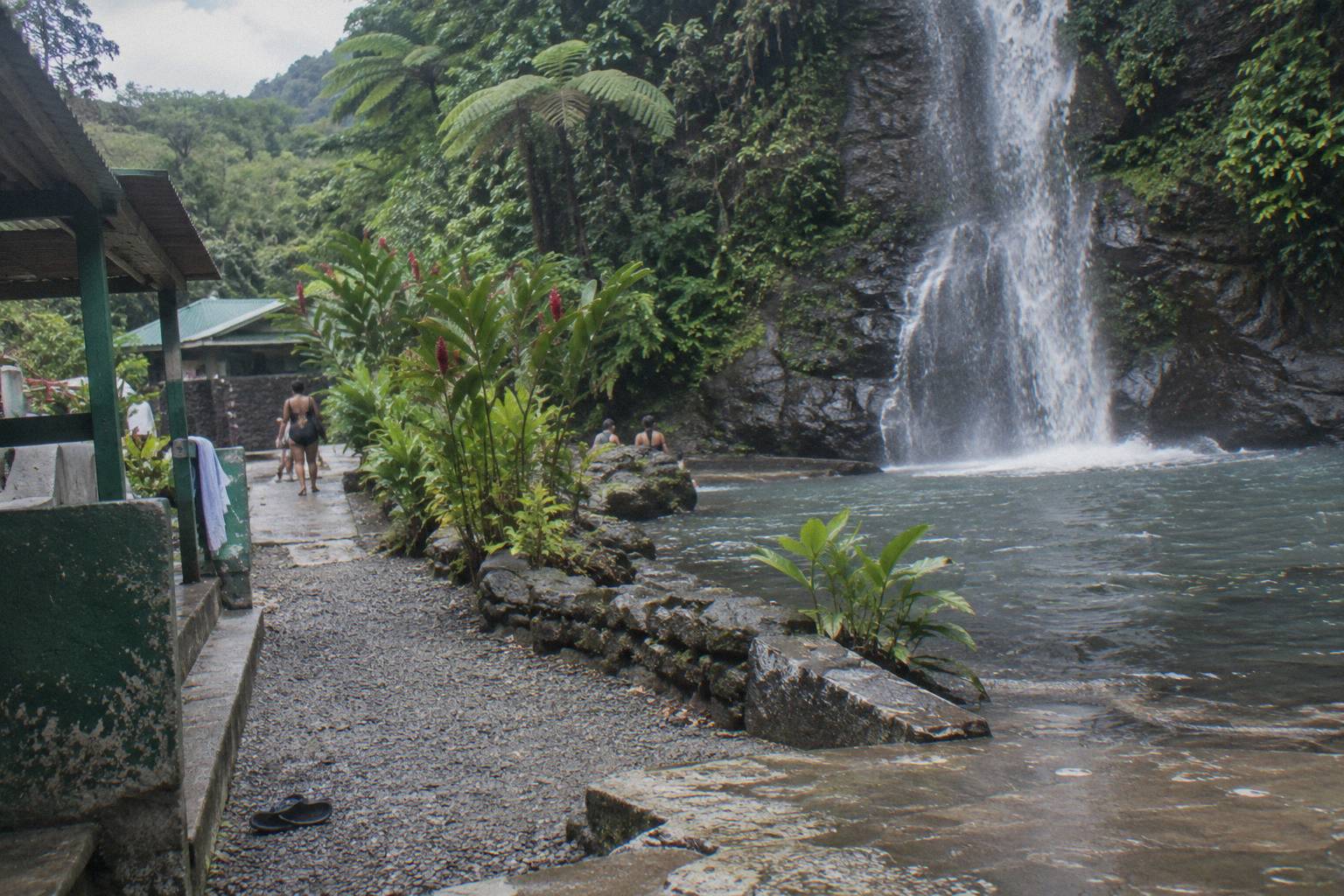
How Did The Springs Become A Visitor Attraction?
Sulphur Springs moved from a locally known geothermal curiosity to a managed public attraction under the Soufriere Regional Development Foundation, the body that now sets the schedule, the rates and the on-site operations. The foundation's management is why the park has published hours, a published fee table and a defined annual maintenance closure. That institutional history is recent and ongoing: rates were formally revised with effect from 1 June 2025, with the bath rising to US$12 for adults.
Older figures of US$10 to 15 quoted on some tour listings predate that schedule, which is one reason to treat the park's own fee table as the governing document. The commercial layer around the park grew the same way. Today, dozens of operators run road, sea and combination tours built around the springs, and the differences between them are mostly about format and inclusions rather than access, since everyone buys entry on the same terms. A useful comparison of the two main formats lives in the site's by sea or by road decision guide. By sea, the Private Speedboat, Beach Time tour from Captain Cliff Adventure Tours, rated 4.9 across 107 reviews from US$260 per person, includes docking fees, port transfers and the taxi in Soufriere to reach the mud bath and waterfall, along with drinks on board.
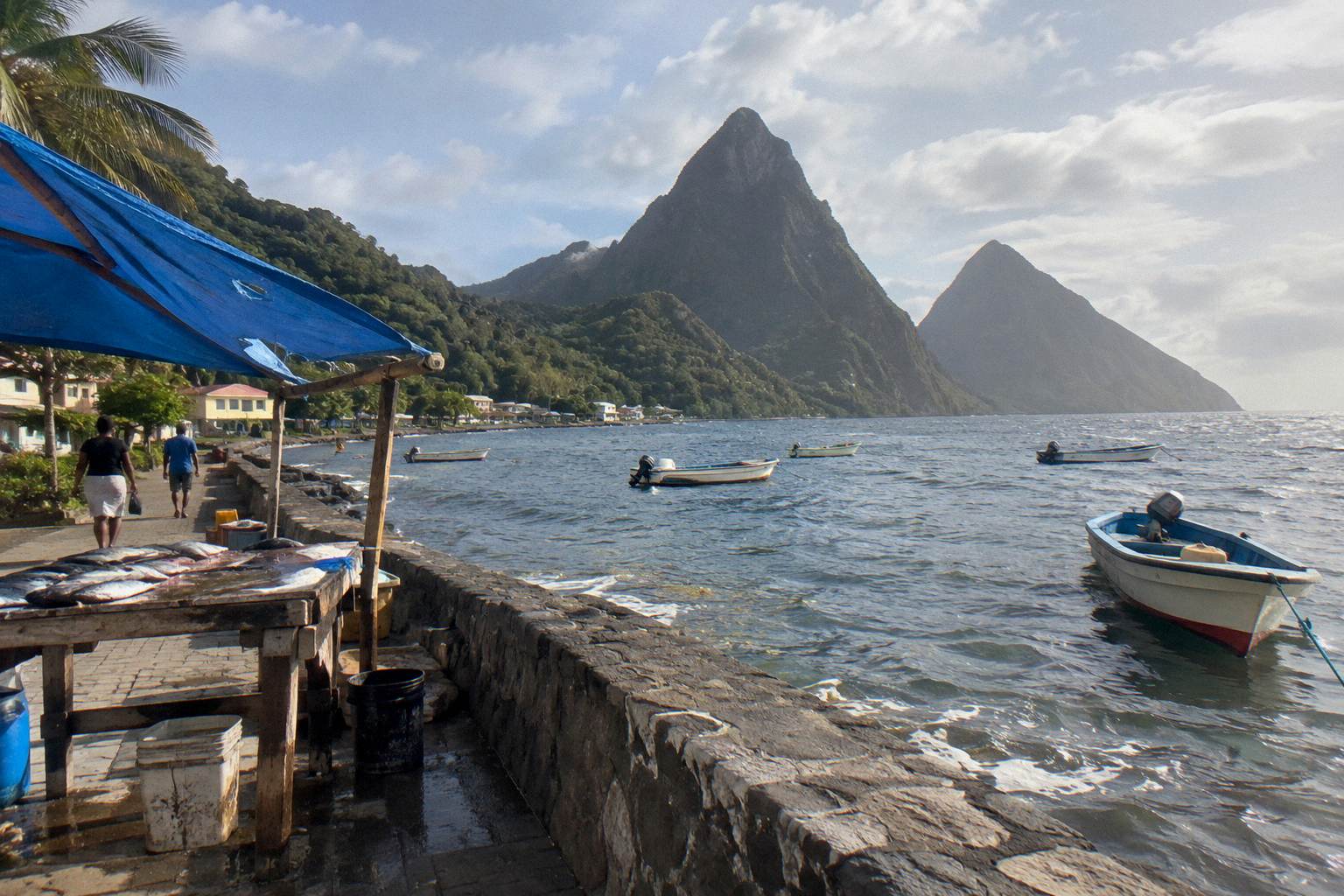
By road, the Creole Lunch, Toraille Waterfall tour from Treasure tours Ltd. St. Lucia, rated 4.6 across 220 reviews and from US$100 per person, includes the entrance fee, lunch, a driver-guide and hotel or port pickup. The range between US$100 and US$260 per person for a day built around the same park illustrates what you are actually paying for beyond entry: transport, food, guiding and format. The cheapest priced tour on this site's roster, the Half-Day Island Delight from Barefoot Holidays at from US$90 per person, is also a road tour with hotel pickup and Sulphur Springs entry included.
| Tour | Operator | Format | Duration | Rating | From (per person) |
|---|---|---|---|---|---|
| Volcano Experience, 7 To 8 Hours | Island Adventures St. Lucia | Guided shared, road | 7 to 8 hours | 5.0 from 533 reviews | US$135 |
| FRAM Rejuvenating Mud Bath | FRAM Tours & Taxi Services | Guided, road | 4 to 5 hours | 4.8 from 338 reviews | US$132 |
| Creole Lunch, Toraille Waterfall | Treasure tours Ltd. St. Lucia | Guided shared, road | 5 to 6 hours | 4.6 from 220 reviews | US$100 |
| Private Speedboat, Beach Time | Captain Cliff Adventure Tours | Private, by sea | 4 to 6 hours | 4.9 from 107 reviews | US$260 |
| Half-Day Island Delight | Barefoot Holidays | Guided shared, road | 5 hours | 4.7 from 27 reviews | US$90 |
How Do You Get To The Caldera?
To reach the caldera at Sulphur Springs, near Soufriere on St Lucia's southwest coast, expect about 45 minutes by car from Hewanorra International Airport (UVF) or roughly 1 hour and 42 km from Castries. Most visitors skip driving themselves, since the winding west coast road is best handled by someone who drives it weekly, which is why road and sea tours with hotel or cruise-port pickup dominate.
Cruise passengers face the longest transit of any visitor group, since ships dock in the north and the caldera is in the south. Timing that trade-off properly is its own subject, covered in the site's guide to mud bath excursions and cruise ship timing. Hotel guests in the Soufriere area have the shortest possible trip, and the guide to tours from Soufriere hotels lists the operators who collect locally.
The geography also explains the tour bundling. Within the same short radius sit Toraille Waterfall, entry about US$3 per person per operator listings, and Diamond Falls Botanical Gardens with its own mineral baths at US$7 for adults, open Monday to Saturday 10 am to 4 pm and Sundays and public holidays 10 am to 3pm. A day built around the caldera can therefore stack three geothermal or hydrological stops without more than an hour of driving between any of them, which is exactly what the combo operators sell.
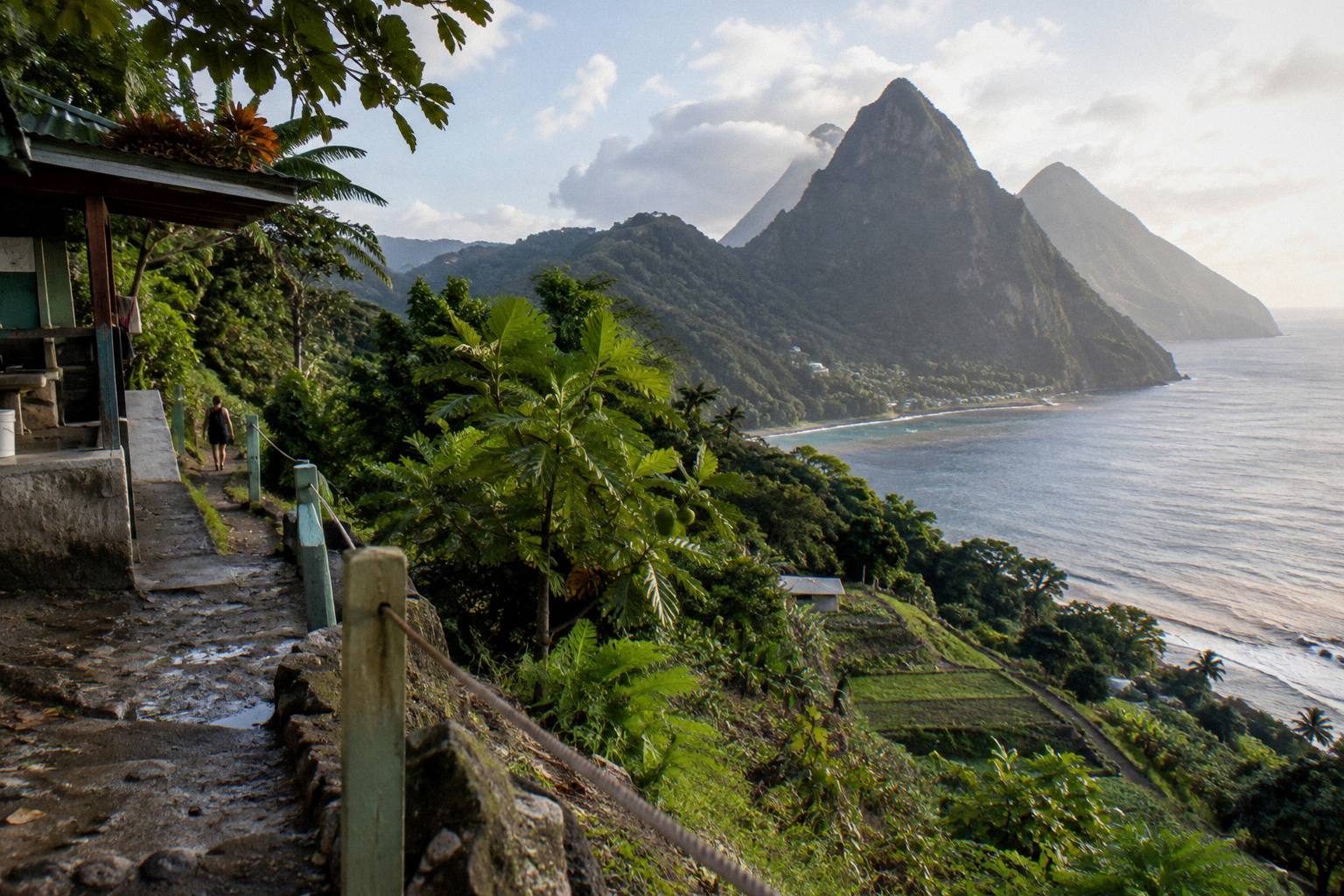
What Trips People Up When Planning Around The History?
The most common mistakes are treating booked tour duration as time at the baths, assuming all entrance fees are included, and reading old fee figures on booking pages as current. A "5 to 7 hour" tour is the whole day including transfers, lunch and stops, not five hours of mud. Only some roster tours include the Sulphur Springs entrance fee, and visitors sometimes confuse Sulphur Springs with Diamond Falls mineral baths, which are a separate site with separate fees.
The duration point deserves the most emphasis because it drives expectations. When Edmund Tours Land And Sea quotes 6 hours 30 minutes, that covers the sailing, the snorkelling stop, lunch, the bat cave visit and the Sulphur Springs stop combined; the bath portion is one chapter of the day. Anyone who wants a longer, unhurried bath experience should look at shorter booked tours with fewer stops, or a private format where the schedule flexes. The trade-offs between those choices are laid out in the site's private versus shared tour comparison.
The fee-inclusion point is a five-minute check that saves money and arguments at the gate. Among the tours named on this page, the FRAM Rejuvenating Mud Bath tour and the Private Drive-In Volcano And Mud tour include the relevant entrance fees, while others list transport, food and guiding but leave park entry to the visitor. The quick check is the inclusions list on the booking page, read against the SRDF fee table above. Finally, the two-sites confusion: Diamond Falls Botanical Gardens charges US$7 for garden entry, with its public baths at US$6 and private baths at US$7, entirely separate from the caldera's US$12 bath ticket, and it keeps its own hours including shorter Sunday opening.
| Mistake | What actually happens | How to avoid it |
|---|---|---|
| Reading tour duration as bath time | Duration is the whole outing, transfers and meals included | Compare tours by stops, not hours |
| Assuming entry is included | Inclusion varies tour by tour | Check the inclusions list before booking |
| Trusting old fee figures | The current SRDF schedule applies at the gate | Use the park's own fee table |
| Mixing up the two bath sites | Sulphur Springs and Diamond Falls are separate paid attractions | Name the site when booking |
| Skipping the combo ticket | Separate bath plus tour costs US$22 versus US$16 combined | Buy the combined ticket if doing both |
Why The History Changes How You Experience The Visit
Knowing the caldera story turns a photo stop into a reading of the landscape: the steam is live geothermal output, the 1766 eruption is the most recent expression of the same system, and the warm rinse water is groundwater heated by it. Visitors who take the guided volcano portion consistently come away with context the bath alone does not supply. The combined ticket at US$16 exists precisely because the park considers the two halves, features and baths, one story.
There is also a planning dividend. Understanding that the springs, the Pitons, Toraille and Diamond Falls all sit inside one compact caldera landscape makes the case for a single well-chosen day tour over several fragmented half-trips. Whether that day runs by sea with the most reviewed operator on the roster, by road with a buffet lunch, or privately with a driver-guide, the underlying geography is the same, and this site exists, as St Lucia Mud Bath, to help match the format to the traveller.
The historical thread even explains the smell that visitors notice before anything else. Sulphur gases venting through the geothermal field are the direct signature of the volcanic system below, the same system that boiled groundwater into the 1766 eruption. Rather than an inconvenience, the odour is the caldera announcing itself. How strong it gets, and how it varies across Soufriere, is covered honestly in the site's sulphur smell guide.
Common Questions About The Qualibou Caldera And Sulphur Springs History
Is Sulphur Springs An Active Volcano?
It is an active geothermal field inside the Qualibou caldera, with boiling springs at 70 to 90 °C and fumaroles reaching up to 172 °C. The last recorded eruption in Saint Lucia was a phreatic event there in 1766, and none has been recorded since. Official material describes the field as active without forecasting any future eruption.
Who Operates Sulphur Springs Park?
The Soufriere Regional Development Foundation (SRDF) runs the park, sets the visitor rates and publishes the schedule: 9:00 am to 5:00 pm daily, closed the first Friday of September each year. The current fee schedule took effect on 1 June 2025.
Is Sulphur Springs Part Of A UNESCO World Heritage Site?
The Sulphur Springs geothermal area lies within the Pitons Management Area, which was inscribed on the World Heritage list in 2004. The Pitons are the headline features of the inscription.
What Does It Cost To Enter Sulphur Springs?
Under the schedule effective 1 June 2025, the bath costs US$12 for adults and US$6 for children, the volcano tour US$10 and US$5, and a combined ticket US$16 and US$8. Fees are set by the park and can change, so treat the SRDF schedule as the governing figure.
What Was The 1766 Eruption Like?
It was a phreatic eruption, meaning steam-driven rather than magma-driven: groundwater heated by the geothermal system flashed to steam and erupted through the Sulphur Springs area. It was the last recorded eruption anywhere in Saint Lucia.
Do Tour Prices Include The Entrance Fee?
Some do and some do not. The FRAM Rejuvenating Mud Bath tour and the Private Drive-In Volcano And Mud tour, for example, list the relevant entrance fees among their inclusions, while other tours cover transport, guiding and food only. Always check the inclusions on the booking page before paying.
Keep Reading
Four follow-on reads round out the practical side of this history: how the bathing ritual actually works, how to build a Soufriere day around it, what the sulphur smell means, and what the crater walk covers. Each guide stands alone, so read them in whatever order matches your planning stage.
- How the volcanic mud bath works, step by step
- Building a Soufriere day trip around the baths
- The sulphur smell at the springs and in Soufriere
- Walking through the crater at Sulphur Springs
The caldera has been shaping this corner of St Lucia for centuries, and it will still be steaming long after any single visit, so plan the day with the confidence that the geography is doing half the work for you.