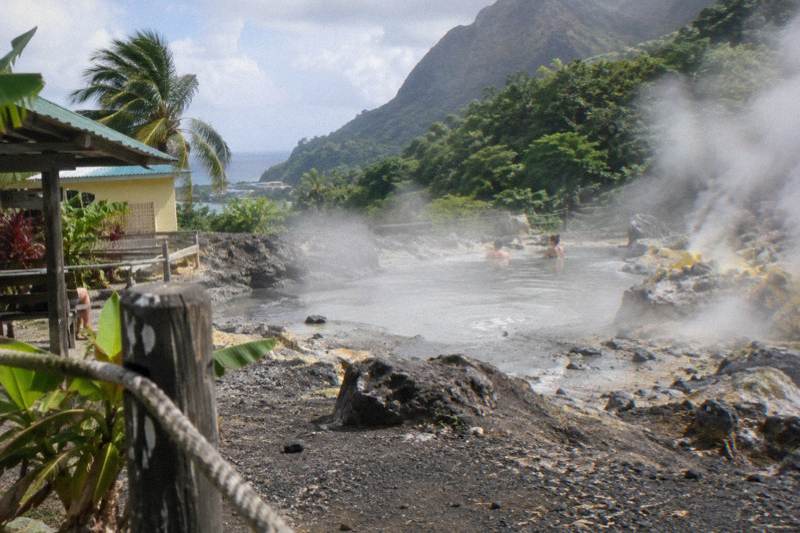
Sulphur Springs St Lucia: What The Drive-In Volcano Really Is
The drive-in volcano is the nickname for the geothermal zone at Sulphur Springs, inside the Qualibou caldera near Soufriere, where you are driven between boiling springs, bubbling mud pools and steaming fumaroles before the mineral bath pools.
Short answer
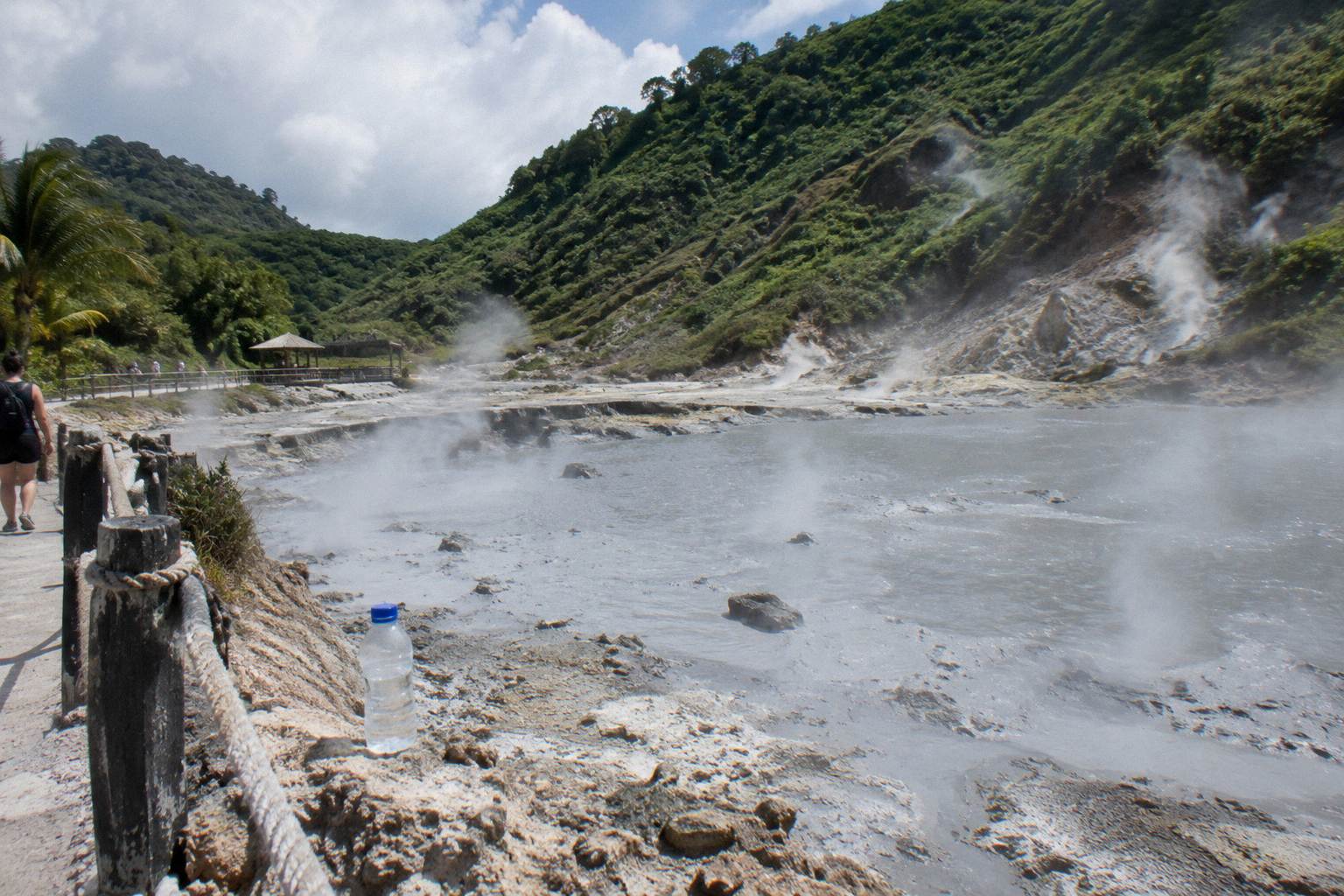
Sulphur Springs is a geothermal area inside the Qualibou caldera, run by the Soufriere Regional Development Foundation, open 9 am to 5 pm daily. The volcano ticket covers guided access to the springs and vents, from US$10 adult; the bath ticket is separate at US$12 adult, or US$16 combined. Boiling springs run 70 to 90 °C and fumaroles reach 172 °C.
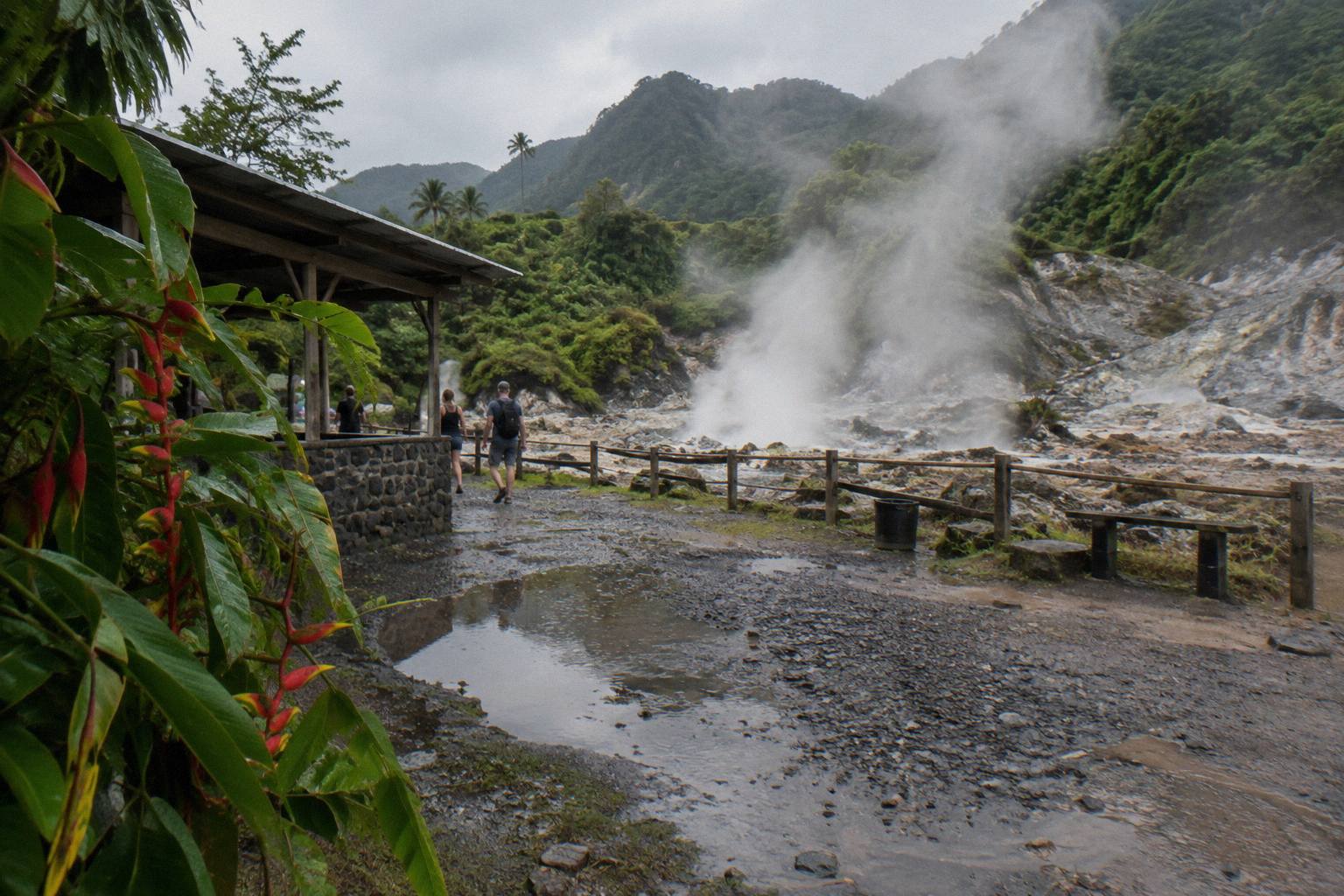
For the full walkthrough of the visit itself, see what to expect at the drive-in volcano, which follows the route stop by stop.
| Quick fact | Detail |
|---|---|
| What it is | Geothermal zone inside the Qualibou caldera, nickamed the drive-in volcano |
| Operator | Soufriere Regional Development Foundation (SRDF) |
| Hours | 9:00 am to 5:00 pm daily, including weekends and holidays |
| Annual closure | First Friday of September |
| Volcano tour ticket | US$10 adult (XCD 25), US$5 child |
| Bath ticket | US$12 adult (XCD 30), US$6 child |
| Combined ticket | US$16 adult (XCD 40), US$8 child |
| Last recorded eruption | 1766, phreatic, in the Sulphur Springs area |
What Is The Sulphur Springs Drive-In Volcano?
The drive-in volcano is the geothermal heart of Sulphur Springs, a field of boiling springs, grey mud pools and steaming vents that vehicles can enter, which is where the nickname comes from. It sits inside the Qualibou caldera near Soufriere, and the last recorded eruption in St Lucia was a phreatic event here in 1766. The park is managed by the Soufriere Regional Development Foundation, a local development body rather than a private operator.
The name trips people up. Search for a "drive-in volcano" and you might picture a theme-park ride or a lookout. What actually happens is simpler and stranger: a road runs into the active geothermal zone, and you are driven through it, getting out at defined points to stand near bubbling mud and hissing steam vents while a guide explains what is under your feet. The Saint Lucia Tourism Authority describes the experience as a drive into the geothermal zone among bubbling mud pools and steaming vents, followed by the mud bath routine of applying grey volcanic mud and rinsing in warm spring water. That description matches what most visitors report.
Geologically, the whole area is the surface expression of a magma system that still heats groundwater. The boiling springs run 70 to 90 °C. The fumaroles, the gas vents, reach up to 172 °C. Those are the features you see on the volcano tour; they belong to the geothermal zone and never to the bathing water, which is a separate, cooler system of pools.
One fact worth knowing: Sulphur Springs sits inside the Pitons Management Area, a UNESCO World Heritage Site inscribed in 2004.
If you are weighing this against other ways to spend a day in the south of the island, most booked tours fold the volcano into a wider loop, and the comparison usually comes down to by sea or by road, group or private.
Tour Or Bath: What Each Ticket Actually Covers
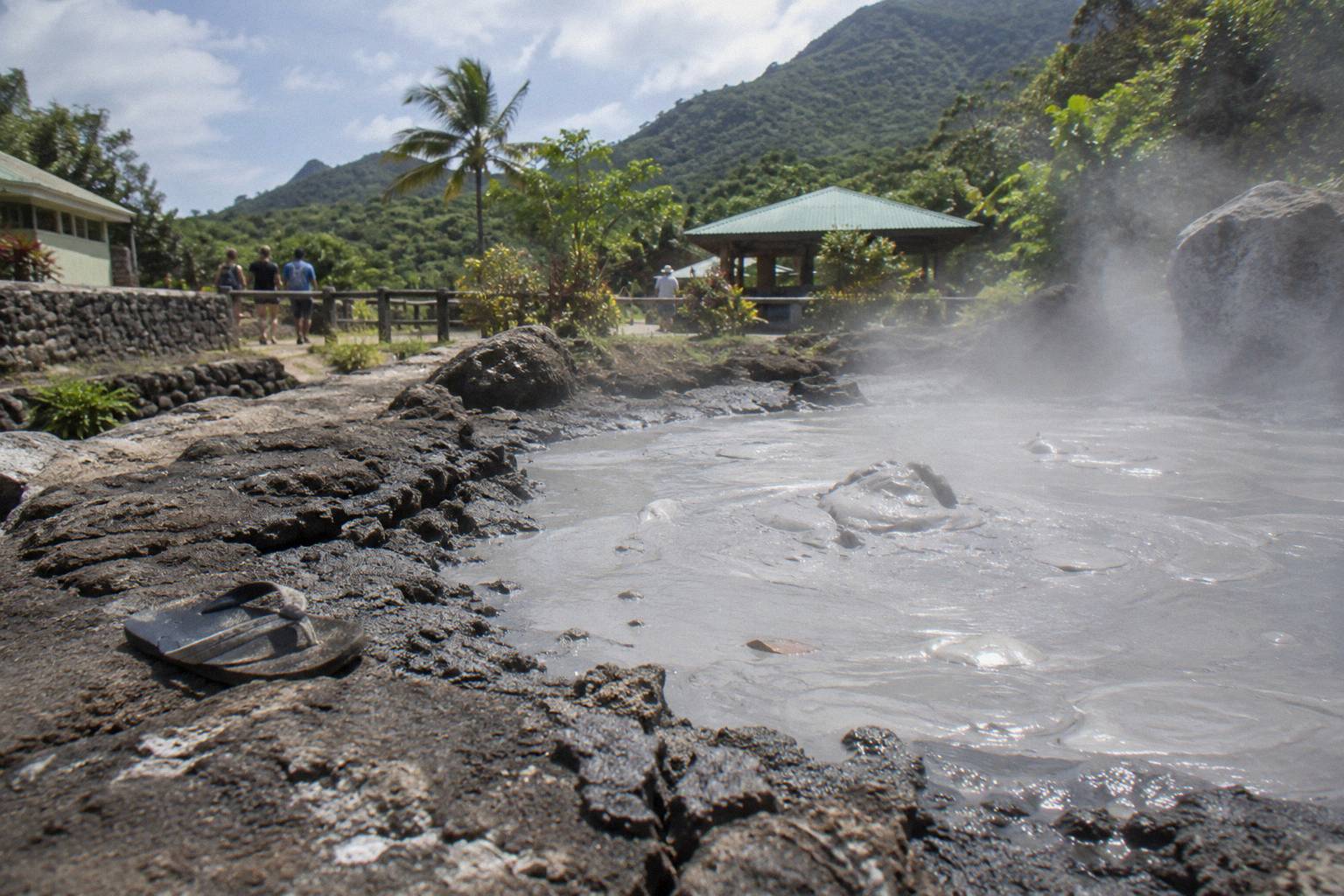
The volcano tour ticket buys guided access to the geothermal features: the boiling springs, the fumaroles and the drive into the crater zone. The bath ticket buys access to the mineral and mud bath pools, including the Black Water Pool, where you apply grey volcanic mud and rinse in warm spring water. They are separate line items, which is why the combined ticket exists, and why many visitors buy it.
The split confuses first-time visitors more than anything else about the park. Someone arrives expecting "the volcano" and discovers two products at the gate. Here is the honest breakdown of what each one buys, using the SRDF visitor schedule effective 1 June 2025. Fees are set by the park and can change.
| Ticket | Adults | Children | What it includes |
|---|---|---|---|
| Volcano tour | US$10 / XCD 25 | US$5 / XCD 12.50 | Guided access to the boiling springs, fumaroles and drive-in zone |
| Bath | US$12 / XCD 30 | US$6 / XCD 15 | Access to the mud and mineral bath pools |
| Combined | US$16 / XCD 40 | US$8 / XCD 20 | Both the geothermal tour and the bath pools |
The pricing logic is straightforward: the combined ticket costs less than buying the two separately, so unless you have a strong aversion to mud, most visitors take the combo. Booked tours handle this differently from operator to operator, so check what the ticket price of a tour actually includes. Some tours list entrance fees as included, others list "Entrance Fees, Mud Bath Only", meaning the geothermal drive is an extra at the gate. A few tours, like Edmund Tours Land And Sea by Edmund Tours St. Lucia, from US$125 per person, list drinks, lunch and snorkelling equipment rather than park fees, so budget the gate fees on top. Others, like the Volcano Experience, 7 To 8 Hours by Island Adventures St. Lucia, from US$135 per person, list all taxes and fees as included. Reading the inclusions line on the booking page is the single highest-value thirty seconds of planning you will spend.
Choosing how the day is packaged matters as much as the ticket itself. These three options show the spread: the most reviewed sea tour on the island, a budget road tour, and a private version of the same loop.
What The Volcano Tour Actually Looks Like On The Ground
You stay in a vehicle for part of it and walk short stretches for the rest, moving between defined viewpoints over the boiling springs and the steam vents. A guide narrates the geology, the caldera history and the 1766 eruption. The stops are close together, so the tour itself is compact, and total time inside the geothermal zone is a fraction of any booked tour's length.
The sequence most visitors describe goes like this. The vehicle drops into the crater zone, past steaming ground that visibly marks where heat escapes. You stop where the boiling springs churn grey water and mud. You stop again near the fumaroles, where steam columns rise from vents the park has left open to view. Guides point out the colors in the rock, the deposits the minerals leave, and the way rainfall and groundwater interact with the heat below. Then the vehicle climbs out, and the tour either ends or continues to the bath pools, depending on your ticket.
What it is not: a hike, a long walk, or anything demanding. The tourism authority's packing advice is comfortable shoes, swimwear and a towel if the mud baths are on the itinerary, and it suggests morning or late afternoon as the comfortable windows. That advice is about the whole visit, not just the crater. If you are arriving on a packaged tour, the operator sets the pacing; the Volcano Experience, 7 To 8 Hours by Island Adventures St. Lucia is, as its name says, a seven to eight hour day with hotel and cruise-port pickup, buffet lunch, drinks and a driver-guide, rated 5 across 533 reviews, from US$135 per person. The crater portion of that day is the anchor, not the bulk.
That is the trade a booked tour makes: hours of coast, lunch and commentary wrapped around a compact geothermal visit. Whether that trade is worth it depends on how much of the island you want covered in one ticket, which is covered in the guide on tours by sea or by road.
How Hot Is It Really: Boiling Springs And Fumaroles
The boiling springs run 70 to 90 °C and the fumaroles reach up to 172 °C, figures published by the foundation that runs the park. Those temperatures belong to the geothermal features you view from defined paths, not to the bathing pools, whose temperature the park does not publish an official figure for. Nobody bathes in the springs; the mud and mineral pools are a separate, cooler system.
The numbers deserve context because they get repeated carelessly. A boiling spring at 90 °C is at or above the boiling point you would measure at sea level for mineral-laden water. A fumarole at 172 °C is a gas vent hot enough that the park manages access around it. These are the reasons the geothermal zone is a guided space with defined stops rather than a wander-at-will crater. Standing near the vents, the heat is real and localised, and the steam moves with the wind.
The bathing pools are a different story. Water reaches them after passing through the mineral ground, and the park describes them as warm rather than scalding. No official temperature figure for the pools has been published, so treat any specific number you read elsewhere with caution. What is verifiable is the routine: apply the grey volcanic mud, let it dry, then rinse in the warm spring water. The mud's grey color comes from the minerals it carries up from the geothermal system.
If the heat is what draws you, the pairing question is natural: hot springs pool time after the mud is covered in detail in the sulphur hot springs pool guide. And if the science of the caldera itself is the appeal, the history section below traces how the Qualibou depression formed and why the 1766 event is the reference point.
The Qualibou Caldera And The 1766 Eruption
Sulphur Springs sits inside the Qualibou caldera, a collapsed volcanic depression near Soufriere, and the last recorded eruption in St Lucia was a phreatic event in this area in 1766. Phreatic means steam-driven: groundwater flashed to pressure without new magma reaching the surface. The geothermal activity today is the same heat source expressed as springs, vents and heated ground rather than eruptions.
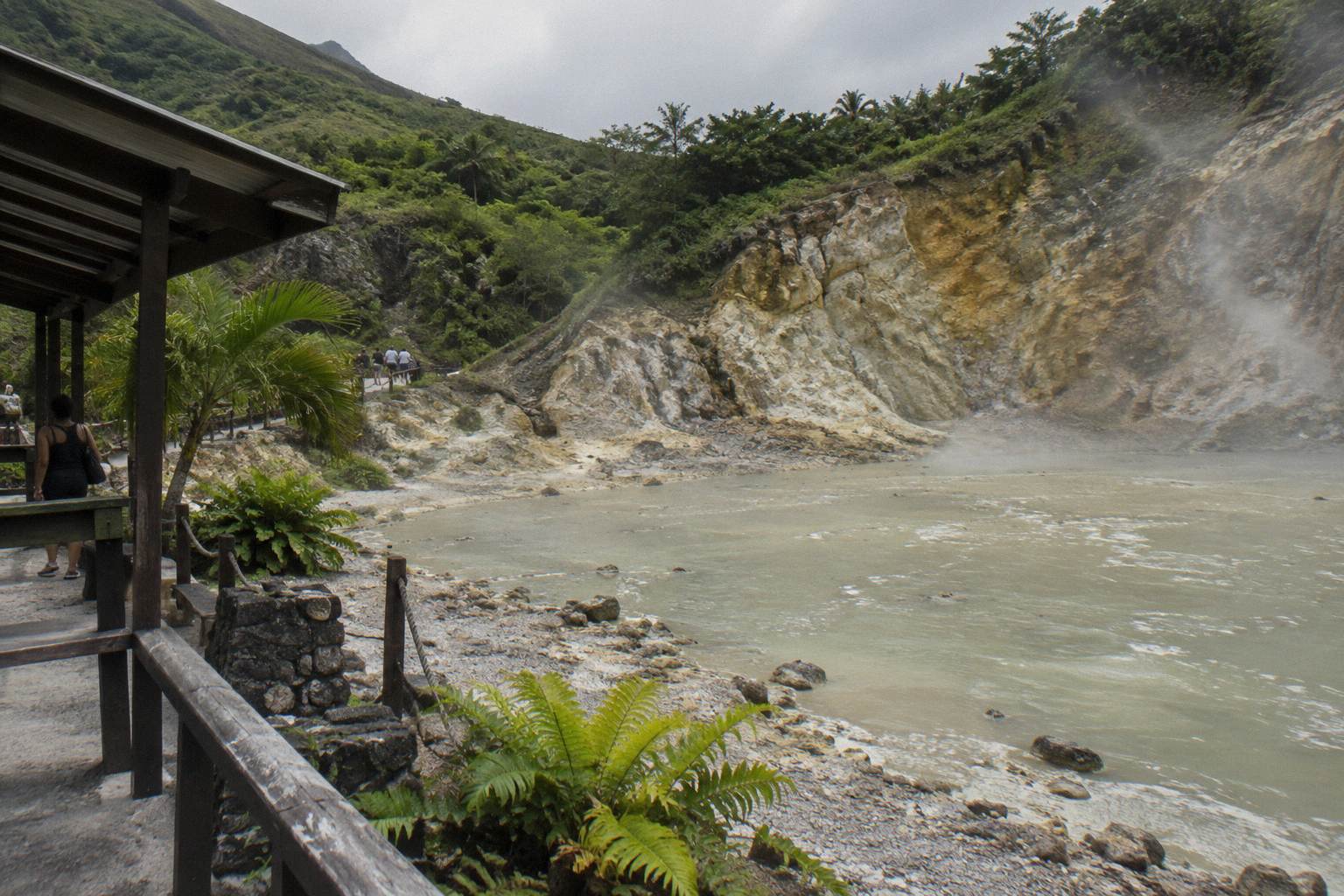
A caldera forms when a magma chamber empties enough that the ground above collapses into the space, leaving a broad depression rather than a cone. Qualibou is that depression, and the town of Soufriere sits on its edge. The hot ground, the springs and the vents are the surface signs of the system that is still there. Calling the site "dormant" or "extinct" would be a forecast nobody can honestly make, and the park's own geology pages do not frame it that way; they describe the features and the last recorded event. Everything else covered here is indexed on St Lucia Mud Bath.
The 1766 eruption is the anchor date. It was phreatic, steam-driven, in the Sulphur Springs area, and it is the most recent recorded eruptive activity on the island. Everything since has been the quieter repertoire: heat, steam, mineral water and mud. That is what makes the site unusual in the Caribbean, a geothermal field you can be driven into rather than viewed from a distant rim.
For visitors, the history mostly matters as framing. The vents you photograph are the working end of a system with a documented eruptive past, managed by an institution that exists to develop Soufriere's resources for the community, the Soufriere Regional Development Foundation. UNESCO's inscription of the Pitons Management Area in 2004 covers the broader landscape; Sulphur Springs lies within that area.
Fees, Hours And How To Get To The Springs
The park opens 9:00 am to 5:00 pm daily, including weekends and public holidays, and closes once a year on the first Friday of September. Gate fees from the June 2025 SRDF schedule are US$12 adult for the bath, US$10 for the volcano tour and US$16 combined, with children at half those rates or less. Driving times run about 45 minutes from Hewanorra airport and roughly one hour from Castries.
Getting there is part of the planning. Soufriere is about 42 km from Castries, roughly an hour's drive on the island's west coast road, and Hewanorra International Airport (UVF) in the south is about 45 minutes by car. Cruise passengers arrive in Castries, which is why so many tours advertise cruise-port pickup. Resort guests in the north should expect the drive to be a meaningful slice of the day, which is the main argument for letting a booked tour absorb the transport.
| From | Approximate drive | Notes |
|---|---|---|
| Hewanorra (UVF) | About 45 minutes | Tourism authority figure |
| Castries | Roughly 1 hour, about 42 km | Cruise terminal is here |
| Soufriere town | Minutes | Park is adjacent to town |
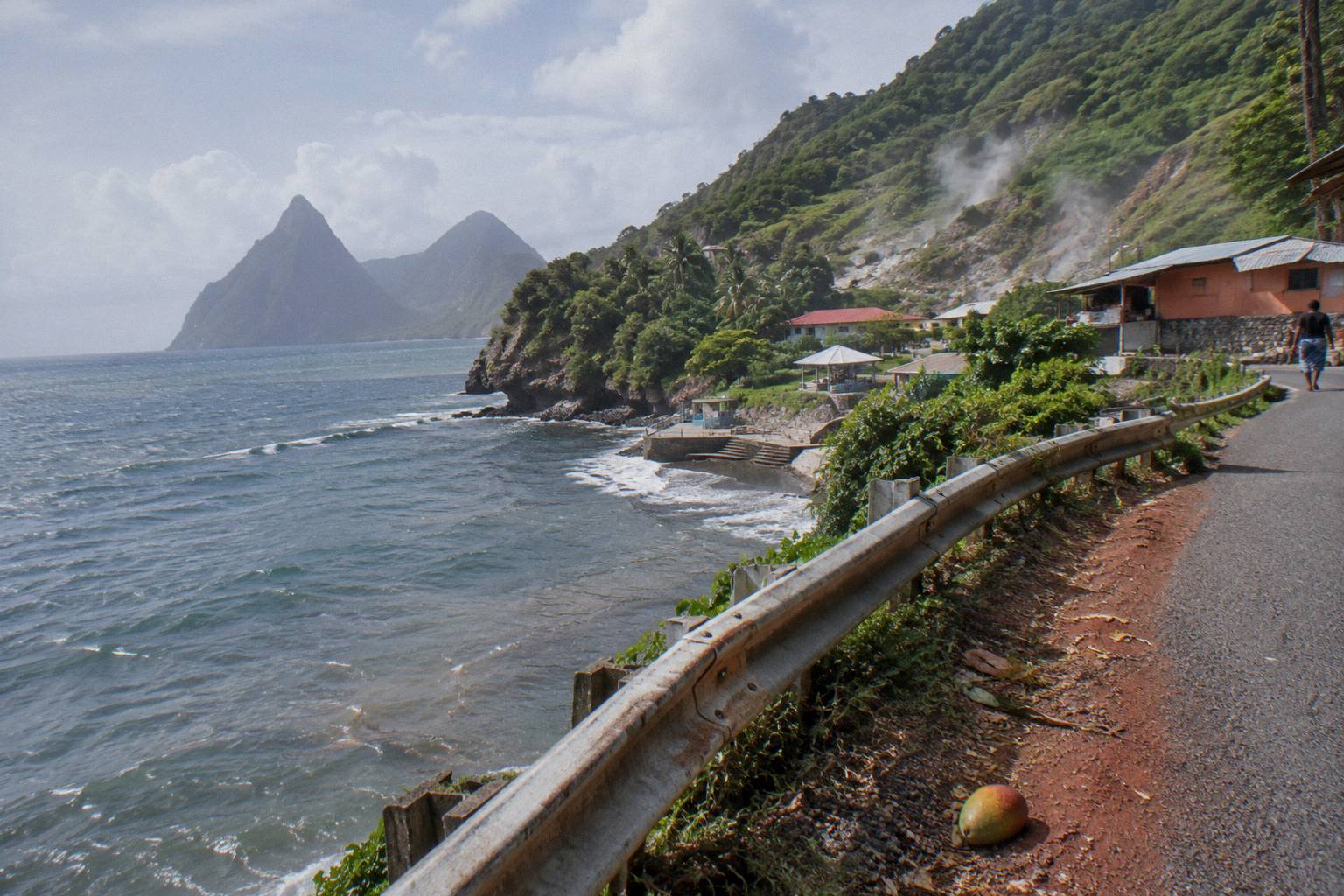
Booked tours muffle most of this planning burden by folding transport into the day. The FRAM Rejuvenating Mud Bath by FRAM Tours & Taxi Services, from US$132 per person, rated 4.8 across 338 reviews, runs four to five hours with hotel and cruise-port pickup and lists mud bath entrance fees as included. That inclusion detail is the one to check on any tour: it decides whether you pay at the gate or not. For the full fee picture including what tours add on top, the entrance fee, hours and booking guide goes deeper than this page does.
Tours That Build The Volcano Into A Full Day
Most booked options pair the geothermal stop with the mud bath plus one or two of the following: a waterfall, the Pitons, a beach, lunch or a distillery. Road tours run roughly four to eight hours, sea tours four to ten, and private versions cluster near the same durations with flexible pacing. The tour does not extend time in the crater; it packages the crater into an island day.
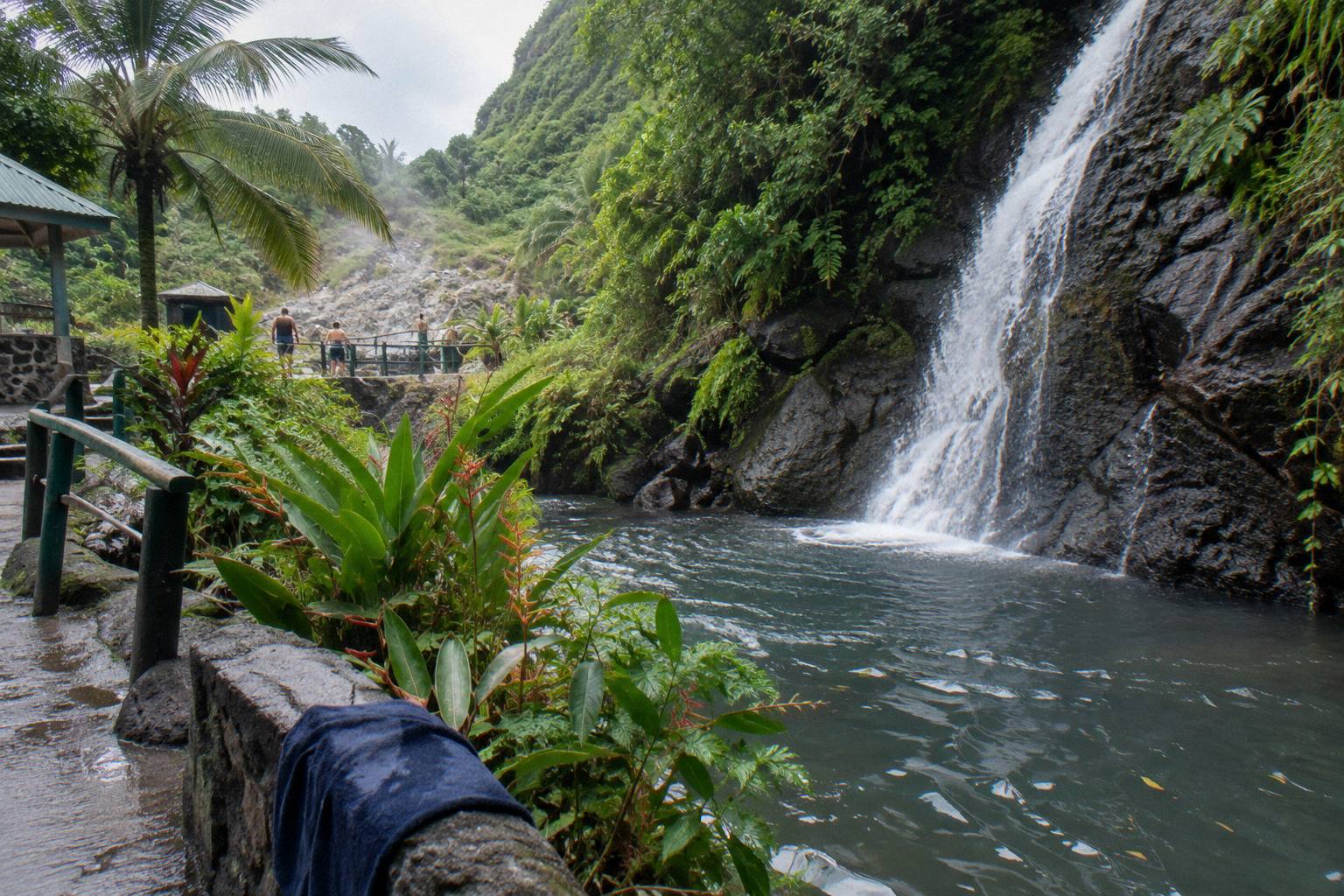
The combo logic is where most visitors land. The Creole Lunch, Toraille Waterfall tour by Treasure tours Ltd. St. Lucia, from US$100 per person, rated 4.6 across 220 reviews, runs five to six hours with hotel and cruise-port pickup, and lists entrance fees, lunch, a driver-guide and beverages as included. The name tells the shape of the day: mud and volcano first, waterfall second, Creole lunch somewhere in the middle. The Toraille gate itself is cheap, about US$3 per person quoted on operator materials, though hours there are not officially published.
By sea, the frame changes. Boats run down the coast from the north, often past the Pitons, and the mud bath becomes the inland stop on a sailing day. The All Inclusive Land And Sea excursion by Julian Boat Tours, from US$175 per person, rated 4.9 across 498 reviews, runs five hours with drinks, lunch, snorkelling gear and all fees and taxes listed. At the private end, the Private Speedboat, Beach Time tour by Captain Cliff Adventure Tours, from US$260 per person, rated 4.9 across 107 reviews, runs four to six hours with hotel and cruise-port pickup, docking fees, port transfers, the Soufriere taxi to the mud bath and waterfall, and drinks aboard all listed as included.
| Tour | Operator | Format | Duration | Rating | Price |
|---|---|---|---|---|---|
| Creole Lunch, Toraille Waterfall | Treasure tours Ltd. | Guided road | 5 to 6 hours | 4.6, 220 reviews | From US$100 |
| All Inclusive Land And Sea | Julian Boat Tours | Guided, by sea | 5 hours | 4.9, 498 reviews | From US$175 |
| Private Speedboat, Beach Time | Captain Cliff Adventure Tours | Private, by sea | 4 to 6 hours | 4.9, 107 reviews | From US$260 |
| Private Drive-In Volcano And Mud | H&A Tours Ltd | Private, road | 5 to 6 hours | 4.9, 124 reviews | From US$140 |
| Wow Tours Island Drive | Wow Tours | Guided road | 5 to 7 hours | 4.9, 603 reviews | From US$92 |
Note the differences that matter rather than the ones that look big. The private options, like the Private Drive-In Volcano And Mud tour by H&A Tours Ltd, from US$140 per person, rated 4.9 across 124 reviews, buy pacing control and a vehicle to yourselves, with entrance fees for Toraille and Sulphur Springs listed as included. The guided road tours, like the Wow Tours Island Drive by Wow Tours, from US$92 per person, rated 4.9 across 603 reviews, are the value play, with hotel pickup and a guide included. Deciding between those philosophies is covered properly in choosing a private or shared tour.
Common Mistakes Visitors Make At Sulphur Springs
The recurring errors are assuming the volcano tour and the bath are one ticket, expecting a booked tour's length to equal time at the springs, arriving without swimwear or a towel, and trusting outdated fee figures printed on older tour documents. Each is avoidable in a few minutes of planning, and none of them is fixable cheaply at the gate on a busy day.
The ticket mistake is the most common. Visitors buy the volcano tour, see the springs and vents, and only then discover the bath pools are a separate line. The combined ticket exists precisely for this, and at US$16 adult versus US$22 bought separately, the arithmetic makes the decision for most people. If a booked tour lists "Entrance Fees, Mud Bath Only", that wording means the geothermal tour is not covered, and the gate fee for it will be yours to pay.
The duration mistake follows. A five to eight hour tour includes transport, lunch, stops and often a waterfall; the time actually inside the geothermal zone is a small fraction of that. Booked duration is whole-tour length, a convention worth internalising before comparing options. Anyone choosing between a four hour and an eight hour tour is mostly choosing how much of St Lucia surrounds the crater visit, not how long the crater visit lasts.
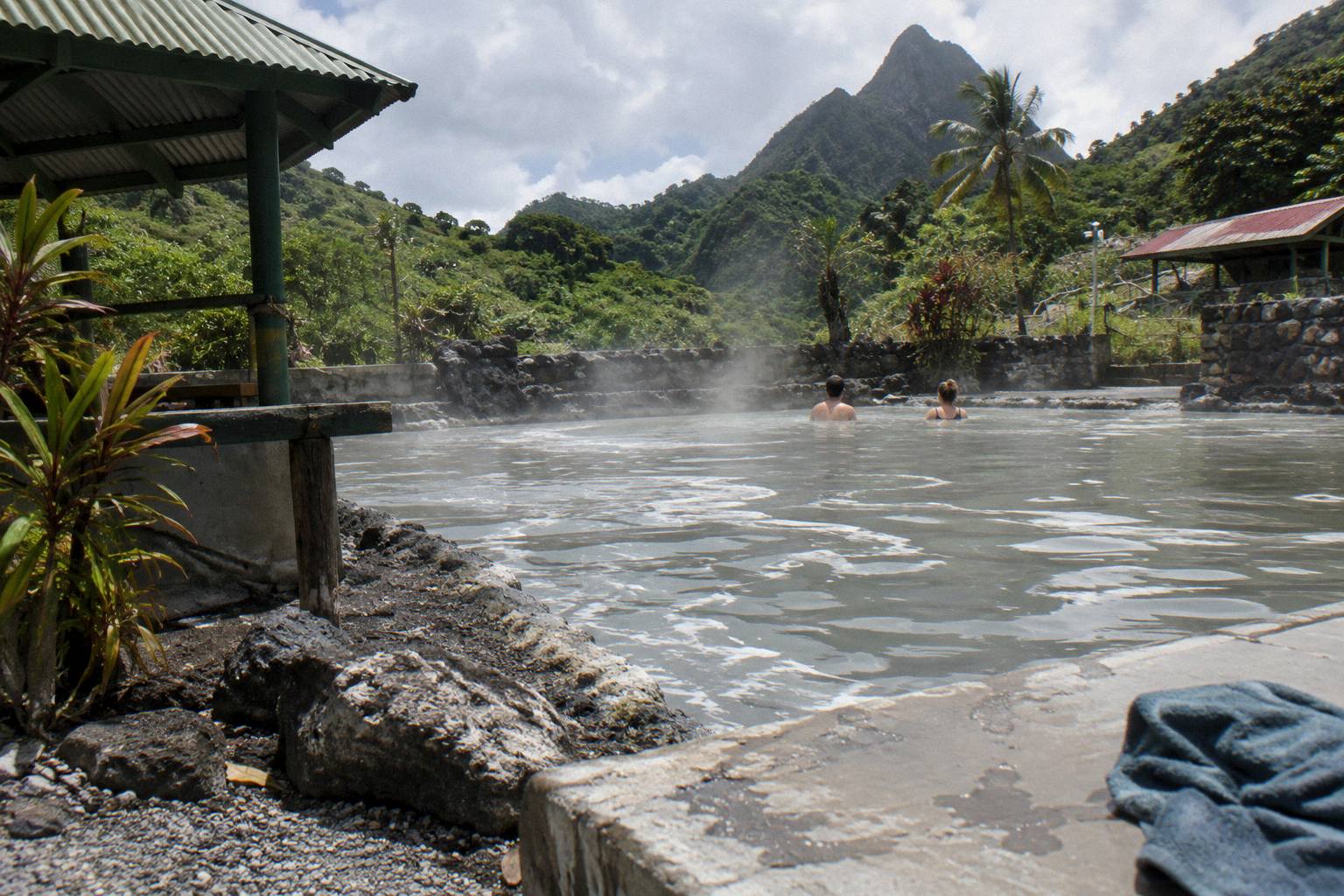
The packing mistake is simply not bringing what the authority recommends: comfortable shoes, swimwear and a towel. There is no verified official guidance on lockers, showers or changing rooms, so plan on the conservative side and keep valuables in the vehicle or with your guide. The fee mistake is subtler: older documents quote bath entry at US$10 to 15, and the current schedule supersedes them. Fees are set by the park and can change, so treat the gate as the final word.
| Mistake | Consequence | Fix |
|---|---|---|
| Buying tour only, expecting the bath | Extra gate payment, possible queue | Buy the combined ticket, US$16 adult |
| Expecting tour length at the springs | Disappointment over pacing | Judge tours by their full-day shape |
| No swimwear or towel | Sitting out the bath | Follow the authority's packing list |
| Trusting old fee figures | Budgeting error | Use the current SRDF schedule |
The last mistake is strategic: skipping the mud bath entirely because the volcano sounded like the headline. The two halves of the park serve different moods, one geological and observational, the other tactile and social, and the reviews suggest the bath is what most people remember. Between the crater and the pools, the pairing, not the choice, is the usual verdict.
For a wider view of how the day can be shaped, the comparison of the best excursion with a mud bath walks through the formats in detail.
Common Questions About The Drive-In Volcano
Is The Drive-In Volcano The Same Place As Sulphur Springs?
Yes. The drive-in volcano is the nickname for the geothermal zone at Sulphur Springs, inside the Qualibou caldera near Soufriere. It is one park, run by the Soufriere Regional Development Foundation, with the volcano tour and the mud bath sold as separate tickets or a combined one.
Is The Sulphur Springs Volcano Active?
The geothermal system is active, with boiling springs at 70 to 90 °C and fumaroles reaching up to 172 °C. The last recorded eruption in St Lucia was a phreatic event in the Sulphur Springs area in 1766. No forecast beyond that record is honest, and none is needed to enjoy the visit.
How Much Does It Cost To Get Into The Drive-In Volcano?
Per the SRDF schedule effective 1 June 2025, the volcano tour costs US$10 per adult and US$5 per child, the bath costs US$12 adult and US$6 child, and the combined ticket is US$16 adult and US$8 child. Fees are set by the park and can change.
Do You Need A Tour To See The Drive-In Volcano?
No. The park sells tickets at the gate and is open 9 am to 5 pm daily. Booked tours add transport, guiding, lunch and combinations with waterfalls or the coast, which suits visitors based in Castries or arriving on a cruise ship, but independent visits are entirely possible.
What Should You Bring To The Drive-In Volcano?
The Saint Lucia Tourism Authority recommends comfortable shoes, plus swimwear and a towel if the mud baths are on the plan, and suggests morning or late afternoon as the comfortable windows. Nothing else is officially specified.
How Long Does The Volcano Part Take Compared With The Mud Bath?
The crater tour is compact, a guided loop of defined stops, while the bath runs on your own pace. Booked tours of four to eight hours wrap both in transport, lunch and extra stops; the whole-tour length is not time at the springs.