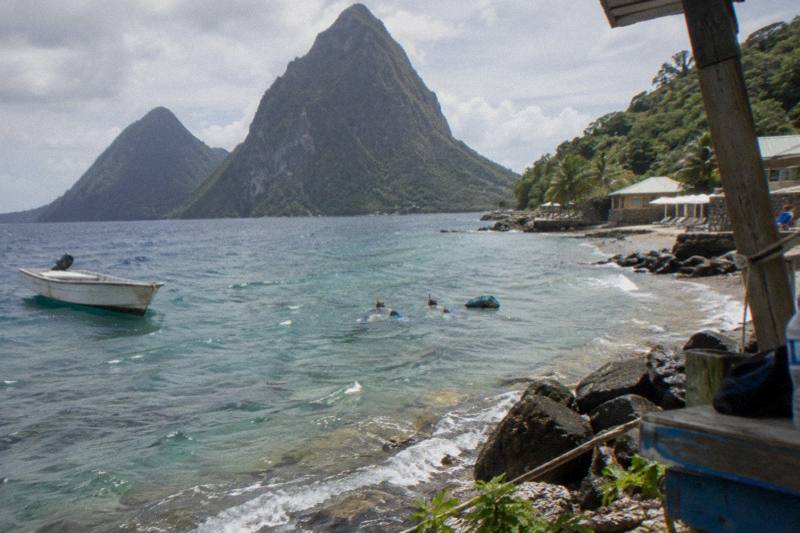
What Are The Benefits Of Visiting The Sulphur Springs In Saint Lucia?
The benefits of a Sulphur Springs visit in St Lucia: the drive in volcano, boiling springs, the mud bath, and the tours that bundle it all with waterfalls and lunch.
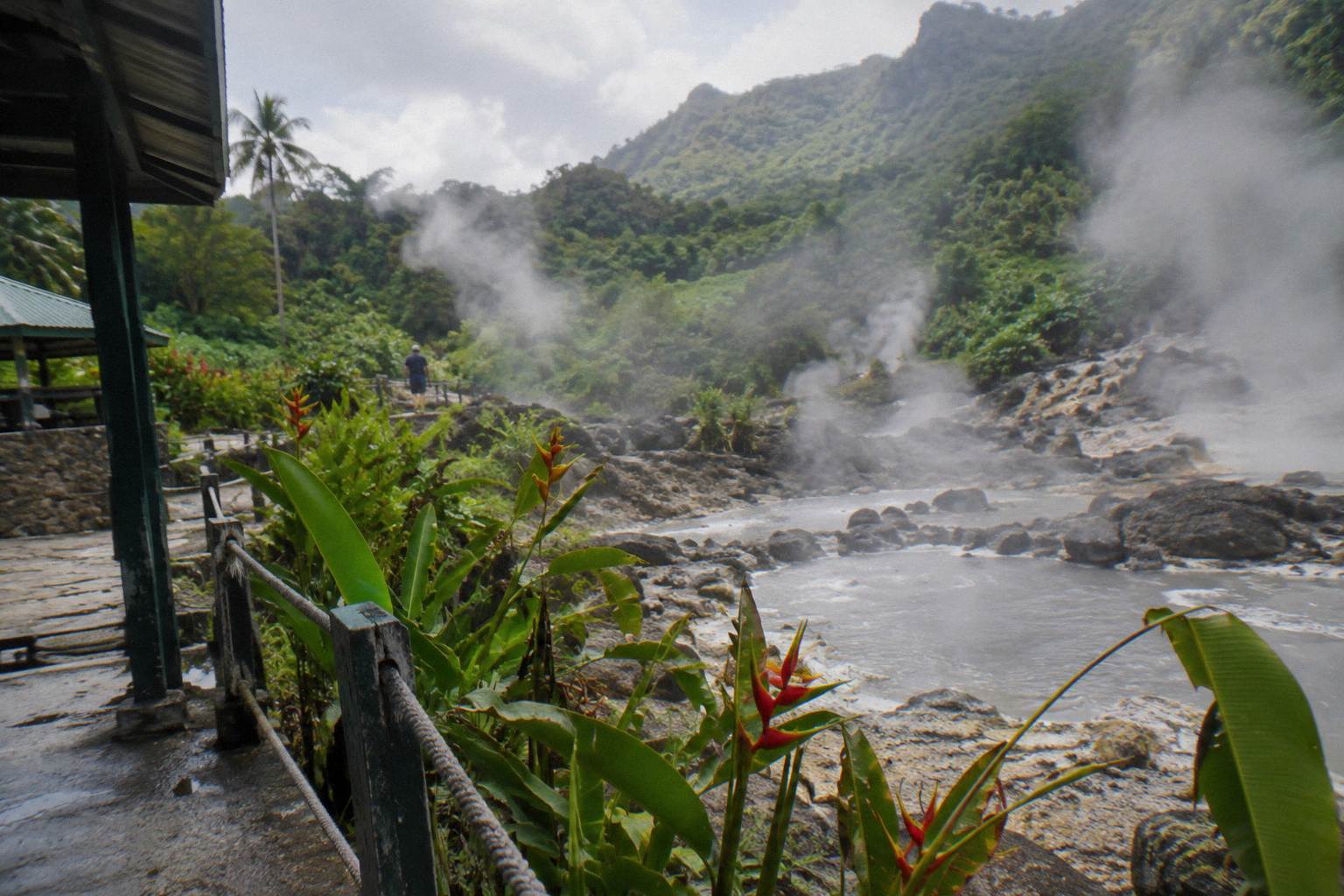
In short: A Sulphur Springs visit bundles four experiences into one stop: a drive into an active geothermal zone, a look at boiling springs and steaming vents, a grey volcanic mud bath finished with a warm spring rinse, and the caldera scenery near the Pitons. The park runs 9:00 am to 5:00 pm daily, and a bath ticket costs US$12 for adults. Most people find the combined ticket at US$16 the better value, because the volcano drive and the bath are genuinely different experiences.
For the wider picture of how the site works, start with St Lucia Mud Bath, which covers fees, timing and tour choices in one place.
The short answer: the benefits are the visit itself. You drive into the Qualibou caldera, past bubbling mud pools and vents hot enough to boil water, then wash in volcanic mud the way locals and visitors have done for decades. Everything else on this page, the fees, the tours, the timing, exists to help you decide whether that bundle is worth a day of your trip.
| Quick fact | Detail |
|---|---|
| Park operator | Soufriere Regional Development Foundation |
| Hours | 9:00 am to 5:00 pm daily, including weekends and holidays |
| Annual closure | First Friday of September |
| Bath only, adult / child | US$12 / US$6 |
| Volcano tour only, adult / child | US$10 / US$5 |
| Combined ticket, adult / child | US$16 / US$8 |
| Geothermal features | Boiling springs 70 to 90 °C, fumaroles up to 172 °C |
| Last recorded eruption in St Lucia | 1766, phreatic, in the Sulphur Springs area |
| Drive from Hewanorra (UVF) | About 45 minutes by car |
| Drive from Castries | About 42 km, roughly 1 hour |
Fees are set by the park and can change, so treat the table as a planning baseline rather than a promise.
The core benefits are fourfold: you see an active geothermal zone from inside it, you bathe in volcanic mineral mud, you get warm spring water to rinse in, and you do it all within striking distance of the Pitons, waterfalls and botanical gardens. No other stop on the island stacks those four into one location. The park's operator, the Soufriere Regional Development Foundation, keeps the site open daily from 9:00 am to 5:00 pm, which means it works for cruise mornings, lazy hotel afternoons and everything between.
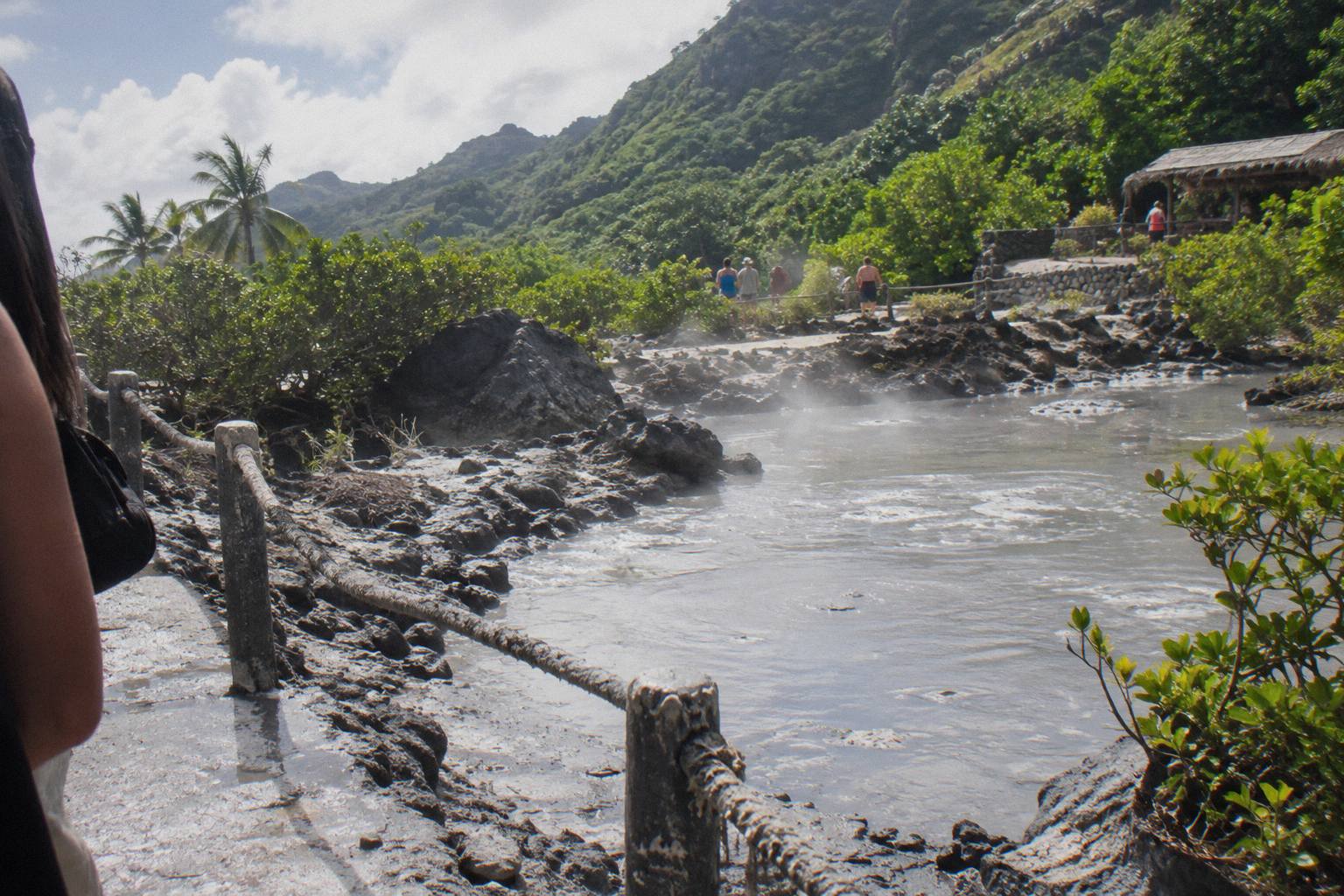
Start with what the place actually is. Sulphur Springs sits inside the Qualibou caldera, a collapsed volcanic crater on St Lucia's south west coast, and the geothermal system under it is live. Boiling springs run 70 to 90 °C. Fumaroles, the steam vents dotting the crater floor, reach up to 172 °C. The last recorded eruption anywhere in St Lucia was in 1766, a phreatic, steam-driven event in this same area, which tells you the system is not a museum piece. The Saint Lucia Tourism Authority describes the experience as driving into the geothermal zone among bubbling mud pools and steaming vents, then applying grey volcanic mud and rinsing in warm spring water.
That is the honest framing of the benefit: it is geological spectacle plus a bathing ritual, not a spa treatment with clinical outcomes. Nobody can promise you a skin result, and this page will not try. What you can count on is the sensory package: the smell of sulphur in the air, the sight of steam columns against green hills, the strange warmth of spring-heated water, and the novelty of standing in a caldera that is still cooking beneath your feet.
The third benefit is convenience. The park sits near Soufriere, about 45 minutes by car from Hewanorra airport and roughly an hour, 42 km, from Castries. From there it is a short hop to Toraille Waterfall, Diamond Falls Botanical Gardens, and the viewpoints facing the Pitons. A single well-planned day can absorb the springs and two or three of those neighbours, which is exactly why so many tour operators build their itineraries around this stop.
If that stack appeals, three road-based tours make a sensible shortlist:
What You Actually Get Inside The Park
A standard visit splits into two halves: the volcano tour, which is guided access to the boiling springs, fumaroles and the drive in volcano, and the bath, which is access to the mineral and mud pools such as the Black Water Pool. The combined ticket covers both at US$16 for adults and US$8 for children, against US$12 for the bath alone and US$10 for the tour alone. Doing only one half is a real option for short visits, but it leaves the park's main contrast, fire above and warm water below, unexplored.
The volcano half is the part people underestimate. You ride or drive into the crater, and the landscape changes to dark, mineral-stained ground pitted with pools that churn grey mud and vents that hiss steam. Guides point out the boiling springs, where water at 70 to 90 °C is visibly working, and the fumaroles pushing temperatures up to 172 °C. Photos struggle with scale here: the vents look modest until steam drifts across the path and you feel the heat. The Soufriere Regional Development Foundation manages both experiences under one roof, which is why the combo ticket exists at all.
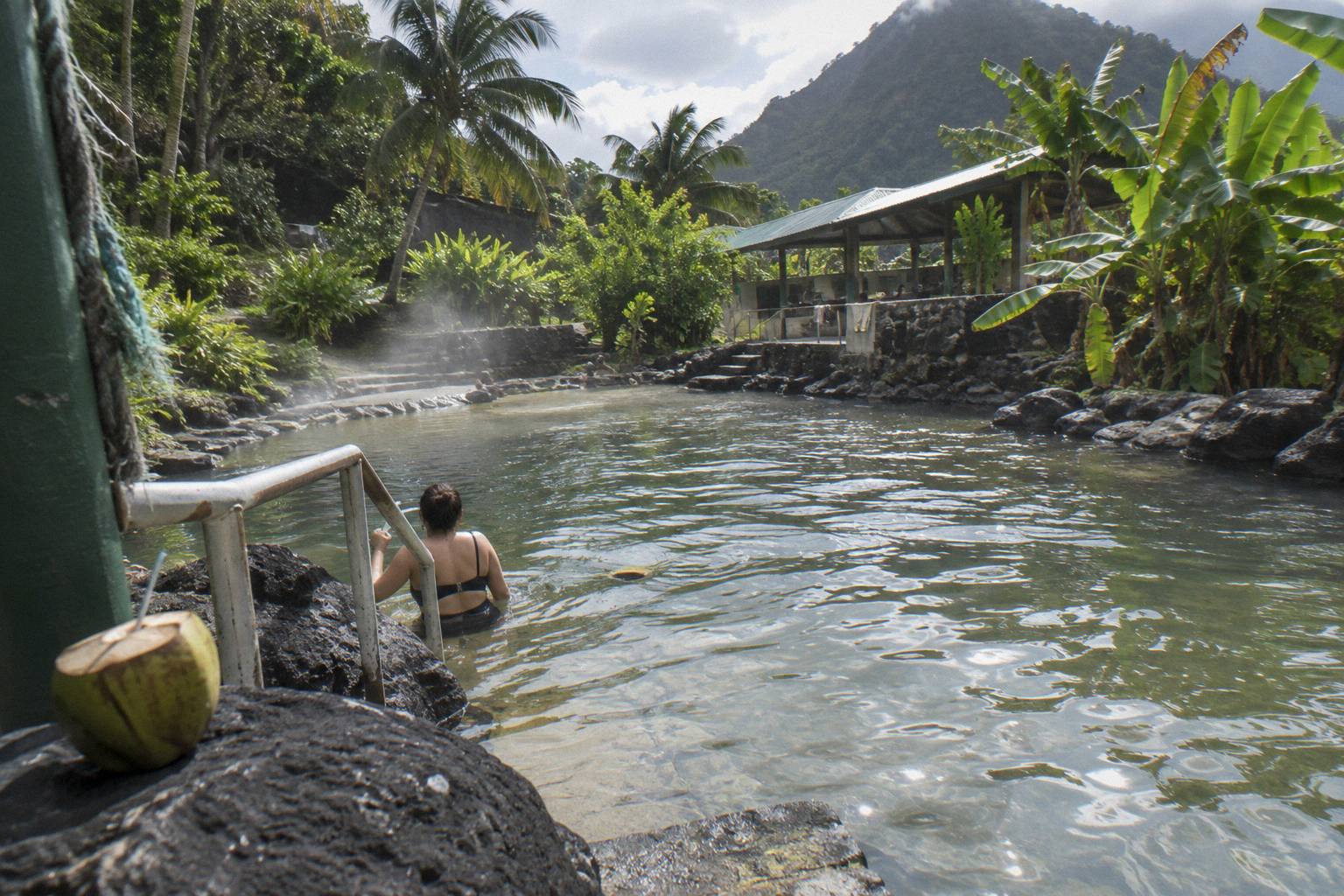
The bath half is slower and more social. The routine the tourism authority describes is simple: apply the grey volcanic mud, let it dry while you sit and talk, then rinse off in the warm spring water. The setting is a set of pools rather than a single tub, so groups spread out and the pace is unhurried. Bring swimwear and a towel, and comfortable shoes for the walk between the parking area, the crater and the pools. Morning or late afternoon visits tend to be the more comfortable slots for the heat.
Planning the practical side is easier with the right background reading. For what the drive in volcano section feels like minute by minute, see what to expect at the drive in volcano, and for the mechanics of the bath itself, the step by step mud bath walkthrough covers the sequence in detail.
| Park option | What it covers | Adult | Child |
|---|---|---|---|
| Bath only | Mineral and mud bath pools, warm spring rinse | US$12 | US$6 |
| Volcano tour only | Guided access to boiling springs, fumaroles, drive in volcano | US$10 | US$5 |
| Combined | Both of the above in one visit | US$16 | US$8 |
Why The Geology Itself Is A Benefit
The geology is a benefit because Sulphur Springs lets visitors stand inside a live caldera: it is the surface expression of the Qualibou caldera's geothermal system, where heat is measurable, steam is visible, and mud is still being cooked underground, turning a scenic stop into direct contact with forces actively at work beneath your feet. Very few Caribbean itineraries include anything comparable. The springs lie within the Pitons Management Area, inscribed on the World Heritage list in 2004.
The numbers make the story concrete. Boiling springs at 70 to 90 °C are hot enough to cook with, and some crater features have been used that way historically. Fumarole steam at up to 172 °C is well above boiling, which is why the vents are viewed from defined paths rather than up close. The 1766 phreatic eruption, a steam explosion rather than a lava flow, is the most recent recorded event in St Lucia, and it came from this area. None of that makes the site dangerous to visit under park rules, and none of it supports words like dormant or extinct either; the honest description is an active geothermal field under managed access.
For visitors, this geology translates into benefits you can feel. The ground under parts of the crater is warm. The air carries sulphur compounds, which the human nose registers instantly, and the mud in the pools is fine, grey and mineral rich because it is being continuously reworked by heat from below. The drive-in format means you experience the crater without a hike, which matters for travellers with limited mobility, families with small children, or anyone saving their legs for the Tet Paul trail or a waterfall later in the day.
The geological backdrop also frames every photograph. Steam columns against green hillsides, mineral-stained rocks in yellows and greys, and, from the right angles, the Pitons on the skyline: the park hands you compositions that the beach stops cannot match. Visitors planning their shots can dig into the best photo angles around the springs before they go.
How The Mud Bath Experience Fits The Day
The mud bath is the park's second act and its most famous one: you coat yourself in grey volcanic mud, let it dry, then rinse in warm spring water, following a routine the tourism authority describes plainly and that takes a relaxed half hour or so of a longer visit. It is a communal, low-tech, sensory experience rather than a clinical spa treatment, and the benefit is enjoyment and novelty, with no promised skin outcome. Anyone telling you otherwise is selling something.
What you need to bring is short: swimwear, a towel and comfortable shoes. The tourism authority's packing list stops there, and it is honest advice. Wear swimwear you do not mind staining, because volcanic mud is dark and fine, and it gets everywhere. Old dark colours beat a new pale swimsuit. For the full clothing discussion, the what to wear guide for the mud bath goes into fabric choices and what survives the mud.
Timing shapes the experience more than most visitors expect. The park opens at 9:00 am and closes at 5:00 pm, every day of the week including holidays, with a single annual closure on the first Friday of September. Morning and late afternoon are the tourism authority's own recommendations for comfort, and they also tend to be the quieter windows. Midday brings the double hit of peak heat and peak arrivals, especially on days when cruise ships are in port. The deeper timing trade-offs, including how rain and season affect the visit, are covered in choosing the best time of day for the mud bath.
One honest limit: not every question about the baths has an official answer. Time limits in the pools, medical cautions, changing rooms and locker policies are not published on the park's own pages, so this page states none of them. Treat the packing list and the hours as your verified anchors, and ask staff on arrival about anything the official sources do not cover.
What A Tour Adds Over Going Alone
A tour converts the park from a self-guided stop into a full day: transport from your hotel or the cruise port, the driving on St Lucia's winding south coast roads, entrance logistics, a guide's commentary, and usually extras such as lunch, drinks and a second stop like a waterfall or garden. The park's own fees are modest, so the case for a tour is rarely about the ticket price; it is about the roads, the schedule and the bundle. The trade-offs are laid out in detail in whether you can do the mud bath on your own.
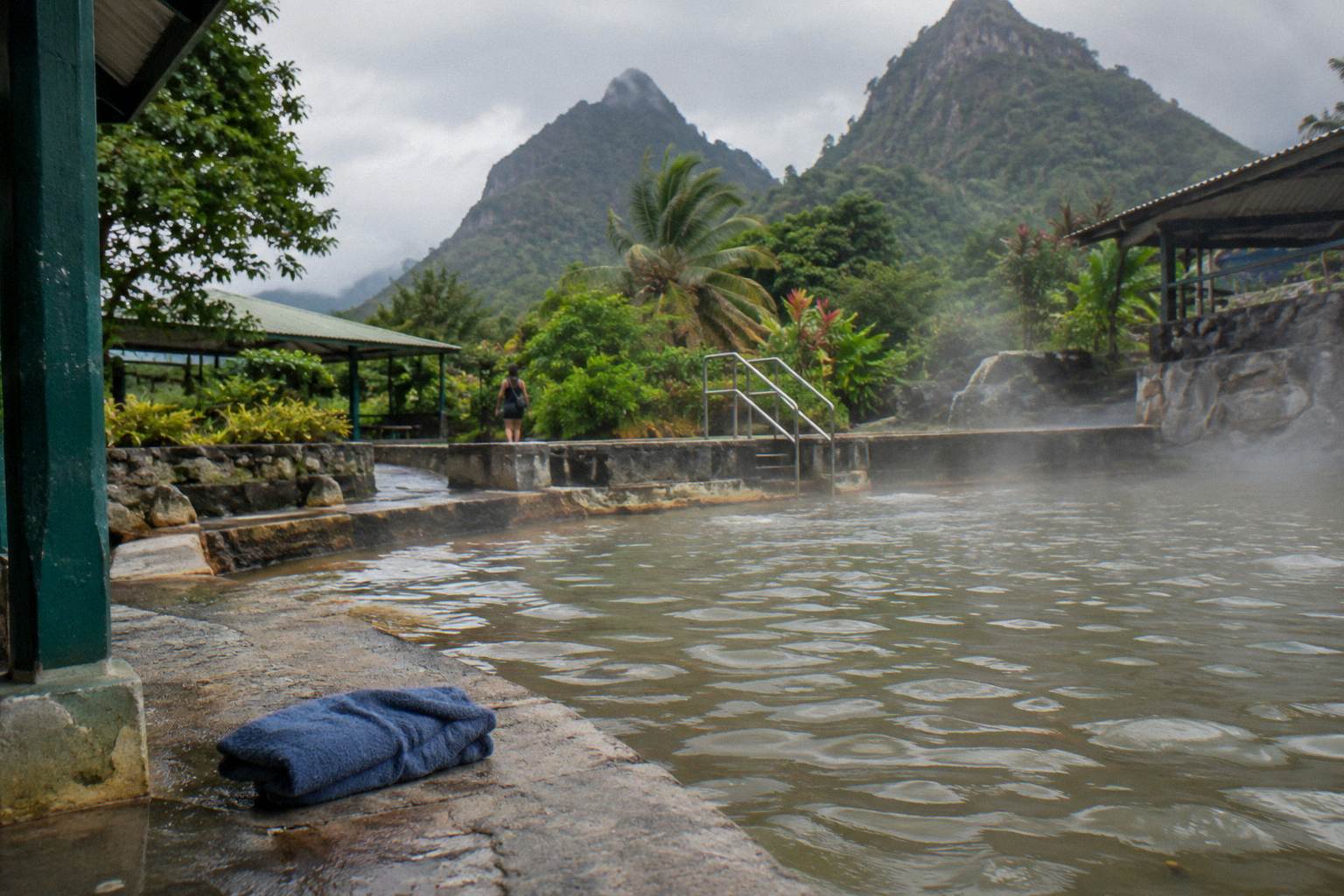
The roster gives a sense of the spread. FRAM Tours & Taxi Services runs the Rejuvenating Mud Bath tour, from US$132 per person, rated 4.8 across 338 reviews, with the mud bath entrance fee at Soufriere included along with drinks, light snacks, a Piton Beer, and hotel or cruise-port pickup, over a booked duration of 4 to 5 hours. Island Adventures St. Lucia offers the Volcano Experience, from US$135 per person, rated 5 across 533 reviews, with buffet lunch, drinks and hotel or cruise-port pickup over 7 to 8 hours. Treasure tours Ltd. St. Lucia runs the Creole Lunch, Toraille Waterfall tour, from US$100 per person, rated 4.6 across 220 reviews, pairing the springs with a Creole lunch and the waterfall over 5 to 6 hours.
Private options narrow the same bundle to your own group. H&A Tours Ltd runs the Private Drive-In Volcano And Mud tour, from US$140 per person, rated 4.9 across 124 reviews, with entrance fees for Sulphur Springs Park and Toraille Waterfall included, hotel and cruise-port pickup, over 5 to 6 hours. Edmund Tours St. Lucia takes the opposite approach with its Land And Sea tour, from US$125 per person and the most reviewed trip of this kind at 4.7 across 2,085 reviews, reaching the springs by boat with lunch, drinks, snorkel gear and a bat cave visit over 6 hours 30 minutes. And on the budget end, Barefoot Holidays offers the Half-Day Island Delight, from US$90 per person, the cheapest priced tour on the site's roster, with hotel pickup and Sulphur Springs entry over 5 hours.
That spread is the real benefit of booking: formats exist for cruise passengers, resort guests, families, couples and private groups, at price points from under a hundred dollars to over five hundred for a premium private boat day. The decision is less whether to visit the springs than which wrapper suits your trip.
The Toraille pairing earns a specific mention, because it is the most common first combination:
Combining The Springs With Waterfalls, Gardens And The Coast
The strongest argument for the springs is positional: within a short drive sit Toraille Waterfall, Diamond Falls Botanical Gardens with their own historic mineral baths, and the Pitons viewpoints, so one base in Soufriere supports a full day of contrasting stops. Each neighbour has its own entry cost, and knowing them in advance helps you judge whether a bundled tour price is fair or whether piecing it together yourself wins.
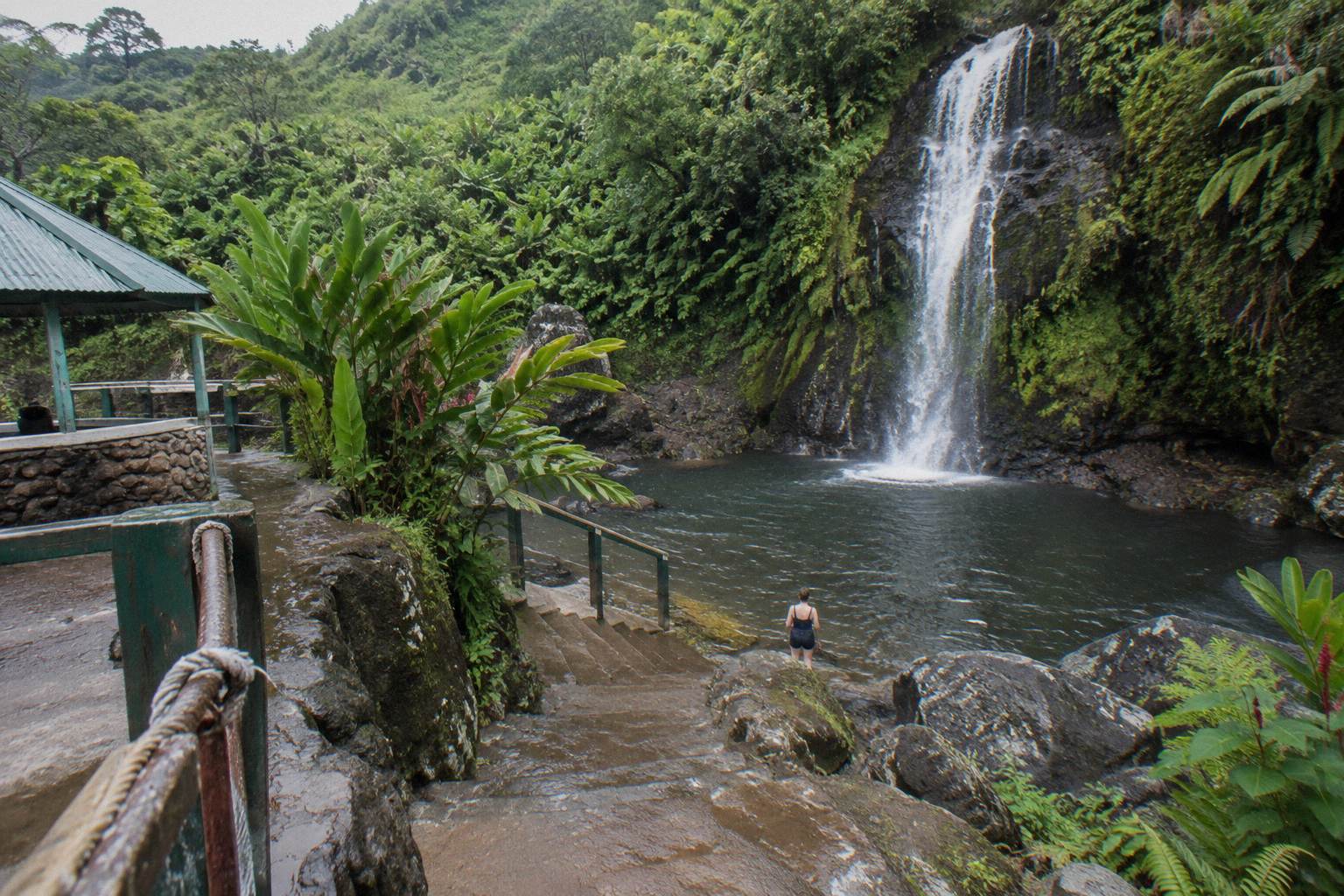
Toraille Waterfall charges about US$3 per person according to operator listing text, with no official hours published; it is a short, dramatic fall with a plunge pool, and it pairs naturally with the springs because several tours bundle the two. Diamond Falls Botanical Gardens, run separately, charges US$7 for adults with children at half price, opens 10 am to 4 pm Monday to Saturday and 10 am to 3 pm on Sundays and public holidays, and is open every day of the year; its official visit page also lists mineral baths at US$7 private and US$6 public, which gives you a second, garden-set bathing option if the volcanic mud is not your thing.
| Stop near the springs | Entry cost | Notes |
|---|---|---|
| Sulphur Springs, combined ticket | US$16 adult / US$8 child | Volcano tour plus mud bath |
| Toraille Waterfall | About US$3 per person | Operator listing figure, no official hours |
| Diamond Falls Botanical Gardens | US$7 adult, children half price | Open daily, shorter Sunday hours |
| Diamond Falls mineral baths | US$7 private / US$6 public | Separate from the volcanic mud bath |
Tour-based combinations make the arithmetic simpler. H&A Tours Ltd also runs the Diamond Baths And Waterfall Combo day, from US$139 per person, rated 5 across 671 reviews, covering 6 to 7 hours with lunch, drinks and a driver-guide, and it stitches the volcanic springs together with the Diamond mineral baths and waterfall side of Soufriere. Wow Tours offers the Island Drive, from US$92 per person, rated 4.9 across 603 reviews, a 5 to 7 hour hotel-pickup tour for visitors who want the road loop without private pricing. St Lucia Taxi Service's Private Toraille Waterfall Excursion, from US$115 per person over 5 hours, bundles entrance fees, lunch and a driver-guide for smaller groups.
Sea-based days add another flavour entirely. Julian Boat Tours runs the All Inclusive Land And Sea excursion, from US$175 per person, rated 4.9 across 498 reviews, over 5 hours with lunch, drinks and snorkel gear, while The Real Deal Boat Tours offers the Snorkel, Mudbath And Lunch Boat trip, from US$537 per person, the most expensive priced tour on the roster, rated 5 across 110 reviews over 5 hours 30 minutes. Whether road or sea suits you better is its own question, argued out in comparing mud bath tours by sea and by road.
Common Mistakes When Planning A Springs Visit
The mistakes that dent a Sulphur Springs day are predictable ones: booking a tour without checking what its price covers, mixing up Sulphur Springs with Diamond Falls, trusting tour listings over the park's own fee schedule, arriving midday in peak season, and assuming the booked tour duration equals mud bath time. Every one of these is avoidable with five minutes of reading, and each is worth a line here.
The first is the fee trap. Tour listings still quote older figures, US$10 to 15 for the bath, while the park's schedule from 1 June 2025 sets the bath at US$12 and the combo at US$16. Where a listing and the park differ, the park wins, and the smart reading of any tour price is what it includes: FRAM's tour covers the mud bath entrance, H&A's private tour covers both Sulphur Springs and Toraille entrances, while others leave fees to you. Never assume inclusion; check the inclusions on the booking page before you pay.
The second is place confusion. Sulphur Springs park, Soufriere town, Diamond Falls and Toraille Waterfall are different places a few minutes apart, with different owners and different tickets. A tour that says mineral baths may mean Diamond's garden baths, not the volcanic mud pool in the caldera. The third mistake is duration arithmetic: a 5 hour booked tour is the whole loop, transfers, stops and lunch included, not five hours of soaking. How the time actually breaks down is covered in how long the mud bath experience takes.
The fourth is timing blindness. The park closes at 5:00 pm sharp and shuts entirely on the first Friday of September; a late-afternoon arrival in the wrong week meets a gate. Cruise passengers face the tightest version of this, since ship time and park hours must line up, a problem explored in cruise ship timing for a mud bath excursion. The fifth mistake is expecting a spa. The baths are rustic, communal and outdoors; visitors who arrive wanting robe service leave disappointed, and visitors who arrive wanting a story leave happy.
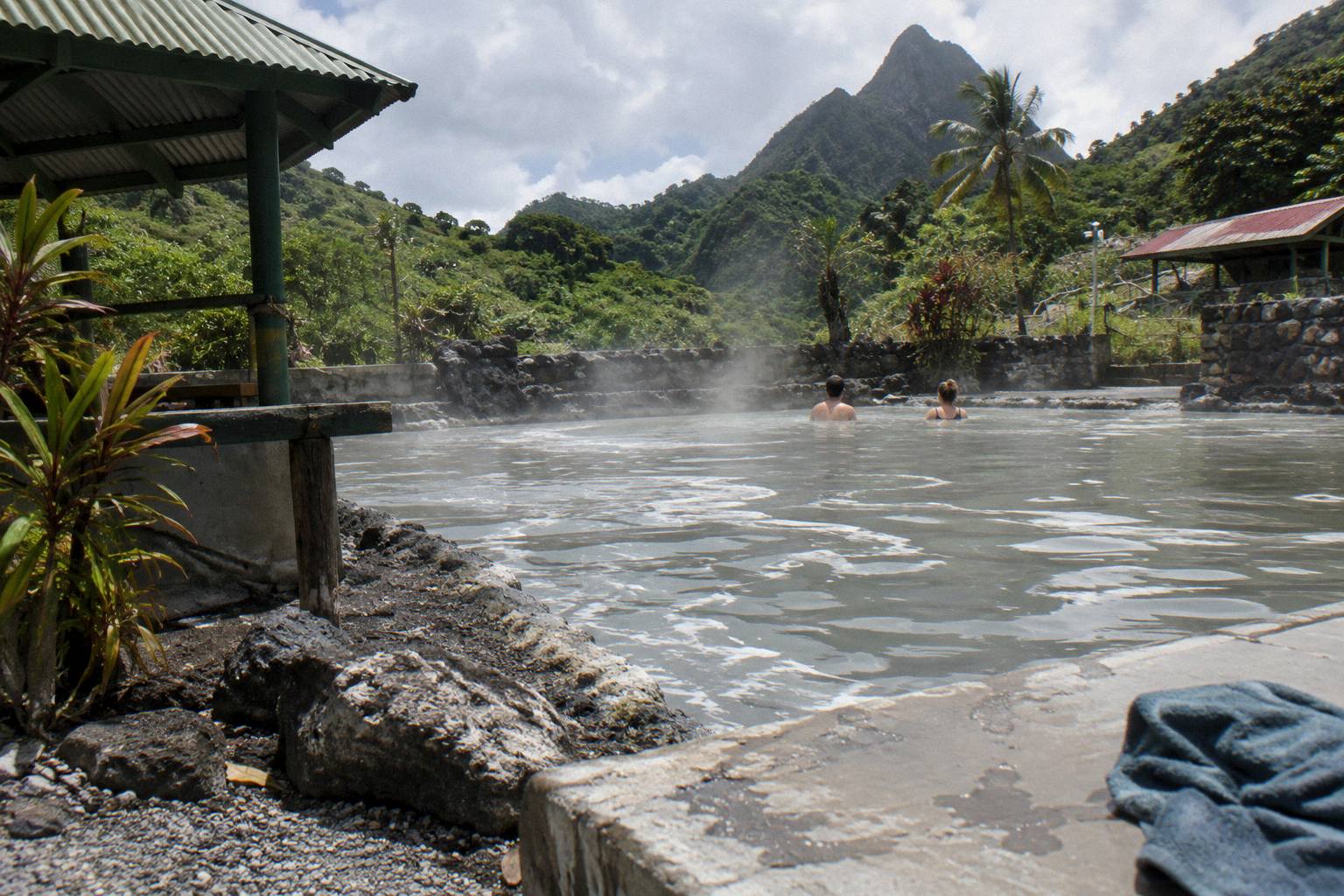
For a longer day built around the south, the Volcano Experience is the most fully packaged road option:
Common Questions About The Sulphur Springs
What Are The Benefits Of Visiting The Sulphur Springs In Saint Lucia?
The benefits are the experience itself: a drive through an active geothermal zone with boiling springs at 70 to 90 °C and fumaroles up to 172 °C, a grey volcanic mud bath finished with a warm spring rinse, and a location near the Pitons, Toraille Waterfall and Diamond Falls that supports a full sightseeing day. The park opens daily from 9:00 am to 5:00 pm, and a combined adult ticket costs US$16.
How Much Does It Cost To Get In?
The park's schedule prices the bath at US$12 for adults and US$6 for children, the volcano tour at US$10 and US$5, and the combined ticket at US$16 and US$8. Fees are set by the park and can change. Tour prices are separate and vary by operator, from US$90 for the cheapest priced road tour to US$537 for the most expensive boat trip.
Is The Mud Bath Good For Your Skin?
No skin or health outcome can be promised, and no official source claims one. The benefit visitors consistently describe is enjoyment: the novelty of bathing in volcanic mud and warm spring water inside a caldera. Treat any stronger claim on a tour page as marketing rather than fact.
Do You Need A Tour Or Can You Go Alone?
You can go alone: the park sells tickets directly and is about 45 minutes by car from Hewanorra airport or roughly an hour from Castries. A tour adds transport, a guide, entrance handling and usually lunch and extra stops such as Toraille Waterfall, which matters most if you are staying far away or arriving on a cruise ship with limited time.
When Is The Park Open?
Every day from 9:00 am to 5:00 pm, including weekends and public holidays, with one annual closure on the first Friday of September. Morning and late afternoon are the recommended visiting windows for comfort.
What Should You Bring?
The tourism authority's list is short: comfortable shoes, swimwear and a towel for the mud baths. Dark swimwear is a practical choice, since the grey volcanic mud is fine and stains. Water and sun protection are sensible additions for the crater walk.
If the benefits stack up for your trip, these three road tours are the natural starting points: