The Drive-In Volcano In St Lucia: What You Drive Past Before The Mud Bath
The drive-in volcano is the part of Sulphur Springs most visitors remember before the mud even appears: a road that runs into the Qualibou caldera past boiling springs and steaming vents. Here is exactly what that drive involves, what the tickets cover, and how the booked tours fold it together with the bath.
Short answer
The drive-in volcano is a vehicle route into the Qualibou caldera at Sulphur Springs, past boiling springs of 70 to 90 °C and fumaroles reaching up to 172 °C. A volcano tour ticket costs US$10 for adults, the bath US$12, or US$16 combined, and the park is open 9:00 am to 5:00 pm daily, closed the first Friday of September.
At Sulphur Springs a road runs directly into the Qualibou caldera, and the park that operates it, the Soufriere Regional Development Foundation, sells that experience as a distinct ticket from the mud bath. Visitors arrive expecting one attraction and find two: a guided drive through a geothermal zone of boiling springs and steaming vents, and a set of mineral pools where grey volcanic mud is applied and rinsed off in warm spring water. This guide walks through the first half, the drive-in volcano, in the order you experience it, then shows how the booked road and boat tours combine both halves into a single day.
| Quick fact | Detail |
|---|---|
| Park operator | Soufriere Regional Development Foundation (SRDF) |
| Opening hours | 9:00 am to 5:00 pm daily, weekends and holidays included |
| Annual closure | First Friday of September |
| Volcano tour ticket | US$10 adult, US$5 child |
| Bath ticket | US$12 adult, US$6 child |
| Combined ticket | US$16 adult, US$8 child |
| Boiling springs | 70 to 90 °C |
| Fumaroles | Up to 172 °C |
| Last recorded eruption | 1766, phreatic, Sulphur Springs area |
| Drive from Hewanorra (UVF) | About 45 minutes by car |
| Drive from Castries | About 42 km, roughly 1 hour |
What Exactly Is The Drive-In Volcano?
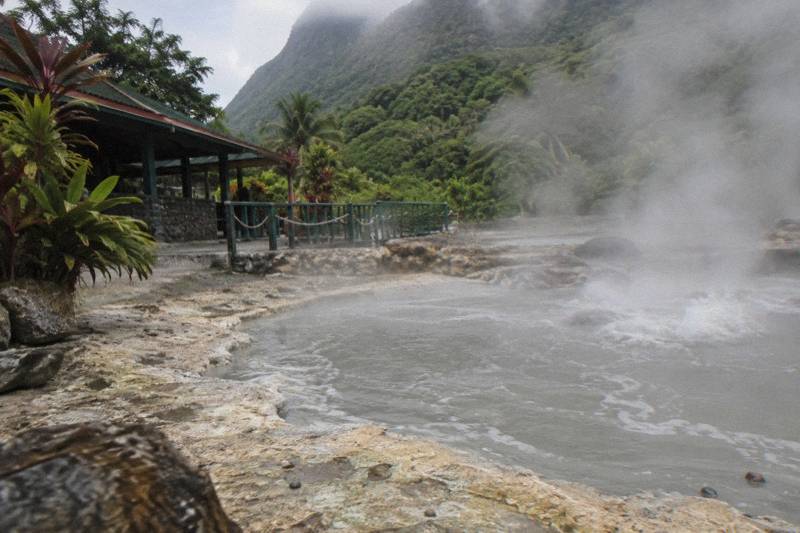
The drive-in volcano is the name given to the vehicle access into the Qualibou caldera at Sulphur Springs, the geothermal field on St Lucia's southwest coast near Soufriere. Rather than hiking in, visitors are driven through the crater zone on a road that passes bubbling mud pools, boiling springs and steaming vents, with a guide explaining the geology at each stop. The volcano tour ticket covers this guided access, and it is sold separately from the mud bath pools.
The caldera itself is the collapsed rim of an ancient volcanic structure, and the geothermal field inside it has been active in recorded memory: the last recorded eruption anywhere in St Lucia was a phreatic event in the Sulphur Springs area in 1766. Nothing on the official park pages supports words like dormant or extinct, and this guide will not use them. What the Saint Lucia Tourism Authority describes is a landscape of bubbling mud pools and steaming vents that you drive into, which is the simplest honest summary of the experience.
One point of precision matters for visitors who care about World Heritage status. The Sulphur Springs geothermal area lies within the Pitons Management Area, inscribed on the UNESCO World Heritage list in 2004. The inscription centres on the Pitons, the twin volcanic spires that dominate the coastline south of Soufriere.
The practical takeaway is that the drive-in volcano and the mud bath are two halves of one park with two ticket lines, and you can buy either or both. Walk-in visitors pay at the park; booked tours almost always bundle both halves with transport, a guide and often lunch, which is why most people experience the caldera as part of a tour rather than solo. The sections below cover the drive itself, the tickets, the temperatures, and the tours that string it all together.
What You Actually Drive Past On The Way In
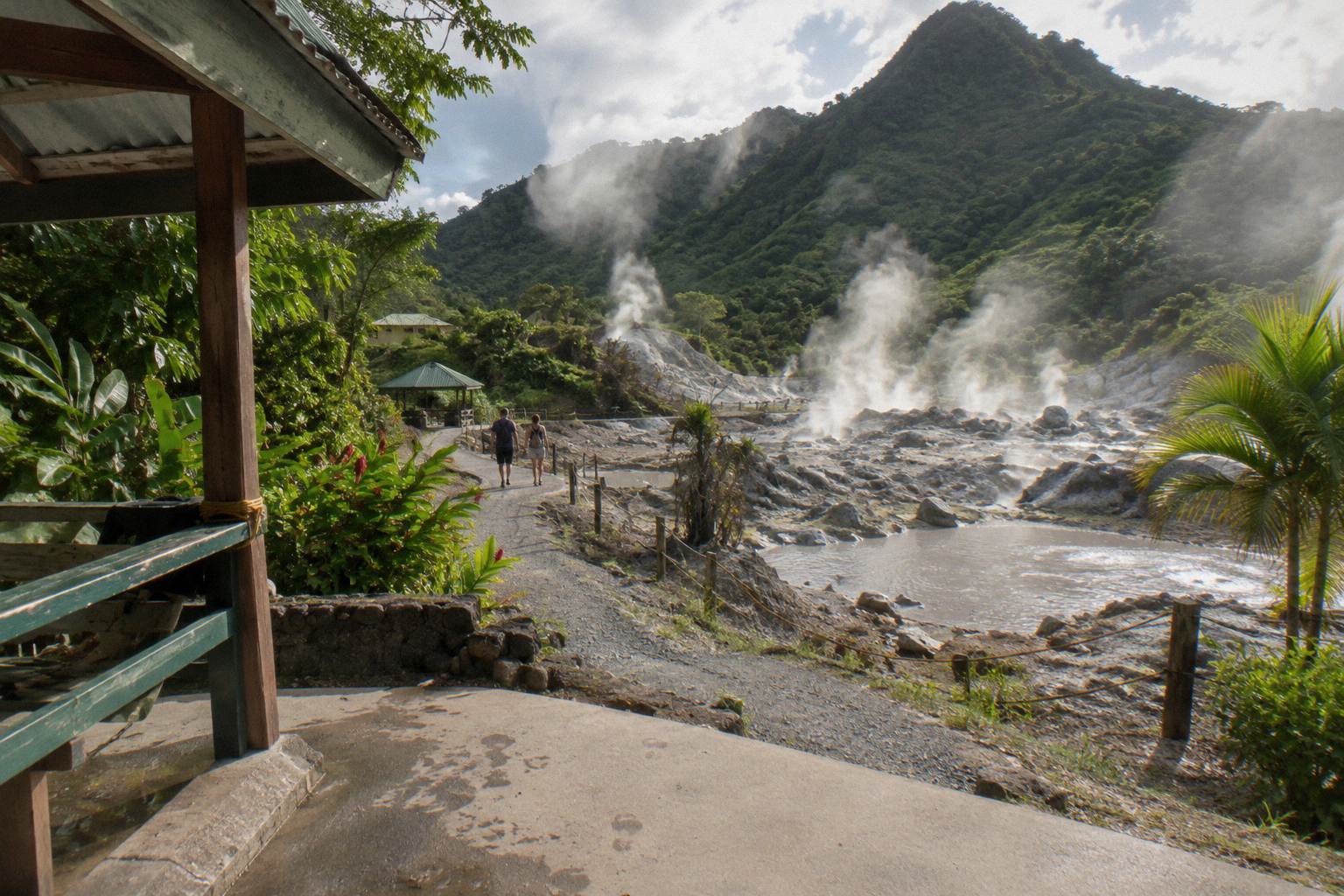
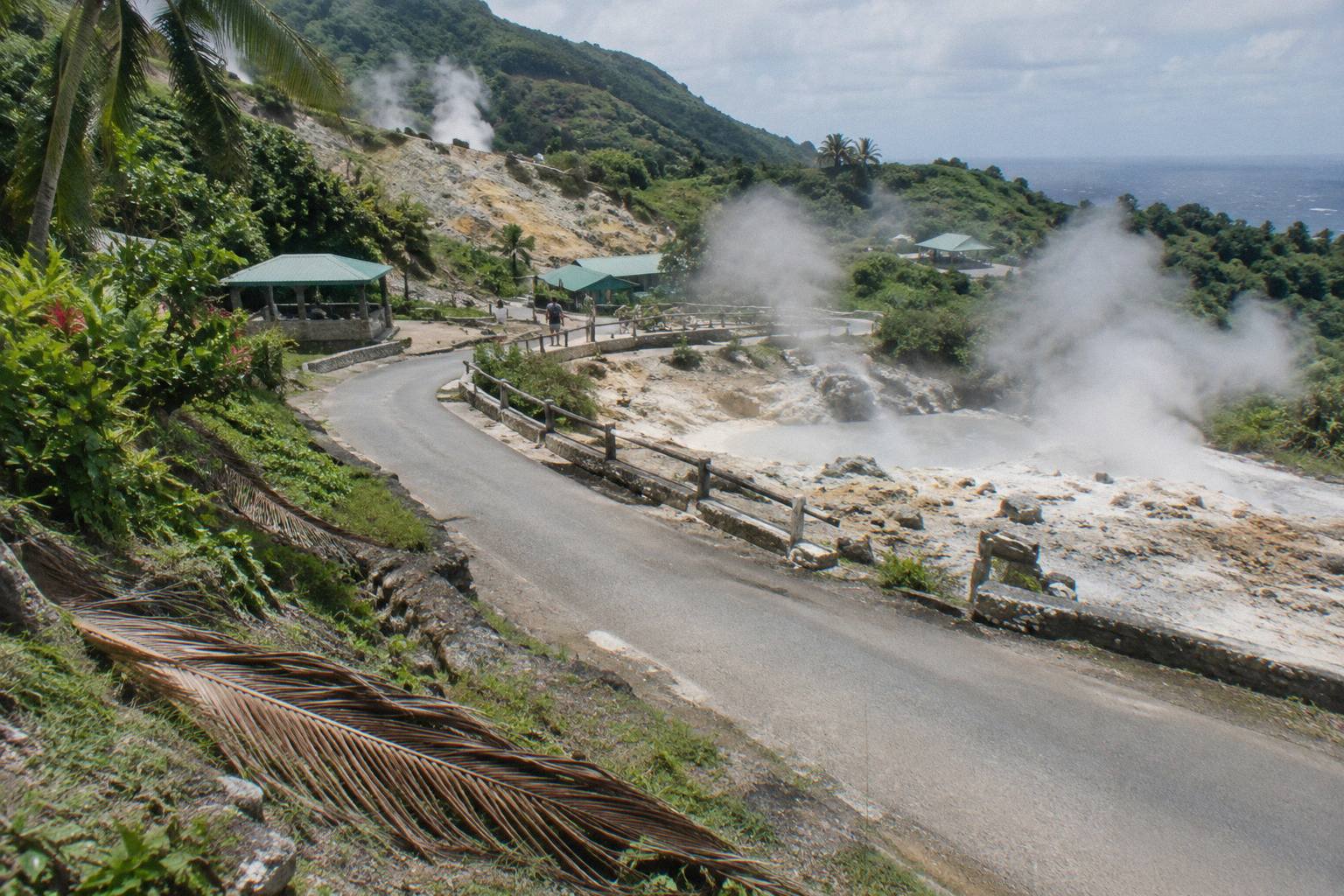
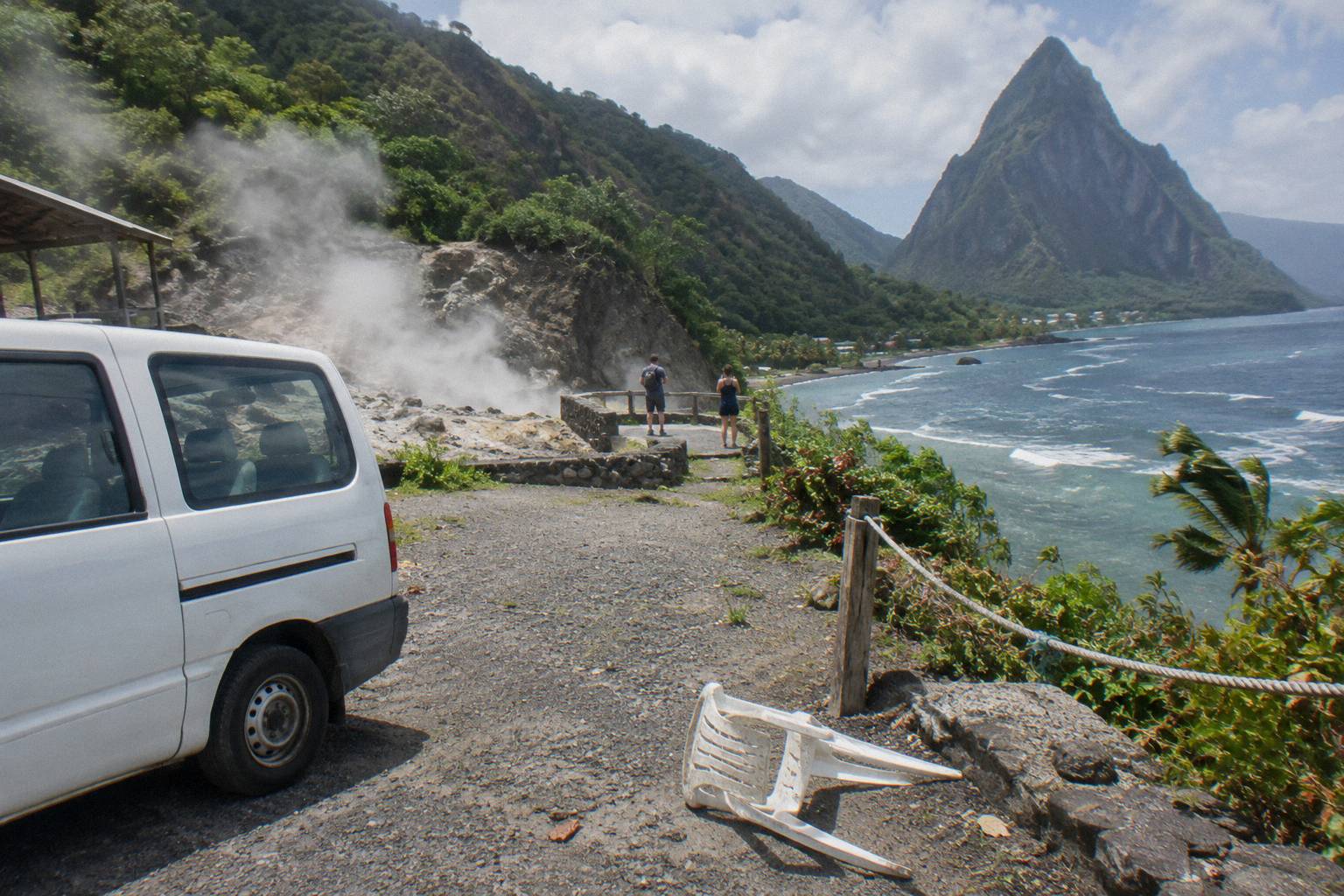
Driving into the caldera, you pass a sequence of geothermal features visible from the road: steaming ground, bubbling grey mud pools, boiling springs and fumaroles venting superheated steam. Guides stop at designated points to explain what each feature is, and the boiling springs run 70 to 90 °C while fumaroles reach up to 172 °C. No official source publishes a walking distance or a boardwalk length for the route.
The drive is short in kilometres but slow by design. Vehicles move at low speed through the geothermal zone because the ground on either side of the road is thermally active, and the stops matter more than the distance. What steams on any given day depends on conditions underground; no guide, operator or article can promise which vents will be active during your visit, and any claim otherwise should be treated as marketing rather than fact.
The visual sequence tends to lodge in memory. First comes the change in ground colour, vegetation thinning as the road drops into the thermally heated zone. Then the steam, sometimes drifting across the road itself. Then the pools: grey, viscous, quietly bubbling, the same mud that visitors later apply by hand at the baths. Guides point out the hottest zones and keep groups to the marked areas, which is the core reason the volcano tour is a guided product rather than a self-drive one.
This is where the booked road tours earn their keep, because they arrive with a driver-guide who already knows the park's rhythm. The Wow Tours Island Drive by Wow Tours, rated 4.9 across 603 reviews and from US$92 per person, runs five to seven hours with hotel pickup and takes in the drive before the bath. The Volcano Experience, 7 To 8 Hours by Island Adventures St. Lucia, rated 5 across 533 reviews and from US$135 per person, covers similar ground on a longer day with buffet lunch and drinks included, with both hotel and cruise-port pickup. And the FRAM Rejuvenating Mud Bath by FRAM Tours & Taxi Services, rated 4.8 across 338 reviews and from US$132, is a shorter four to five hour version whose listed inclusions cover the mud bath entrance fee at Sulphur Springs.
All three of those run as guided group trips rather than private ones, and all three list free cancellation within a 24 hour window, which matters if your cruise schedule or flight times shift. If you are weighing that style of day against a version with a waterfall and a sit-down lunch, the Creole Lunch, Toraille Waterfall tour by Treasure tours Ltd. St. Lucia, rated 4.6 across 220 reviews and from US$100 per person, pairs the road itinerary with a Creole meal, hotel or port pickup, and entrance fees listed among its inclusions. Five to six hours is its booked duration, transfers and lunch included, not time at the bath.
Volcano Tour Or Mud Bath: What Each Ticket Actually Covers
The volcano tour ticket covers guided access to the geothermal features, including the boiling springs, the fumaroles and the drive-in volcano route, while the bath ticket covers the mineral and mud bath pools, including the Black Water Pool. Adults pay US$10 for the tour, US$12 for the bath or US$16 for a combined ticket covering both, with child tickets at US$5, US$6 and US$8, and park-set fees can change.
Those figures come from the SRDF schedule effective 1 June 2025, and the park's own rates page is the authority when a listing disagrees. Older numbers, US$10 to 15 for the bath in some tour copy, predate the schedule and should not be relied on for planning. If you arrive independently and pay at the gate, the current SRDF rate is what you will be charged; if you arrive on a booked tour, the entrance question depends on that tour's listed inclusions, which vary operator by operator.
| Ticket | Adult | Child | What it covers |
|---|---|---|---|
| Volcano tour | US$10 / XCD 25 | US$5 / XCD 12.50 | Guided access to boiling springs, fumaroles and the drive-in route |
| Mud bath | US$12 / XCD 30 | US$6 / XCD 15 | Access to the mineral and mud bath pools |
| Combined | US$16 / XCD 40 | US$8 / XCD 20 | Both the tour and the bath |
The split explains a common point of confusion among visitors who read one review and expected a different experience. Somebody who bought only the volcano tour never touched the mud; somebody who bought only the bath never drove into the geothermal zone. Reviews of the park conflate the two constantly. The St Lucia Mud Bath site exists largely because of that confusion, and the entrance fees, hours and booking questions have their own dedicated guide to Sulphur Springs entrance fees and hours.
Boiling Springs, Fumaroles And The Temperatures You Are Looking At
The verified geothermal temperatures at Sulphur Springs are 70 to 90 °C for the boiling springs and up to 172 °C for the fumaroles, the steam vents that rise from cracks in the caldera floor. These figures belong to the geothermal features, not to the bathing pools, and no official source publishes a temperature for the pools themselves. The vents and springs are viewed from guided positions, never touched.
The gap between those two numbers tells the geological story in miniature. The boiling springs are hot groundwater reaching the surface; the fumaroles are steam-dominated vents where the heat source is far more aggressive, and their plumes can rise well above the boiling point of water because the steam is under pressure before it escapes. Guides use the visible steam columns to explain the caldera's heat engine, and the drive-in route is positioned so that several of the strongest vents are visible from the vehicle.
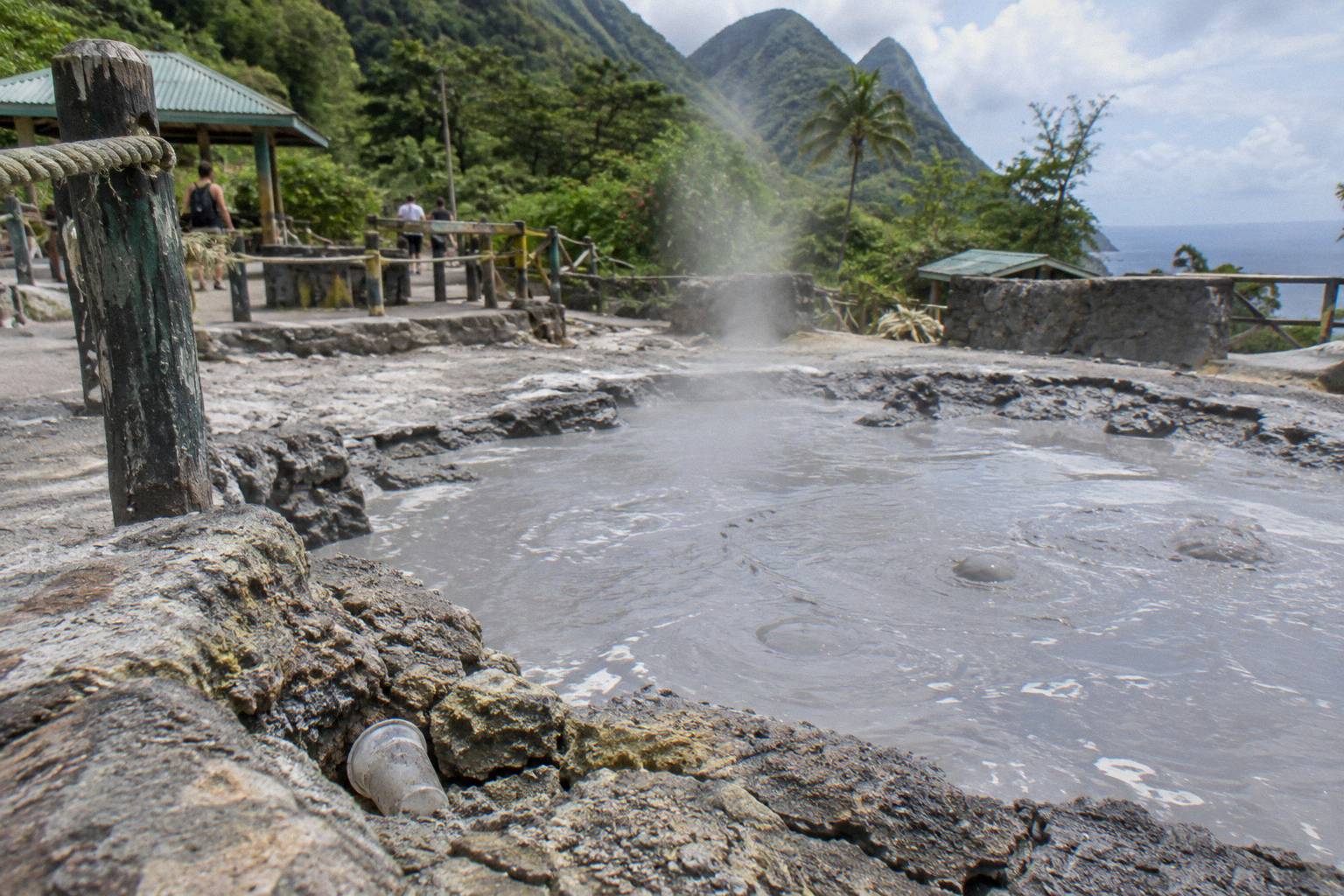
A recurring question is whether the smell of sulphur dominates the experience, and the honest answer is that it varies with the wind and with how active the vents are on the day; no operator or official page promises a smell level, and this guide will not either. What can be said is that the odour is part of the geology rather than a defect, the same hydrogen sulphide signature that gives hot spring areas worldwide their distinctive air. If smell is a deciding factor for you, the planning questions around it are covered in detail elsewhere on this site.
Tours differ in how much time they give the geothermal zone versus the bath, and the open-top option is the one that changes the viewing experience most. The Volcano Jeep Safari by Island Routes, rated 4.7 across 95 reviews and from US$165.85 per person, runs five and a half hours in an open-top jeep down the coast to Soufriere, with a buffet lunch, a stop at Marigot Bay, a waterfall dip and the sulphur springs mineral waters listed among its inclusions. Its cancellation terms are not shown here, so check the booking page for those.
How Long The Visit Takes And How You Get There
The park is about 45 minutes by car from Hewanorra International Airport (UVF) and roughly 1 hour, around 42 km, from Castries. It opens 9:00 am to 5:00 pm daily, including weekends and public holidays, and closes only the first Friday of September each year. Booked tour durations run from about 4 hours to 10 hours for the whole trip, transfers, stops and lunch included, which is not time at the bath itself.
That duration distinction matters more than it sounds. A tour listed at six hours might include ninety minutes of coastal driving each way, a lunch stop, a waterfall and the park, leaving a shorter stretch inside the caldera and at the pools than the number suggests. Reading the booked duration as "time at the mud bath" is the single most common planning error visitors make with these listings, and every duration quoted in this guide is a whole-tour length.
| Tour | Operator | Format | Booked duration | From (per person) |
|---|---|---|---|---|
| Wow Tours Island Drive | Wow Tours | Guided group, by road | 5 to 7 hours | US$92 |
| Volcano Experience, 7 To 8 Hours | Island Adventures St. Lucia | Guided group, by road | 7 to 8 hours | US$135 |
| FRAM Rejuvenating Mud Bath | FRAM Tours & Taxi Services | Guided group, by road | 4 to 5 hours | US$132 |
| Half-Day Island Delight | Barefoot Holidays | Guided group, by road | 5 hours | US$90 |
| Creole Lunch, Toraille Waterfall | Treasure tours Ltd. St. Lucia | Guided group, by road | 5 to 6 hours | US$100 |
| Edmund Tours Land And Sea | Edmund Tours St. Lucia | Guided group, by sea | 6 hours 30 minutes | US$125 |
That table shows the range across road formats, plus the most reviewed trip on this site's roster, Edmund Tours Land And Sea by Edmund Tours St. Lucia, rated 4.7 across 2,085 reviews and from US$125 per person, which reaches the same stretch of coast by boat with lunch, drinks and snorkel gear included. The cheapest priced tour in the roster is the Half-Day Island Delight by Barefoot Holidays at from US$90, and the most expensive is the Snorkel, Mudbath And Lunch Boat by The Real Deal Boat Tours at from US$537, a reminder that the by-sea formats span a very wide price band.
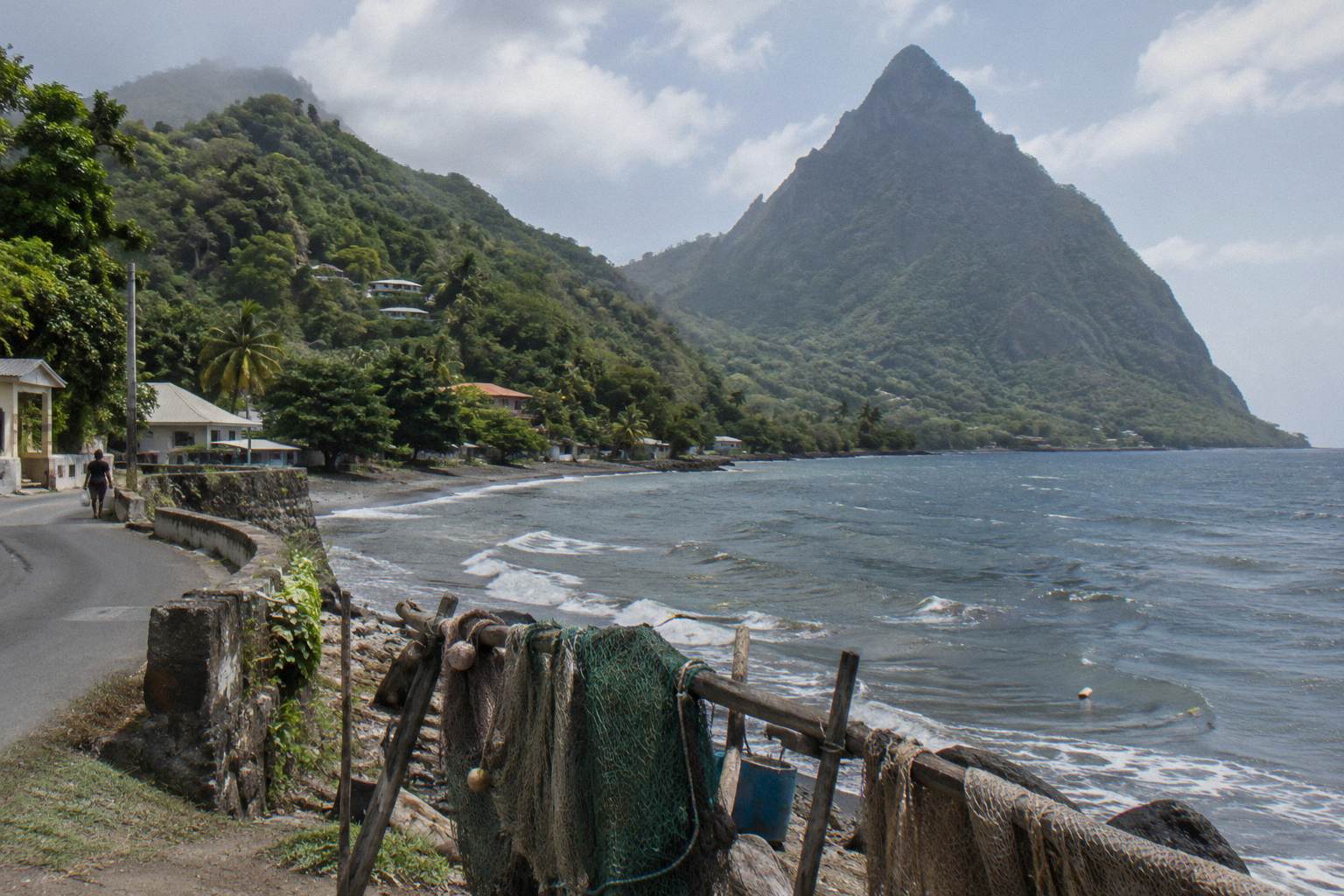
If you are arriving independently rather than on a tour, the drive itself is part of the appeal. The road from Castries drops through the west coast towns and banana valleys before the caldera country begins, and the road from UVF climbs through the southwest fishing villages. Parking, ticketing and the sequence of stops are handled by the park; what a tour adds is the driving, the guide and the rest of the day's itinerary around it.
Tours That Combine The Drive And The Bath
Most booked Sulphur Springs tours include both the caldera drive and the mud bath, usually with a waterfall, lunch and Pitons viewpoints added. Road versions run from US$90 to US$166.67 per person across the guided group options listed here, private versions from US$115 to US$260, and sea versions from US$120 upward. Private means your own vehicle and guide; guided group means shared transport with other travellers.
The private category deserves its own look because the word private appears in tour names where it does not always apply. The Diamond Baths And Waterfall Combo by H&A Tours Ltd, rated 5 across 671 reviews and from US$139 per person, is a guided group trip. Genuinely private options include the Private Drive-In Volcano And Mud, also by H&A Tours Ltd, rated 4.9 across 124 reviews and from US$140 per person, with hotel and cruise-port pickup, Toraille waterfall entry, local beers and the Sulphur Springs park entrance fee listed among its inclusions.
Other private formats fill out the same idea at different price points. The Simple Transfers Private Tour by Simple Transfers, rated 4.9 across 95 reviews and from US$140, is a five to six hour private day with water, beers, soda and an experienced guide. The Rumie Customized Private Tour by Rumie Tours St. Lucia, rated 5 across 28 reviews and from US$120, builds a custom itinerary around the mud bath and transportation. The Private Toraille Waterfall Excursion by St. Lucia Taxi Service, rated 4.8 across 48 reviews and from US$115, is the least expensive of the private set and includes entrance fees, lunch and a driver-guide.
On the guided group side of the ledger, the Mud Baths And Waterfall By Road trip by Cool Vibes Taxi and Tours, rated 4.3 across 96 reviews and from US$160 per person, adds a hike on the scenic Tet Paul Nature Trail to the standard road formula, with lunch, Piton beer and an air-conditioned vehicle listed. Its booked duration is not shown here, so read the booking page for timing. The lesson across all of these is that the caldera drive is the constant; the variables are the vehicle, the extras and whether the day is yours alone or shared.
Mistakes That Trip Visitors Up
The recurring errors are treating the booked duration as time at the bath, assuming one ticket covers both halves of the park, budgeting with outdated fee figures, and expecting a specific vent or view to be steaming on arrival. Others include reading the word private into a tour name that is not private, and planning a tight cruise turnaround without checking pickup eligibility. Each mistake is avoidable with one piece of planning.
The first is the duration trap, covered above but worth restating as a checklist item: every hour figure on a booking page is the whole trip. The second is the ticket trap. If you go independently, decide in advance whether you want the volcano tour, the bath or the combined ticket, because buying them separately costs more than the US$16 combined rate, and the two halves are genuinely different experiences that some visitors only want one of. The walk through the crater page covers what the geothermal side involves in more depth.
The third is the fee trap. The SRDF schedule effective 1 June 2025 reset the rates, and plenty of tour copy still quotes the older figures. Budget from the current schedule and treat anything lower as outdated. The fourth is the expectation trap: no source can promise which vents steam on a given morning, what the weather will do, or how crowded the pools will be, and any tour text implying otherwise is overselling. Conditions allowing, the drive delivers; promising it would be dishonest.
The fifth is the cruise trap: not every road tour offers cruise-port pickup, and for those that do, the booked duration has to fit your ship's hours in port with margin to spare. Where a tour's roster entry shows hotel pickup only, a cruise passenger booking it is planning on sand.
| Mistake | What goes wrong | The fix |
|---|---|---|
| Reading duration as bath time | Expecting hours in the pools, getting a full-day itinerary | Treat every listed duration as whole-trip length |
| Buying tickets separately | Paying more than the US$16 combined rate | Buy the combined ticket if you want both halves |
| Budgeting old fees | Under-planning by a few dollars per person | Use the current SRDF schedule; fees can change |
| Trusting a tour name | Booking "private" trips that are group tours | Check the format flags on the booking page |
| Assuming pickup anywhere | Cruise guests booked onto hotel-pickup tours | Confirm pickup eligibility before booking |
| Expecting a promised view | Disappointment when vents vary day to day | Plan for the geology, not a marketing image |
Best Time Of Day And What To Bring
The Saint Lucia Tourism Authority recommends comfortable shoes, swimwear and a towel for the mud baths, and suggests the morning or late afternoon as the best times to visit. The park's hours, 9:00 am to 5:00 pm daily with the first Friday of September closed, define the outer limits of any visit. Booked tours set their own departure times, which usually place the springs stop in the late morning or early afternoon.
The morning-or-late-afternoon guidance is about heat and light rather than steam: midday in the caldera country is hot, and the drive-in portion involves time near warm ground in a vehicle. Tours departing from Castries or the north typically reach Soufriere around late morning after the coastal drive, which lands the springs stop close to the middle of the day anyway; that is normal and manageable with water and sensible clothing. What to wear is its own topic, and the what to wear to the mud bath guide handles it in detail.
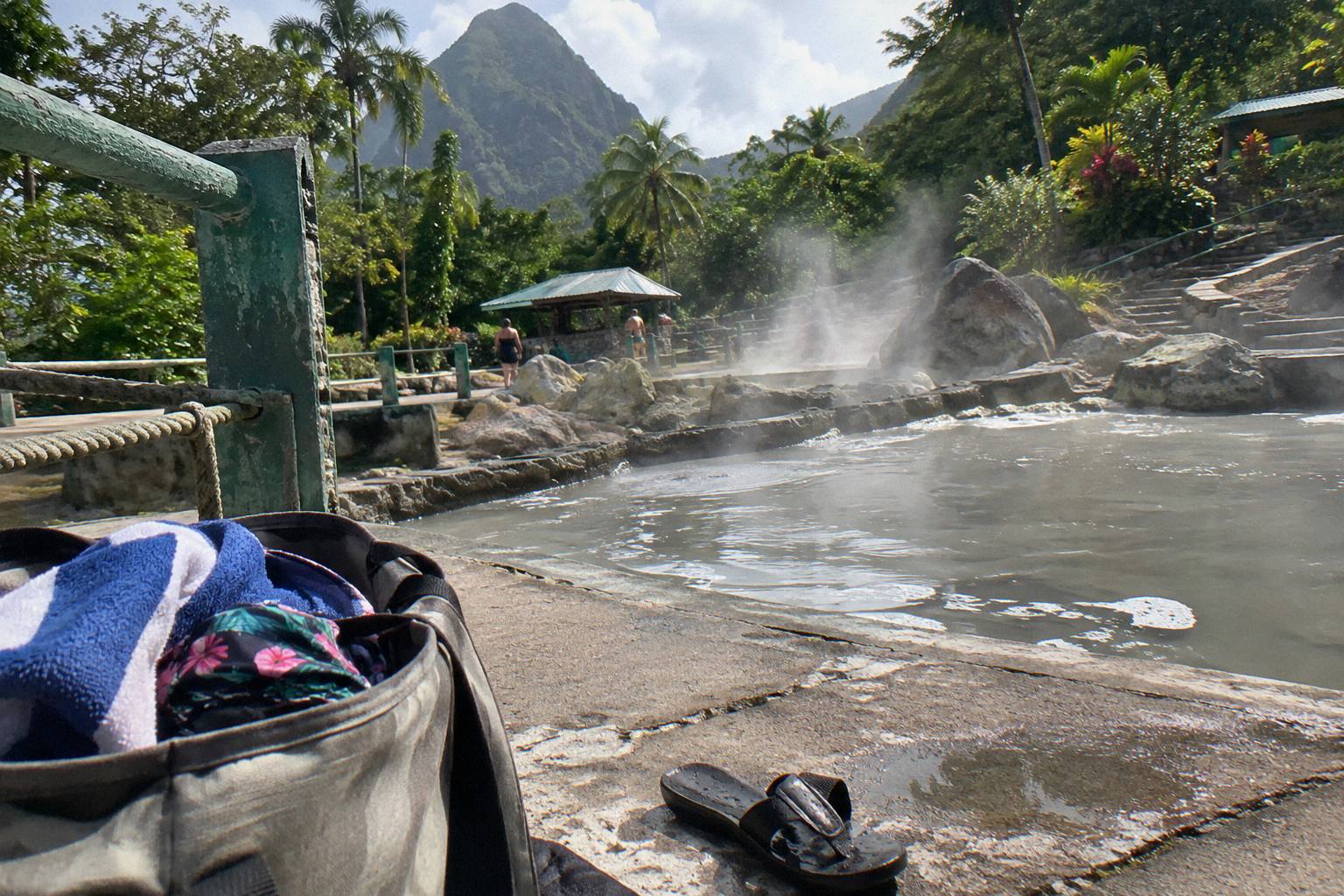
For the drive-in half specifically, shoes matter more than swimwear, since the stops involve standing on warm ground and uneven volcanic surfaces. For the bath half, the towel and swimwear from the authority's packing list are the essentials, plus whatever your tour lists among its inclusions: several road tours include drinks, some include lunch, and the private formats often include entrance fees, which changes what you carry and what you budget at the gate. Read the inclusions line on the booking page rather than assuming.
One last planning note on timing. The single annual closure, the first Friday of September, is easy to miss if you are visiting in that month, and tour operators work around it by shifting itineraries. If your dates are flexible and you want the caldera at its quietest, the shoulder periods either side of the peak winter season are the traditional play, though no official source publishes crowd data, so treat that as general Caribbean rhythm rather than a promise about any specific week.
For comparing the full set of options side by side, the question of a mud bath tour by sea or by road is the natural next read, and the trio below is the same shortlist this guide has referenced throughout: the value road day, the long full-day experience and the shorter mud-focused trip.
Common Questions About The Drive-In Volcano
Is The Drive-In Volcano In St Lucia Actually A Volcano You Drive Into?
Yes, in the sense that a road runs into the Qualibou caldera, an active geothermal field with boiling springs of 70 to 90 °C and fumaroles reaching up to 172 °C. It is not a drive into a crater lake or lava field; the experience is a slow guided route past steaming vents and bubbling mud pools, sold as the volcano tour ticket.
Is St Lucia's Drive-In Volcano Active?
The geothermal field is active, with boiling springs and fumaroles documented by the park operator. The last recorded eruption in St Lucia was a phreatic event in the Sulphur Springs area in 1766. No official source describes the system as dormant, extinct or safe in any forward-looking sense, and no eruption forecast exists.
How Much Does It Cost To See The Drive-In Volcano?
The volcano tour ticket is US$10 per adult and US$5 per child under the SRDF schedule effective 1 June 2025. The mud bath is US$12 per adult, and a combined ticket covering both the tour and the bath is US$16 per adult and US$8 per child. Fees are set by the park and can change.
Can You Do The Drive-In Volcano Without The Mud Bath?
Yes. The volcano tour and the bath are separate tickets, and a combined ticket only makes sense if you want both. Some visitors prefer the geology half and skip the pools entirely; several road tours weight the day toward the drive, the viewpoints and the waterfalls.
How Long Does The Drive-In Volcano Take?
No official source publishes a duration for the caldera drive itself. Booked tour durations, which cover the entire trip including transfers, stops and lunch, range from about 4 hours to 10 hours across the tours on this site's roster. Treat every listed duration as whole-tour length.
Do Tours Include The Drive-In Volcano And The Mud Bath Together?
Most Sulphur Springs tours do combine both, usually with a waterfall, lunch and Pitons viewpoints. Road versions listed here run from US$90 per person upward, private versions from US$115, and sea versions from US$120. Check each tour's inclusions line, because entrance fees are included on some and paid separately on others.