Is The Drive-In Volcano In St Lucia Active?
The volcano at Sulphur Springs in St Lucia is geothermally active but has not erupted since 1766. Here is what that means for your mud bath visit, with fees, hours and tour options.
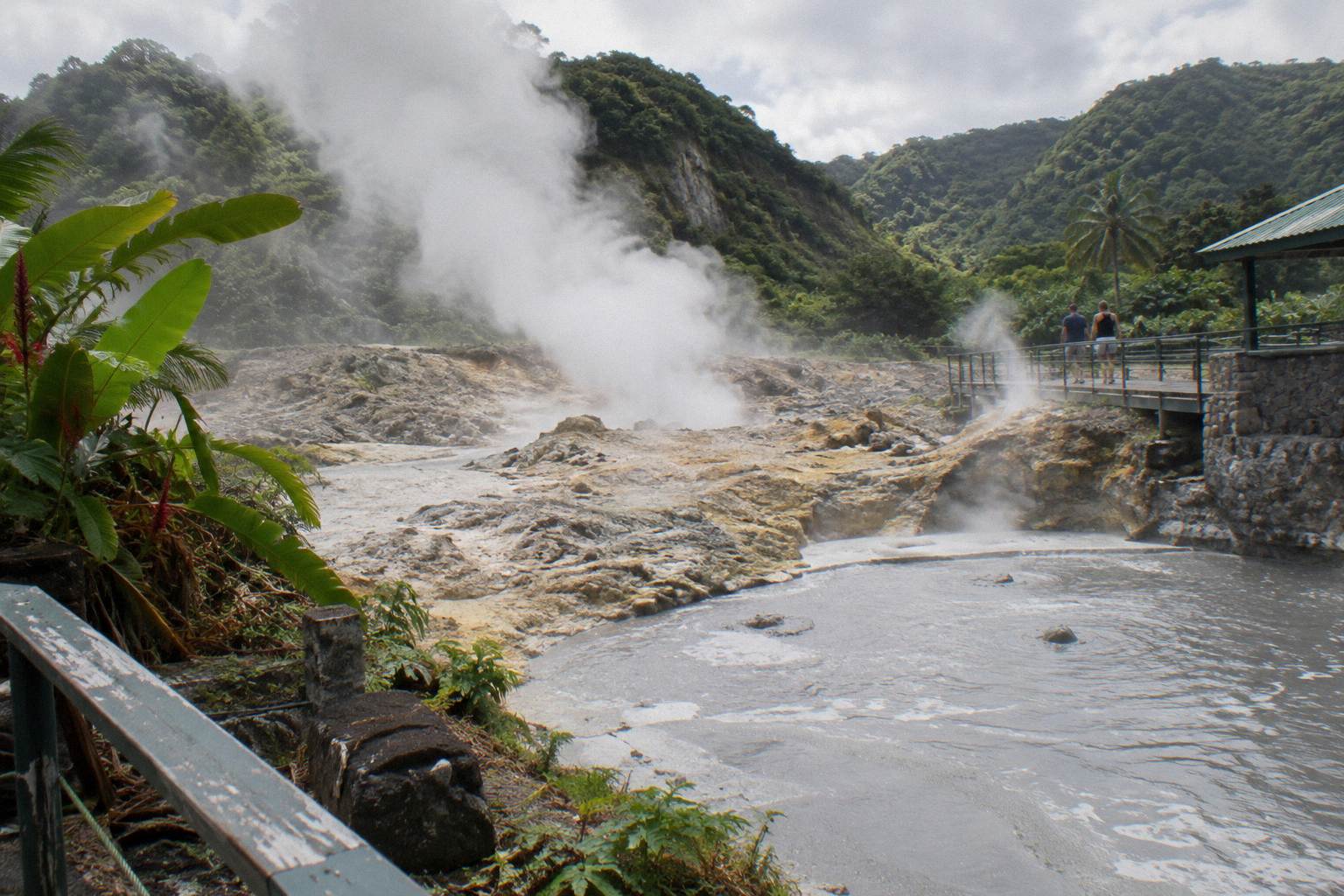
In short: The drive-in volcano at Sulphur Springs is geothermally active, not erupting. Boiling springs sit at 70 to 90 °C, fumaroles vent steam at up to 172 °C, and grey mud still bubbles in the pools you drive past. The last recorded eruption anywhere in Saint Lucia was in 1766, a phreatic event in this same area. The park opens 9:00 am to 5:00 pm daily.
This question matters because the answer decides whether you book. A worried reader does not want a geology lecture, they want to know whether the steaming crater they are about to drive into is about to do something. The short version: the volcano itself and how it behaves is the reason the mud bath exists at all, and the two experiences are sold together on almost every tour on the island, including the Wow Tours Island Drive by Wow Tours, rated 4.9 across 603 reviews, and the Volcano Experience, 7 To 8 Hours by Island Adventures St. Lucia, rated 5 across 533 reviews.
Yes, it is active in the geothermal sense, and no, it is not erupting. Sulphur Springs sits inside the Qualibou caldera and its boiling springs run 70 to 90 °C, with fumaroles reaching up to 172 °C. The last recorded eruption in Saint Lucia was in 1766, a phreatic event in the Sulphur Springs area. No verified alert level, monitoring statement or eruption forecast exists for this page to report.
That is the honest, complete answer, and it is worth unpacking each half because "active" is a word that does a lot of sloppy work in travel writing. Volcanologists use it to describe any volcano with ongoing geothermal activity: heat, gas, steam, hot springs, bubbling mud. By that definition Sulphur Springs qualifies clearly and visibly. You do not need instruments to see it. The plumes rise off the vents as your vehicle rolls through the crater on the road that gives the drive-in volcano its name, and the step-by-step mud bath experience that follows uses the same geothermal system, in gentler form, as the pools you soak in.
What "active" does not mean here is imminent eruption. The Saint Lucia Tourism Authority describes the site plainly as a place where you drive into the geothermal zone among bubbling mud pools and steaming vents, apply grey volcanic mud, and rinse in warm spring water: the authority's Sulphur Springs page frames it as a visitor attraction, not a hazard zone. The park is run by the Soufriere Regional Development Foundation, opens 9:00 am to 5:00 pm every day including weekends and holidays, and closes only one day a year, the first Friday of September, for maintenance. That is the operational profile of a managed attraction sitting on top of a stable, quietly steaming geothermal field.
| Quick fact | Value |
|---|---|
| Geothermal status | Active: boiling springs 70 to 90 °C, fumaroles up to 172 °C |
| Last recorded eruption in Saint Lucia | 1766, phreatic, Sulphur Springs area |
| Location | Inside the Qualibou caldera, near Soufriere |
| Park operator | Soufriere Regional Development Foundation |
| Opening hours | 9:00 am to 5:00 pm daily, including weekends and holidays |
| Annual closure | First Friday of September |
| Bath entry, adult | US$12 (XCD 30) |
| Volcano tour entry, adult | US$10 (XCD 25) |
| Combined ticket, adult | US$16 (XCD 40) |
If the geothermal side is what draws you, the tours below all include the volcano zone and the mud baths in one booked day. They differ in format and price, from road-based small groups to full-day combinations, and all three can be cancelled free up to 24 hours before.
What Active Actually Means At Sulphur Springs
Active, in the geological sense used here, means the ground still produces heat, steam and hot water. It does not mean an eruption is due, expected or forecast. Sulphur Springs shows its activity through boiling springs at 70 to 90 °C and fumaroles venting steam at up to 172 °C, features the park has built its walkways and drive-in road around. No source this site relies on states any alert level for the volcano.
The distinction matters because casual travel copy often flattens it. You will read that the volcano is "dormant", "extinct" or "perfectly safe", and all three of those words are claims this page will not make. Dormant and extinct are eruption-forecast words, and no verified monitoring statement supports them. Safe is a promise about your day, and conditions on any given afternoon are the operator's and the park's to manage, not a writer's. What can be said, from the park operator's own geology material, is concrete: the boiling springs hold at 70 to 90 °C, and the fumaroles, the gas and steam vents, reach up to 172 °C. Those temperatures belong to the geothermal features you view from the walkways and the vehicle, never to the bathing pools, whose temperature no official page states.
Think of the caldera as a slow, reliable machine. Rainwater percolates down through fractured rock, meets the hot zone, and comes back up as steam, gas and mineral-laden water. That cycle has been running long enough to build the grey mud deposits visitors smooth onto their skin, and it is steady enough that the Soufriere Regional Development Foundation, the body that runs the park, sells the same tickets to the same features year after year. Activity here is not an event. It is the baseline condition, and it is the entire reason there is something to see.
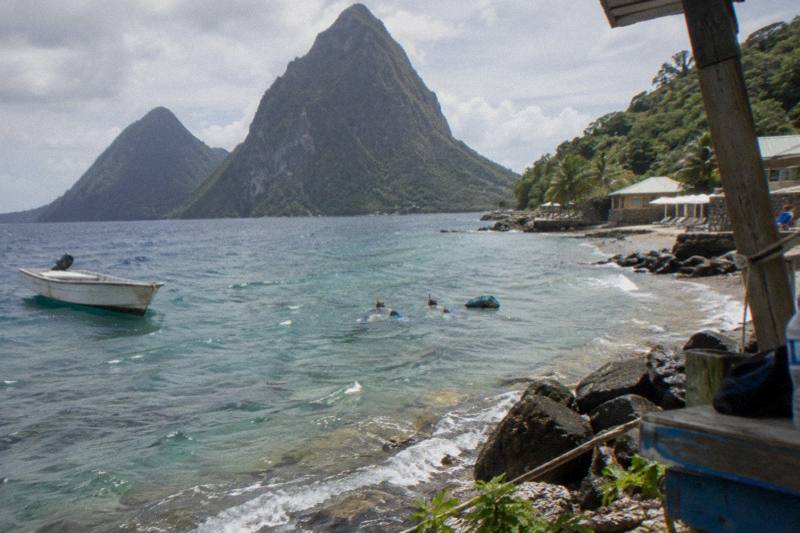
One more framing point. The Sulphur Springs geothermal area lies within the Pitons Management Area, which was inscribed by UNESCO as a World Heritage site in 2004, as the UNESCO listing record shows. The protected landscape and the living geology overlap, which is part of why the site is managed rather than merely visited.
How Hot Is The Volcano Right Now
The measured geothermal features at Sulphur Springs run hot and stay hot. Boiling springs hold 70 to 90 °C, and fumaroles, the steam and gas vents, reach up to 172 °C. These are the park operator's own published figures for the geothermal zone. The temperature of the bathing pools themselves is not published, and no figure for them appears on any official page this site draws from.
The numbers deserve a moment because they answer the worry behind the original question better than any reassurance could. A spring at 70 to 90 °C is boiling or near-boiling water emerging from the ground. A fumarole at 172 °C is well above the boiling point of water at sea level, which is why the vents carry dry steam and gas rather than liquid. These are the features the volcano tour portion of your ticket covers: you are guided past the boiling springs, the fumaroles and the drive-in volcano crater, at a distance and on routes the park has laid out for exactly that purpose. The bath portion is a separate activity at separate pools, where the routine is grey volcanic mud followed by a rinse in warm spring water.
Visitors sometimes conflate the two zones, and tour listings occasionally blur them too. Keep them separate in your planning. If a tour description mentions the drive-in volcano, the boiling springs and the fumaroles, it is describing the hot zone you view from safe vantage points. If it mentions the mud baths, the Black Water Pool or a mineral soak, it is describing the bathing pools. The combined ticket, US$16 for an adult against US$12 for the bath alone, exists precisely because the park treats them as two different experiences on one site. Fees are set by the park and can change.
| Sulphur Springs ticket | Adult | Child |
|---|---|---|
| Mud bath only | US$12 (XCD 30) | US$6 (XCD 15) |
| Volcano tour only | US$10 (XCD 25) | US$5 (XCD 12.50) |
| Combined tour and bath | US$16 (XCD 40) | US$8 (XCD 20) |
For most readers the combined experience is the point, and several road tours bundle it neatly. The FRAM Rejuvenating Mud Bath by FRAM Tours & Taxi Services runs 4 to 5 hours from US$132 per person, rated 4.8 across 338 reviews, and its inclusions cover entrance fees for the mud bath specifically. The Volcano Experience, 7 To 8 Hours by Island Adventures St. Lucia is the longer option at 7 to 8 hours from US$135 per person, rated 5 across 533 reviews, with buffet lunch, drinks and a driver-guide included, plus hotel and cruise-port pickup.
If the volcano's activity is the part you most want to witness up close, a guided day removes the guesswork about tickets, timing and transport.
Boiling Springs, Fumaroles And The Drive-In Experience
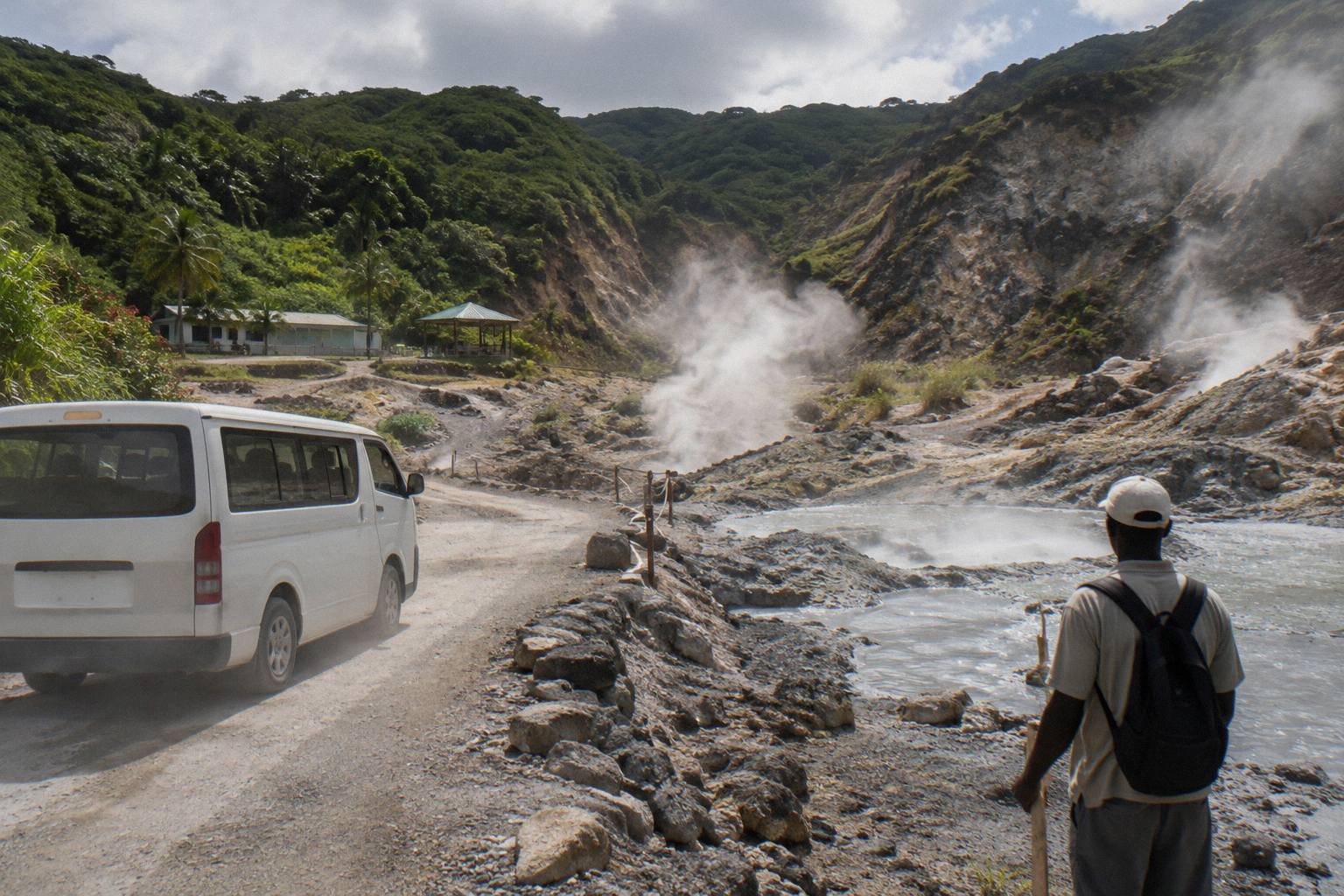
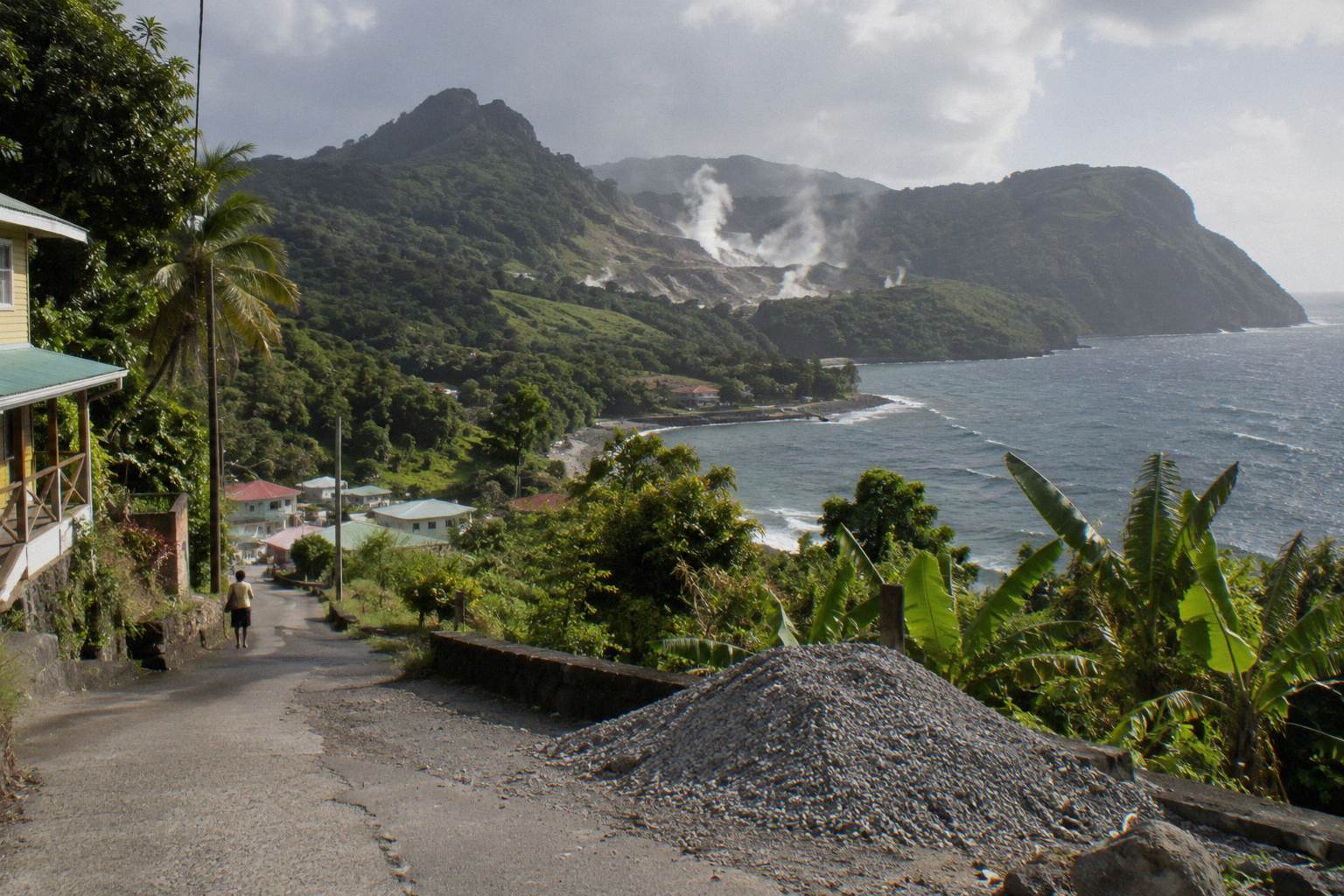
The drive-in experience is exactly what the name says: a road takes your vehicle into the crater of an active geothermal zone, past boiling springs, bubbling mud pools and steaming vents, before you continue to the baths. The tour portion of the ticket covers guided access to these features. Visitors view them from the vehicle and walkways, not by touching them.
It is a genuinely odd and memorable five minutes. One moment you are on a normal tropical road climbing through green hills toward Soufriere, and the next the vegetation thins, the ground turns grey and ochre, and steam begins leaking from vents beside the tarmac. The road dips into the caldera floor, and for its whole length you are inside the volcano's geothermal zone, close enough to see the mud churning in its pools and close enough to smell the sulphur that gives the springs their name. Guides point out the hottest vents and explain what each feature is doing. Nobody gets out mid-drive.
The walkways extend the experience on foot. From them you can watch the boiling springs doing what boiling springs do, water at 70 to 90 °C rolling up from below, and see fumaroles, the gas vents that reach up to 172 °C, hissing steam into the air. The colour palette is alien for the tropics: mineral-stained yellows, rusts and bone-white deposits crusting over dark grey mud. Photographers will want the wide shots from the rim approach, and there is a dedicated guide to framing the springs in photos worth reading before you go, because the steam and the flat midday light defeat a lot of cameras.
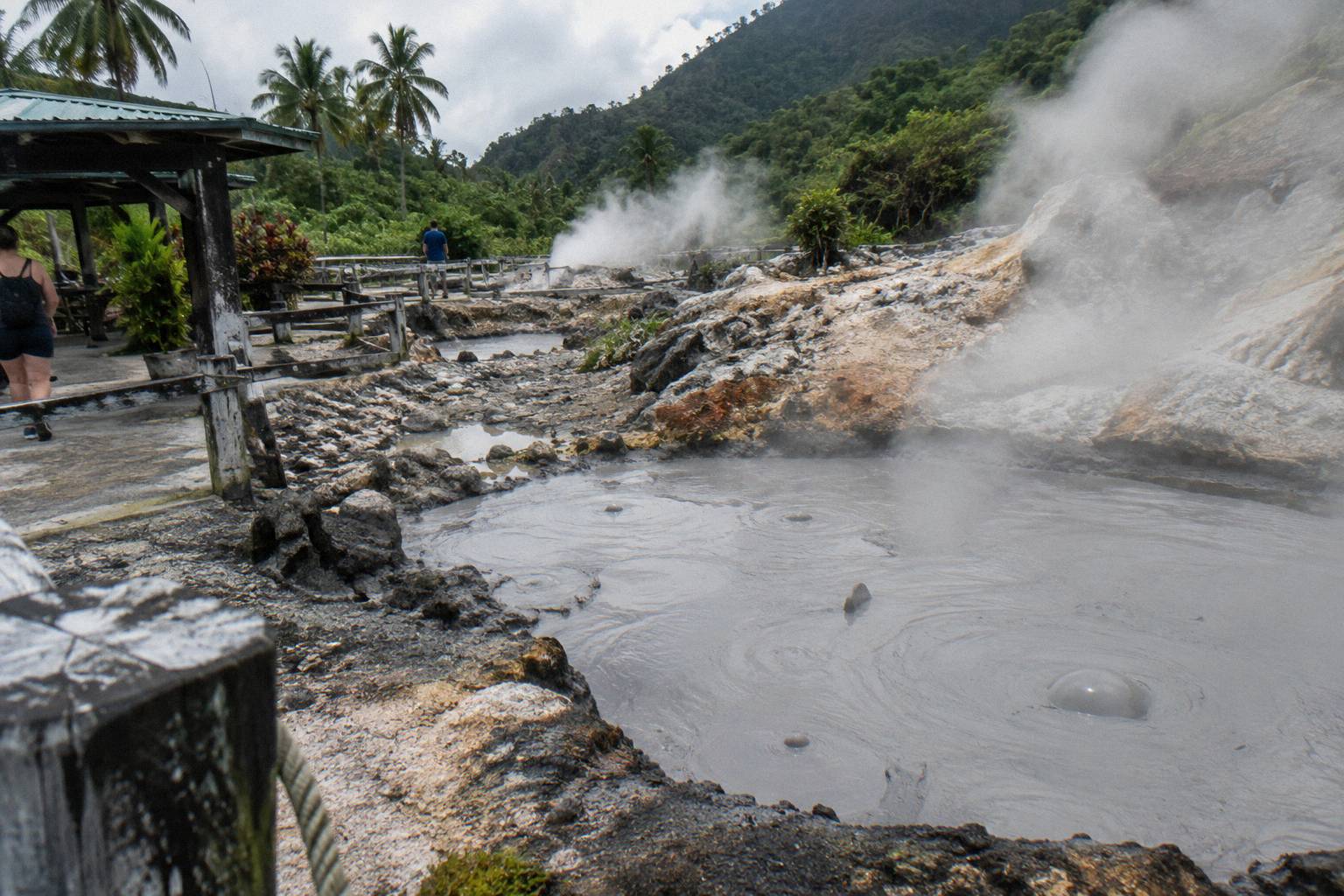
Then the contrast. Minutes after leaving the hot zone you can be sitting in a warm mineral pool, coated in the grey mud the volcano produces, rinsing off in spring water while tropical green closes back in around you. That whiplash, from Martian crater to garden spa, is the core product St Lucia sells at Sulphur Springs, and it is why tour after tour pairs the two halves in a single booked day. The Edmund Tours Land And Sea, the most reviewed trip in this category at 4.7 across 2,085 reviews, delivers it by boat at from US$125 per person over 6 hours 30 minutes, while the All Inclusive Land And Sea by Julian Boat Tours, 4.9 across 498 reviews, does the same from US$175 per person over 5 hours with lunch and drinks included.
The Last Eruption And The Qualibou Caldera
The last recorded eruption in Saint Lucia happened in 1766, a phreatic event in the Sulphur Springs area, and nothing has been recorded since. Sulphur Springs sits inside the Qualibou caldera, the collapsed volcanic crater that shapes the whole Soufriere landscape. This page makes no claim about the future, no forecast and no monitoring status, because none is verified.
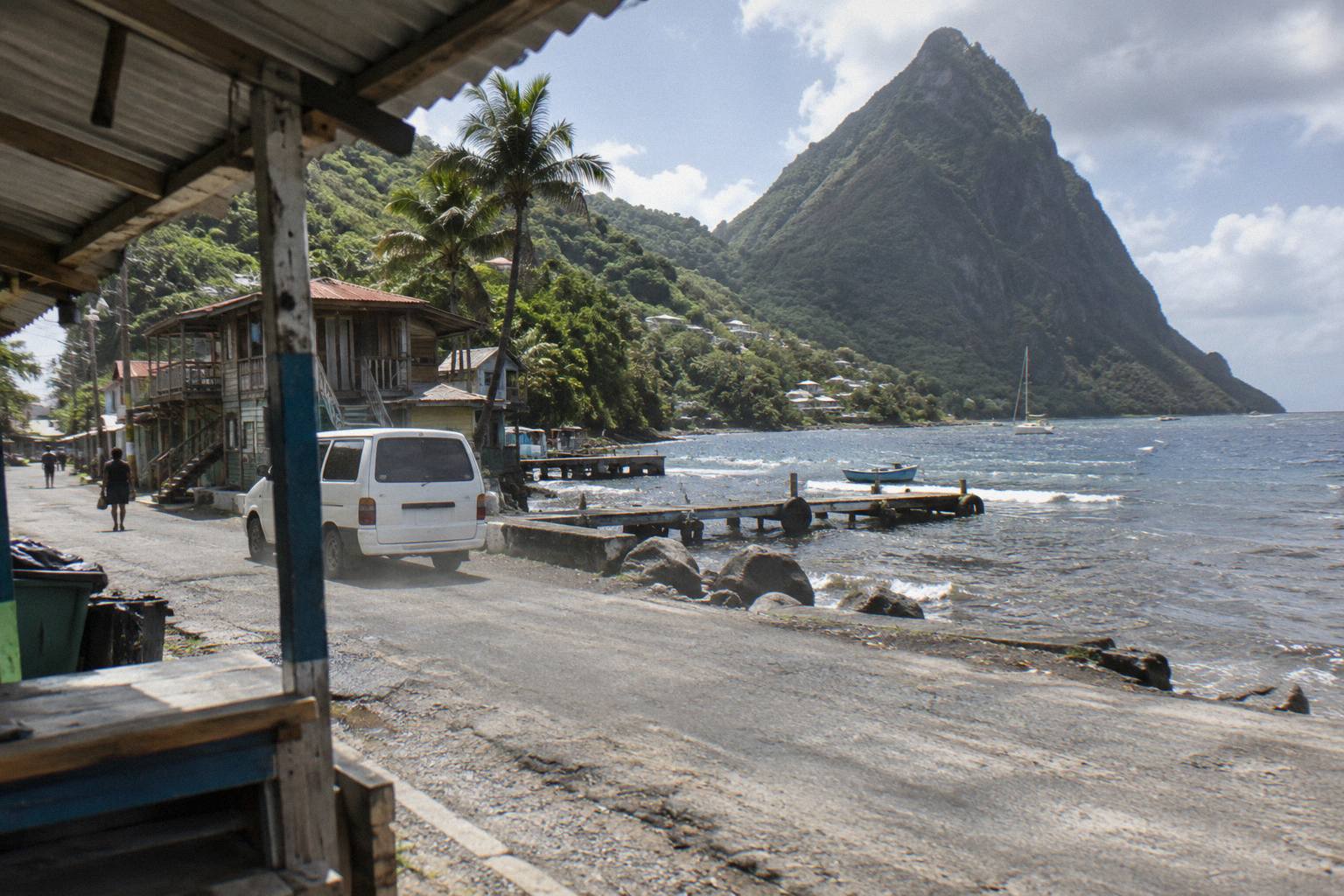
A phreatic eruption is a steam-driven one: water flashing to vapor underground and blasting rock and mud outward rather than fresh lava surging up. The 1766 event in this area was of that type, and it is the most recent eruption recorded anywhere on the island. Nearly three centuries of quiet have followed, but "quiet" at Sulphur Springs is a relative term, since the springs never stopped boiling and the vents never stopped steaming. The full geological backstory of the caldera is covered in the history of Sulphur Springs and the Qualibou caldera, which traces how the collapsed crater became the geothermal engine visible today.
The caldera itself is the reason the landscape looks the way it does. Soufriere sits in a bowl of collapsed volcanic ground, with the Pitons rising at its edge and the geothermal field occupying the low ground near town. That geometry is also why the site works so well as a drive-in attraction: the road can descend into the crater floor on a manageable grade, something no cone-shaped volcano offers. It is why the "drive-in volcano" branding is literal rather than a marketing flourish.
What this history should and should not do for a nervous visitor is worth stating plainly. It should tell you that the features you are paying to see are real, current and powered by live geothermal heat, not relics. It should not be bent into a prediction, in either direction. Anyone who tells you the volcano is "due" or "finished" is going beyond the record. The verified record says: caldera, 1766, and steam rising today.
Is It Safe To Visit With Kids And On A Cruise Day
The park operates as a daily visitor attraction, open 9:00 am to 5:00 pm including weekends and holidays, which is the strongest practical signal available. Children's tickets are sold for both the tour and the baths, at US$5 and US$6 respectively for the volcano tour and bath entry. Specific safety rules, age limits and medical cautions are not published on official pages and cannot be stated here.
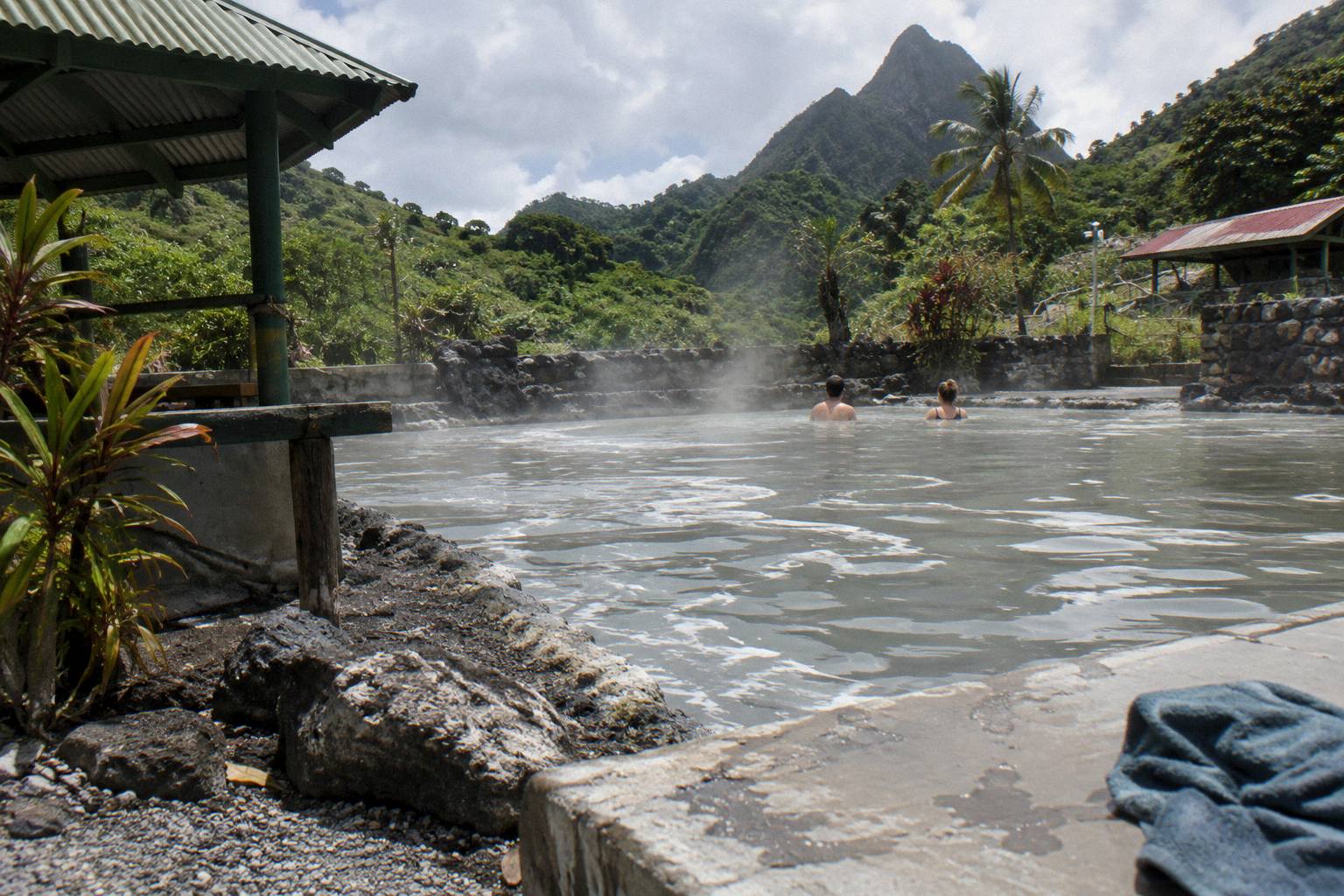
That last sentence is deliberate. A lot of travel content invents reassurance, listing silver-jewellery warnings, time limits and pregnancy cautions as if they were park policy. None of that appears on the official pages this site draws from, so none of it appears here. What is verified is operational: the park sells child tickets, runs seven days a week, and closes once a year on the first Friday of September. Families do visit routinely, and there is a full guide to taking kids and teenagers to the mud baths covering the practical side from a planning angle.
The tourism authority's packing list is the closest thing to official guidance on the visitor side: comfortable shoes, swimwear and a towel if you are doing the mud baths, with mornings and late afternoons recommended as the best times to go. Those are sensible for the hot zone too, since midday heat plus geothermal steam plus a crowded walkway is a combination most people would rather avoid. Cruise passengers working against an all-aboard time have their own calculus, and the timing a mud bath excursion from a cruise ship guide works through it in detail.
Tour-side, the options split cleanly by format. Road tours with cruise-port pickup include the FRAM Rejuvenating Mud Bath (4 to 5 hours, from US$132, 4.8 across 338 reviews) and the Volcano Experience, 7 To 8 Hours (from US$135, 5 across 533 reviews). Private formats include the Private Drive-In Volcano And Mud by H&A Tours Ltd, a genuinely private tour with hotel and cruise-port pickup, 5 to 6 hours, from US$140 per person, rated 4.9 across 124 reviews, with the Sulphur Springs Park entrance fee among its listed inclusions.
A good middle path pairs the volcano and baths with a waterfall stop, all with a local lunch. The Creole Lunch, Toraille Waterfall tour by Treasure tours Ltd. St. Lucia runs 5 to 6 hours from US$100 per person, rated 4.6 across 220 reviews, with the entrance fee, lunch, beverages and hotel or port pickup and drop-off included.
Common Mistakes Visitors Make About The Volcano
The recurring mistakes are expecting an eruption-style volcano, conflating the hot zone with the bathing pools, budgeting only the tour price and forgetting the park entry fee, and assuming any mention of "active" means danger. Each one is avoidable with a single fact: the caldera is geothermal today, erupted last in 1766, and sells two separate tickets for two separate experiences.
Expectation is the big one. Visitors who picture a lava crater or a smoking cone find bubbling mud and steam vents instead, and some feel short-changed until a guide explains what they are actually looking at. The drive-in volcano is a geothermal field in a collapsed caldera, and its drama is chemical and thermal rather than fiery. Approaching it as the mud's source, the engine heating the springs and producing the mineral bath, makes the whole visit click.
The fee mistake is the most expensive. Tour prices on the booking page cover transport, guiding and whatever inclusions that specific operator lists, and the roster shows these differ tour by tour. Some, like the FRAM Rejuvenating Mud Bath, list mud bath entrance fees as included. Others leave the US$12 bath entry or the US$10 volcano tour entry, or the US$16 combined ticket, as a separate payment at the gate. Check the inclusions on your tour's booking page before assuming. There is a fuller breakdown in the mud bath tour price versus going alone guide.
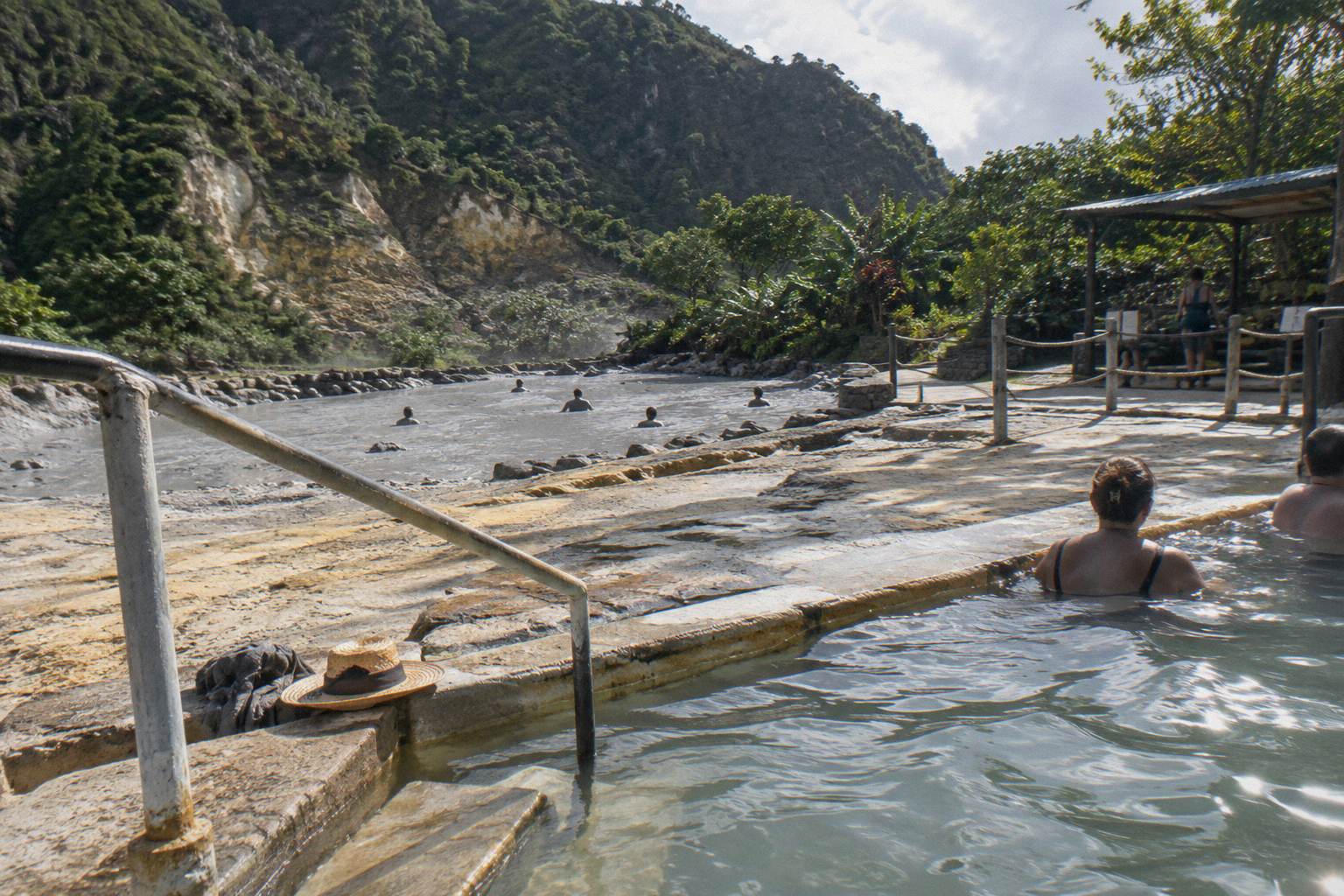
Timing errors come third. The park opens at 9:00 am and closes at 5:00 pm, and the first Friday of September is the one annual closure. Arrive expecting otherwise and the gate decides your day. The best time of day for the mud bath guide covers the crowds-and-heat trade in depth.
Tours That Take You Into The Volcano
Road tours, boat tours, private tours and jeep safaris all include the Sulphur Springs stop, with the volcano drive and the mud baths as the shared centrepiece. Road formats start from US$90 per person on this site's roster, the most reviewed option is Edmund Tours Land And Sea at 4.7 across 2,085 reviews, and every tour listed here permits free cancellation up to 24 hours before unless noted otherwise.
The format you choose changes the day more than the volcano does. By road, the Wow Tours Island Drive from Wow Tours is the value pick at from US$92 per person, 4.9 across 603 reviews, with hotel pickup and a guide, over 5 to 7 hours. The Volcano Experience, 7 To 8 Hours by Island Adventures St. Lucia is the fuller version, buffet lunch and drinks included, from US$135, rated 5 across 533 reviews. Half-Day Island Delight by Barefoot Holidays is the cheapest priced tour on the roster at from US$90, 4.7 across 27 reviews, with Sulphur Springs entry included in its 5-hour run.
| Tour | Operator | Format | Duration | Rating | From (per person) |
|---|---|---|---|---|---|
| Wow Tours Island Drive | Wow Tours | Guided road, hotel pickup | 5 to 7 hours | 4.9 from 603 reviews | US$92 |
| Volcano Experience, 7 To 8 Hours | Island Adventures St. Lucia | Guided road, hotel and port pickup | 7 to 8 hours | 5.0 from 533 reviews | US$135 |
| FRAM Rejuvenating Mud Bath | FRAM Tours & Taxi Services | Guided road, hotel and port pickup | 4 to 5 hours | 4.8 from 338 reviews | US$132 |
| Creole Lunch, Toraille Waterfall | Treasure tours Ltd. St. Lucia | Guided road, hotel and port pickup | 5 to 6 hours | 4.6 from 220 reviews | US$100 |
| Private Drive-In Volcano And Mud | H&A Tours Ltd | Private, hotel and port pickup | 5 to 6 hours | 4.9 from 124 reviews | US$140 |
| Edmund Tours Land And Sea | Edmund Tours St. Lucia | Guided, by sea | 6 hours 30 minutes | 4.7 from 2,085 reviews | US$125 |
By sea, the boat formats trade road time for coastline and snorkelling. The Edmund Tours Land And Sea is the island's most reviewed trip at 2,085 reviews, and the All Inclusive Land And Sea by Julian Boat Tours stacks lunch, drinks and snorkel gear into its 5 hours at from US$175, rated 4.9 across 498 reviews. For an open-top twist, the Volcano Jeep Safari by Island Routes runs 5 hours 30 minutes from US$165.85 per person, rated 4.7 across 95 reviews, taking the coast road down to Soufriere with a buffet lunch, a waterfall dip and the sulphur springs soak along the way.
For help deciding between the formats, the mud bath tour by sea or by road comparison walks through the trade-offs, and the private or shared mud bath tour guide does the same for exclusivity. Whichever you choose, the volcano half of the day will look the same: a drive into a steaming caldera, a walk past boiling springs, and then the mud. This site, St Lucia Mud Bath, exists because that sequence is the island's signature experience, and it has been running every day of the year but one for as long as the park has sold tickets.
Whether your priority is price, a short day or a full island loop, one of these three will fit, and all three can be cancelled free up to 24 hours before.
Common Questions About The Drive-In Volcano
Is The Drive-In Volcano In St Lucia Active?
Yes, in the geothermal sense: boiling springs at Sulphur Springs run 70 to 90 °C and fumaroles reach up to 172 °C. The last recorded eruption in Saint Lucia was in 1766, a phreatic event in the Sulphur Springs area, and no verified forecast or alert level exists. The park operates daily from 9:00 am to 5:00 pm.
Can The Volcano Erupt While I Am Visiting?
No eruption has been recorded in Saint Lucia since 1766, and the park runs as a daily attraction under the Soufriere Regional Development Foundation. No official source publishes an alert level, monitoring statement or forecast for Sulphur Springs, so this site makes no claim in either direction about future activity.
Is The Mud Bath Water Boiling Hot?
No published figure exists for the temperature of the bathing pools, so this site does not print one. The 70 to 90 °C boiling springs and the 172 °C fumaroles are separate geothermal features viewed on the volcano tour, not the pools you bathe in. The bath routine is grey volcanic mud followed by a rinse in warm spring water.
How Much Does It Cost To Enter The Volcano Park?
Under the park's current fee schedule, the volcano tour is US$10 per adult and US$5 per child, the mud bath is US$12 per adult and US$6 per child, and a combined ticket is US$16 per adult and US$8 per child. Fees are set by the park and can change, and some tours include entry in their price while others leave it separate.
What Does Drive-In Volcano Actually Mean?
It is literal: a road takes vehicles down into the caldera floor, past bubbling mud pools and steaming vents, before you continue to the walkways and the baths. The tour portion of your ticket covers guided access to the boiling springs, fumaroles and the drive-in route through the geothermal zone.
When Is The Park Closed?
Sulphur Springs opens 9:00 am to 5:00 pm daily, including weekends and public holidays, and closes once a year on the first Friday of September. That single annual closure is the only scheduled shutdown on the park's published schedule.