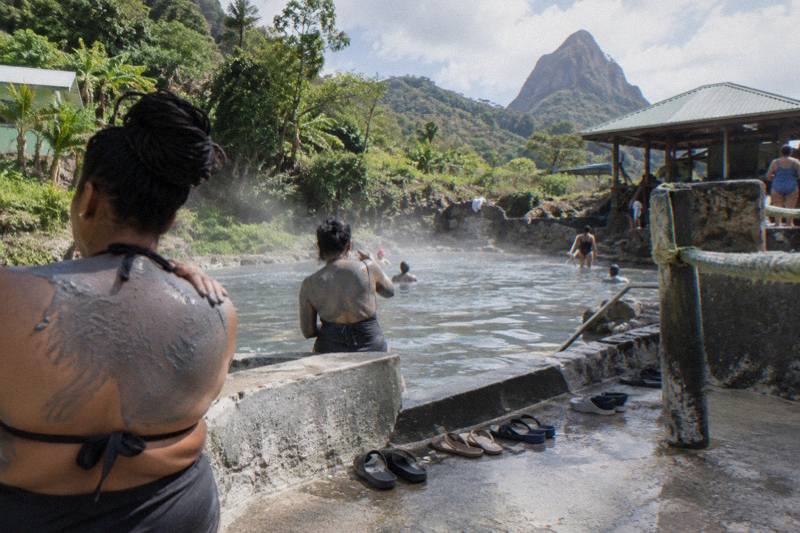
Why Take A Mud Bath At Sulphur Springs?
The honest reasons to take a mud bath at Sulphur Springs in Soufriere: the volcanic setting, the ritual, the day out around it, and what a tour adds.
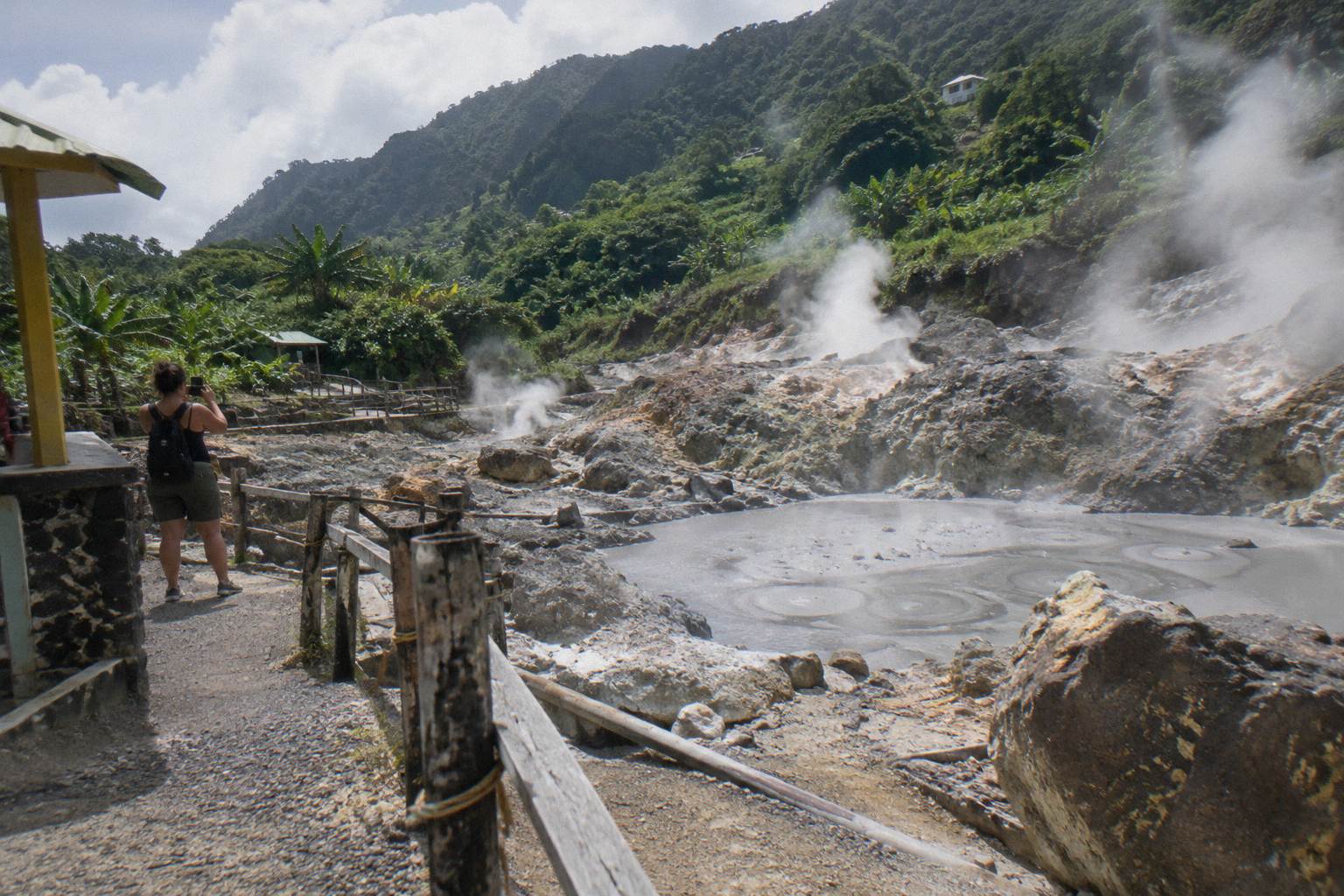
In short: the mud bath at Sulphur Springs is one of the few spa-adjacent experiences on earth that happens inside the caldera of a volcano that last erupted in 1766. You cover yourself in grey volcanic mud, rinse off in warm spring water, and the whole thing costs US$12 at the gate for an adult bath. Most people go for the setting, the ritual and the Soufriere day around it, not for any promised health result, because no such promise is on the table. This page lays out what the experience actually is, what the fees and hours are, and which tours get you there.
The reasons sit in the experience itself: a working geothermal field with boiling springs running 70 to 90 °C, a drive-in volcano, and a small park run by the Soufriere Regional Development Foundation, the town's own development body. The full practical picture, from hours to what to wear, lives in the Sulphur Springs entrance fee, hours and booking guide; this page sticks to the why.
| Quick fact | Detail |
|---|---|
| Park operator | Soufriere Regional Development Foundation (SRDF) |
| Hours | 9:00 am to 5:00 pm daily, weekends and holidays included |
| Annual closure | First Friday of September |
| Bath, adult | US$12 (XCD 30) |
| Bath, child | US$6 (XCD 15) |
| Volcano tour, adult / child | US$10 / US$5 |
| Combined ticket, adult / child | US$16 / US$8 |
| Drive from Hewanorra (UVF) | About 45 minutes by car |
| Drive from Castries | About 42 km, roughly 1 hour |
Fees are set by the park and can change. The figures above are the SRDF visitor rates effective 1 June 2025, which replaced the lower numbers some tour descriptions still quote.
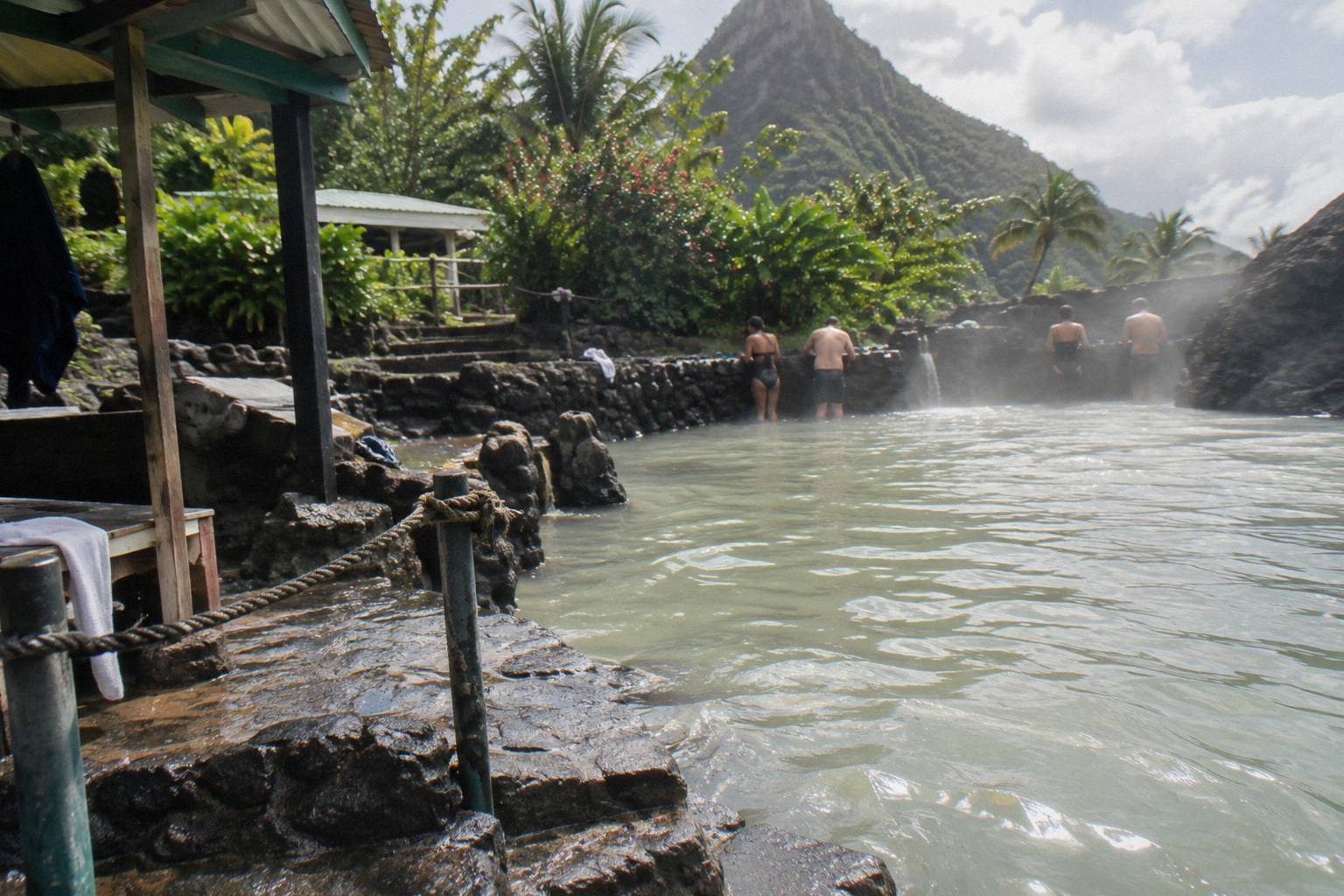
People take the mud bath at Sulphur Springs because it is a strange, memorable ritual in a genuinely dramatic setting, and because Soufriere builds a whole day around the experience, turning a quirky soak into the kind of memory you keep retelling long after the last of the mud washes off. You sit in mineral pools in the middle of a steaming geothermal field, paint yourself in grey volcanic mud, wait for it to dry, and rinse in warm spring water. Nothing about the experience is replicable at a spa at home, because the water and the mud come straight out of the ground beneath you. The short answer to the why question is the setting, the ritual and the day, in that order.
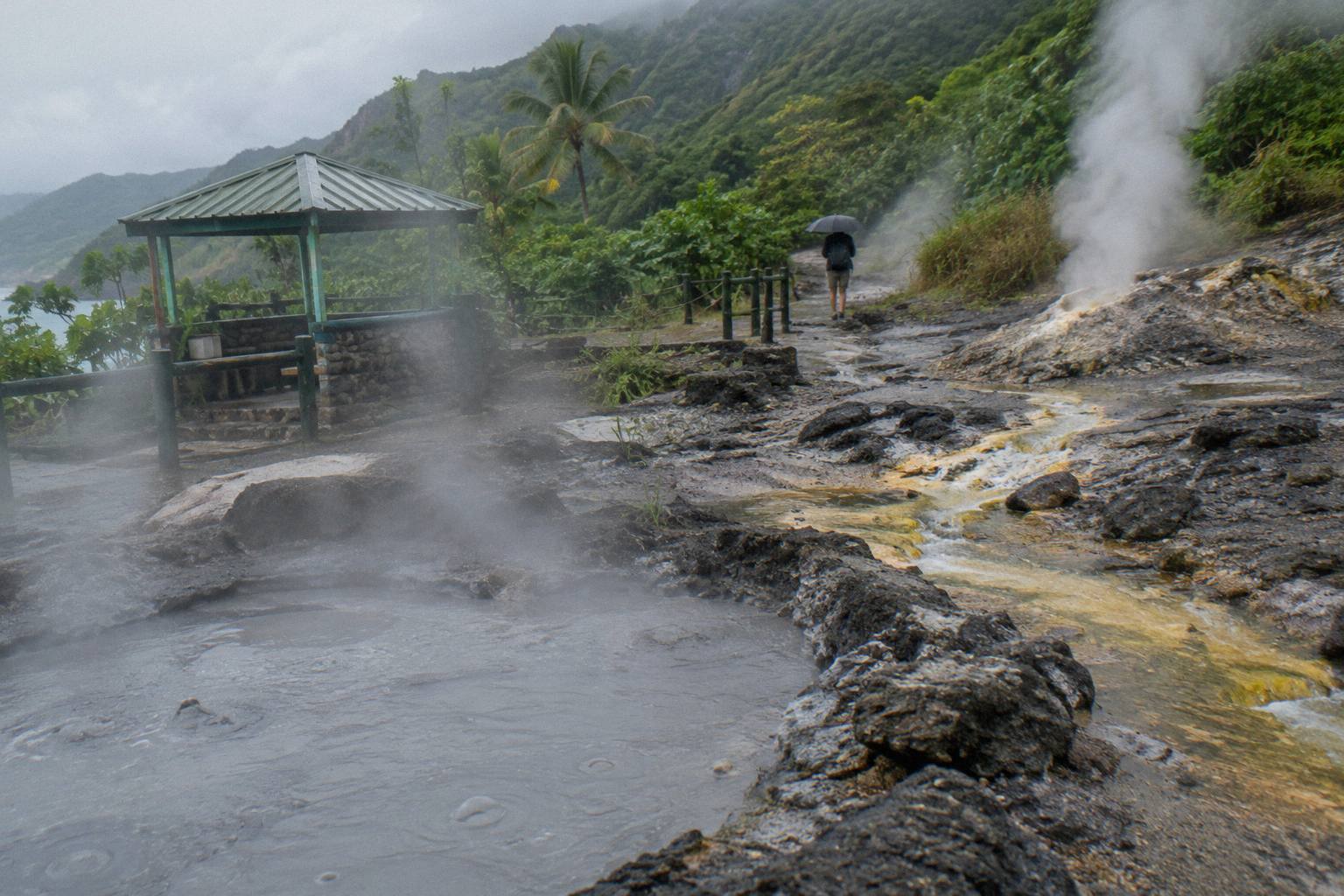
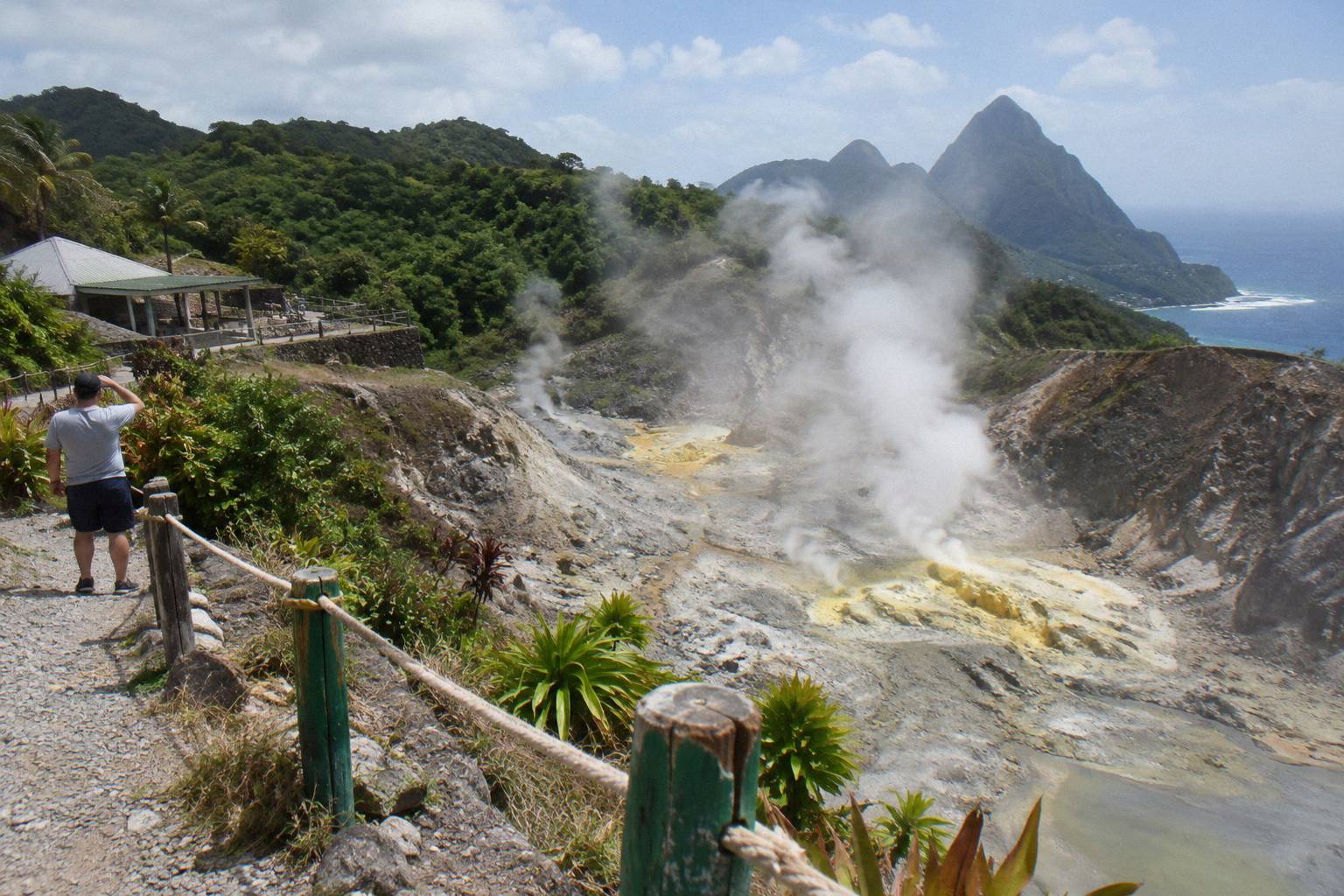
Start with the setting, because it is the part no photograph fully conveys. Sulphur Springs sits inside the Qualibou caldera, and the geothermal field is live: boiling springs between 70 and 90 °C, and fumaroles venting at up to 172 °C, according to the park's own geology notes. Buses literally drive visitors into the volcano's crater, past bubbling mud pools and steaming vents, before anyone reaches the baths. Saint Lucia's last recorded eruption was in 1766, a phreatic event in this same area, and the park makes no secret of the fact that the ground here is still thermally active. The mud bath is the calm, shallow end of that landscape.
Then there is the ritual itself, which is half the fun. The Saint Lucia Tourism Authority describes the experience plainly: apply grey volcanic mud, let it dry, rinse in warm spring water. That is it. There is no technician, no treatment menu, no protocol. You and whoever you came with smear mud on each other, stand around looking ridiculous while it dries, and wash off in water that comes out of the mountain warm. The comedy of it is the point. Couples, families with teenagers and cruise groups all end up doing exactly the same thing, and the photographs tend to outlast every other picture from the trip.
The third reason is the day. Nobody travels to Soufriere for twenty minutes of mud. The town sits in the southwest of the island under the Pitons, and the mud bath slots into a circuit that can include Toraille Waterfall, Diamond Falls Botanical Gardens, the Tet Paul Nature Trail and a Creole lunch. The whole area lies within the Pitons Management Area, inscribed by UNESCO in 2004. Operators have built their entire product around combining the bath with those stops, which is why the tour roster runs to dozens of options rather than one.
If the why question has already sold you, the practical next question is how to get there, and there are three formats worth a look straight away:
What Actually Happens When You Take One
Taking one is a short, simple sequence from start to finish, and there is nothing complicated about any of it. You change first, enter the warm mineral pools, apply the grey volcanic mud to your skin, let it dry, and then rinse off in the spring water. The whole cycle takes a fraction of the time people expect, which is why the booked duration of a mud bath tour, often 4 to 8 hours, covers the entire day rather than the bath. Visitors apply the mud by hand, there is no attendant performing a treatment, and the experience is self-directed from the moment you step into the water.
The Tourism Authority's guidance on what to bring tells you most of what the visit demands: comfortable shoes, swimwear and a towel. Morning or late afternoon is the recommended window, which lines up with how tours schedule the stop, often mid-morning after the drive down from the north or the sail down the coast. The park is open 9:00 am to 5:00 pm daily including weekends and holidays, with a single annual closure on the first Friday of September, so the calendar rarely gets in the way of a plan.
What the bath is not matters just as much. It is not a medical treatment, and no official source connected to the park makes health claims about it. The water's temperature in the bathing pools is not published by the park, so treat any specific number a blog or brochure quotes with caution; the verified temperatures belong to the boiling springs and fumaroles elsewhere in the field, not the bathing water. Statements about detoxification, skin cures or therapeutic outcomes are marketing talk, not park statements. For a fuller walkthrough of the sequence, see the step-by-step guide to how the volcanic mud bath works on the homepage hub.
The honest framing is experiential. You are bathing in the outflow of a live geothermal system, in a park operated for the benefit of the surrounding town, in a landscape you can see steaming from the road above. A reader deciding whether the experience justifies the drive or the tour price is really deciding whether that novelty appeals, and the visitor reviews suggest it does: the tours that centre on the bath consistently rate between 4.6 and 5.0 across review pools ranging from two dozen to two thousand.
The Volcanic Setting: Why Here And Not Somewhere Else
Sulphur Springs is here, and not somewhere else, because it sits inside the Qualibou caldera, a geothermal field that makes this the Caribbean's most accessible drive-in volcano; the site's last recorded eruption came in 1766, and that lingering geothermal character is precisely what sets this spot apart from anywhere else on the island. That combination, drive-in access plus live thermal features, is what separates it from every other mud bath option in the region. The park sits on the edge of Soufriere, the old French colonial capital of St Lucia, wedged between the town and the Pitons that dominate every postcard of the island.
The geology rewards a little reading before you go. The field's boiling springs run 70 to 90 °C and its fumaroles reach 172 °C, figures published by the park's own geology page. The 1766 eruption was phreatic, meaning steam-driven rather than magma-driven, and it remains the island's most recent recorded eruptive event. None of that makes the bathing area hazardous in the way the word "volcano" implies, but it does explain why the site smells of sulphur and why parts of the field are off-limits except on the guided drive. The walk through the crater guide covers what that guided section includes.
Context also explains the park's management. The Soufriere Regional Development Foundation, a local development body, runs Sulphur Springs, and its fee schedule funds both the park and the town's infrastructure. The current rates, effective 1 June 2025, price an adult bath at US$12 (XCD 30), a child bath at US$6, the volcano tour at US$10 for adults and US$5 for children, and a combined ticket at US$16 and US$8. Those are gate prices paid directly to the park; tours that advertise "entrance included" are folding that fee into their headline price.
How The Ritual Works, Step By Step
The ritual unfolds in a simple sequence: you arrive and change, slip into the warm pools to soak, then cover yourself in the grey mud dispensed around the bath, let it dry on your skin, and finally rinse off in the spring water before a shower finishes the process. There is no booking slot for the bath itself inside the park, no appointment, and no treatment menu. The whole sequence is self-guided once you are through the gate, which surprises visitors expecting a spa format with staff directing the process.
The mud is the star. It comes out of the ground as a smooth grey paste, and the drying stage is where most of the laughter happens: a group of adults standing around a geothermal pool, cracking like riverbeds in the sun. Once dry, the rinse in the warm spring water lifts it off, and the water carries a faint mineral character from the field feeding it. What the water does for skin beyond the immediate feel is not something any official source claims, and this site does not claim it either; the mud bath benefits discussion sticks to what can be said honestly.
Practical notes that hold up: wear swimwear you do not mind staining, bring a towel, and choose a morning or late-afternoon window, which is the Tourism Authority's own recommendation. Dark swimwear survives the mud better than pale fabrics, and anything with silver should stay in the room, since sulphurous water is unkind to it, though that is general travel sense rather than an official park rule. Nothing about the sequence is physically demanding, which is why the bath appears on tours aimed at every age group.
What The Day Around The Mud Bath Looks Like
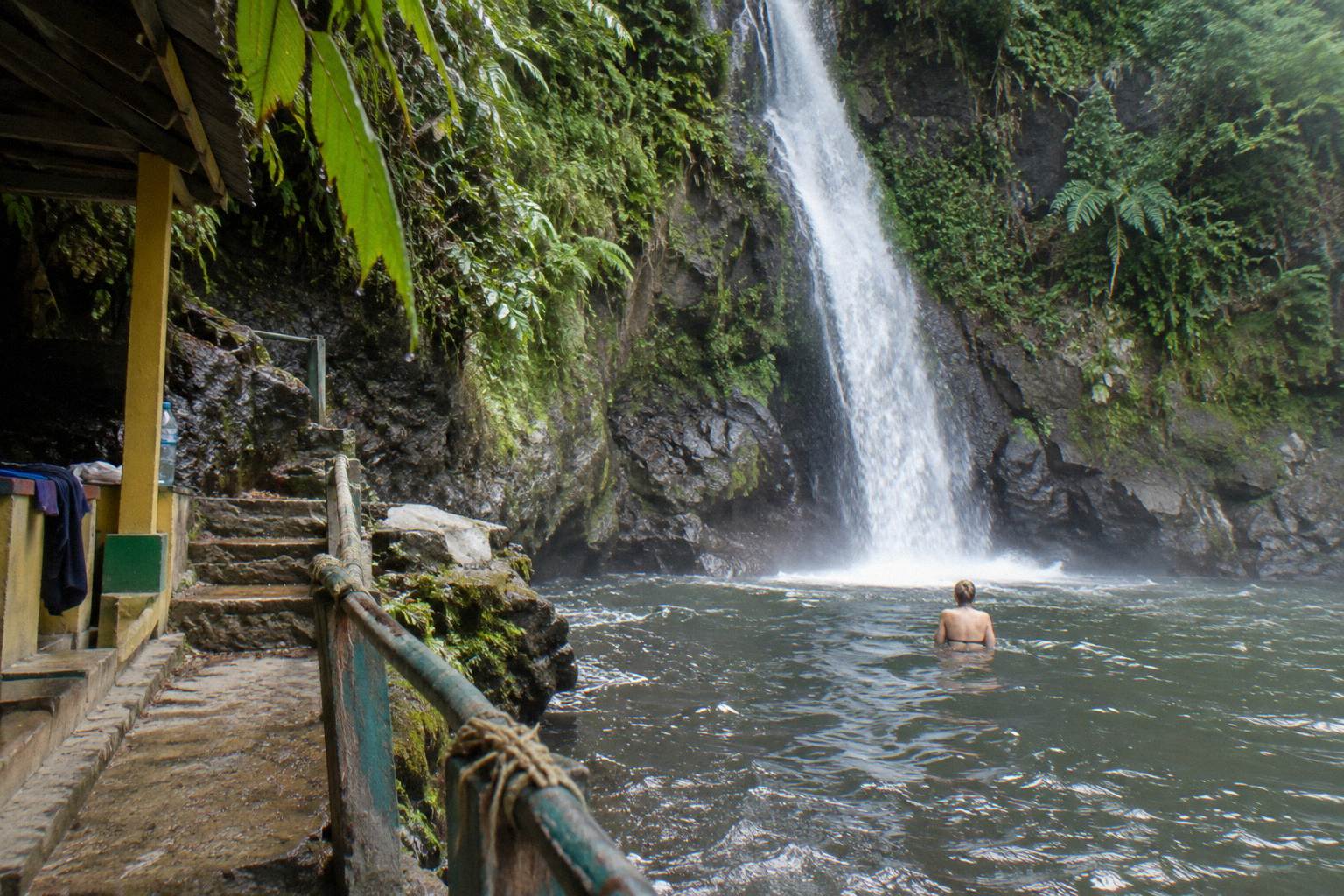
Almost nobody does the mud bath alone: the usual day pairs the twenty-minute soak with Toraille Waterfall, Diamond Falls or a Creole lunch, so a quick ritual becomes a five-to-eight-hour Soufriere circuit, with the bath serving as one stop on a relaxed loop rather than a standalone outing. Tour durations reflect that whole-trip length, transfers and stops included, not time at the baths. This is the real answer to why the mud bath anchors so many itineraries: it is the fixed point around which the southwest of the island gets organized.
The classic road version runs: hotel pickup, the drive south with photo stops, the Sulphur Springs bath, Toraille Waterfall for a freshwater rinse, then lunch in or near Soufriere before the return. The Creole Lunch, Toraille Waterfall tour from Treasure tours Ltd. St. Lucia is that template exactly: 5 to 6 hours, hotel and cruise-port pickup, entrance fee, lunch, driver-guide and beverages included, from US$100 per person, rated 4.6 across 220 reviews, free cancellation within 24 hours. The FRAM Rejuvenating Mud Bath from FRAM Tours & Taxi Services covers the bath and the road south in 4 to 5 hours from US$132, with the Sulphur Springs entrance fee in the price, and rates 4.8 across 338 reviews. Other pages covering the same trip are gathered on St Lucia Mud Bath.
Variations extend in every direction. Island Adventures St. Lucia runs its Volcano Experience, 7 To 8 Hours, a guided group tour from US$135 per person with buffet lunch, drinks, all taxes and hotel or cruise-port pickup, rated 5 across 533 reviews. H&A Tours Ltd offers the Diamond Baths And Waterfall Combo, from US$139 per person, 6 to 7 hours, rated 5 across 671 reviews, which chains the volcanic bath with the Diamond Falls mineral baths and waterfall; it is a guided group tour. And the by-sea format, sailing down the coast under the Pitons to Soufriere and bathing before the return trip, is a category of its own, covered in the sea versus road comparison.
| Tour | Operator | Format | Duration | Price | Rating |
|---|---|---|---|---|---|
| FRAM Rejuvenating Mud Bath | FRAM Tours & Taxi Services | Guided group, road | 4 to 5 hours | from US$132 | 4.8 from 338 reviews |
| Creole Lunch, Toraille Waterfall | Treasure tours Ltd. St. Lucia | Guided group, road | 5 to 6 hours | from US$100 | 4.6 from 220 reviews |
| Volcano Experience, 7 To 8 Hours | Island Adventures St. Lucia | Guided group, road | 7 to 8 hours | from US$135 | 5.0 from 533 reviews |
| Diamond Baths And Waterfall Combo | H&A Tours Ltd | Guided group, combo | 6 to 7 hours | from US$139 | 5.0 from 671 reviews |
| Wow Tours Island Drive | Wow Tours | Guided group, road | 5 to 7 hours | from US$92 | 4.9 from 603 reviews |
Every one of those cancels free within a 24-hour window, and all five include pickup of some kind: the FRAM, Island Adventures and Treasure tours pick up at hotels and, on three of them, at the cruise port as well, while the H&A day covers the same ground as a combo. Prices are per person as listed.
Who Takes A Mud Bath Tour And What The Options Cost
The range runs from US$90 to US$537 per person across the priced tours on this site's roster, with the cheapest option being the Half-Day Island Delight from Barefoot Holidays and the most expensive a private-boat format from The Real Deal Boat Tours. In between sit the mainstream choices, most of them between US$90 and US$175 for a guided group day with lunch. The span exists because the product being sold is not the bath but the whole journey to it.
Budget travellers and independent spirits land at the low end. The Wow Tours Island Drive, from US$92 per person for a 5-to-7-hour guided day with hotel pickup, rated 4.9 across 603 reviews, is the value pick of the big-review-pool tours. Families and cruise passengers cluster in the middle, where the FRAM and Island Adventures products sit with their entrance fees and pickup flags. The top end buys privacy or the sea: H&A Tours Ltd's Private Drive-In Volcano And Mud runs from US$140 per person as a genuinely private tour with both the Sulphur Springs and Toraille entrance fees included, rated 4.9 across 124 reviews, while The Real Deal Boat Tours' Snorkel, Mudbath And Lunch Boat, from US$537 per person for 5 hours 30 minutes by sea, rated 5 across 110 reviews, is the splurge.
The most reviewed option of all is the Edmund Tours Land And Sea tour from Edmund Tours St. Lucia: 2,085 reviews, a 4.7 rating, 6 hours 30 minutes by sea, from US$125 per person with lunch, drinks, snorkel gear and a bat cave visit included. A review pool that size is its own kind of evidence, not of quality alone but of how central this experience has become to a St Lucia trip. The mud bath tour price versus going alone guide does the arithmetic on when a tour beats a taxi and a gate ticket.
Common Mistakes People Make
The most common mistakes come down to a few repeat offenders: treating the tour's set duration as personal bath time, showing up in the wrong swimwear, assuming the experience comes with spa conditions, and budgeting the trip around entrance figures that are out of date. Each of these errors is easy to make and just as easy to avoid once you know to watch for it. Each one is avoidable with a single piece of knowledge, and each one trips up visitors every week of the year.
First, the duration confusion. A "5 hour" tour does not mean five hours of mud. The booked duration is the whole trip: transfers, photo stops, the waterfall, lunch, everything. The bath itself is a short segment of the day, and anyone expecting a long soak is misreading the product. Second, the wardrobe. Pale swimwear takes on a grey memory of the mud permanently, towels are on the Tourism Authority's own packing list, and comfortable shoes matter for the walking sections of the crater drive and any trail stop.
Third, the spa assumption. There is no therapist, no appointment and no treatment protocol inside the bath area; the what to wear and what to bring guides exist because the experience is self-directed. Fourth, the price confusion. The current gate price for an adult bath is US$12 on the SRDF schedule effective 1 June 2025; older figures between US$10 and US$15 still circulate on tour descriptions, and the park sets and can change its own fees. Fifth, timing. The park closes at 5:00 pm sharp and shuts entirely on the first Friday of September each year, and the Tourism Authority recommends morning or late afternoon, advice worth taking in the hottest months.
Going Alone Versus With A Tour
Yes, you can absolutely visit Sulphur Springs on your own: drive or take a taxi there, pay the US$12 adult bath fee at the gate and walk right in. A tour does not buy you access; what it buys is logistics, entrance handling and the surrounding stops packaged into one easier day. The choice comes down to transport, confidence and how much of the southwest you want packed into one day. The full decision framework is in the guide on doing the mud bath on your own.
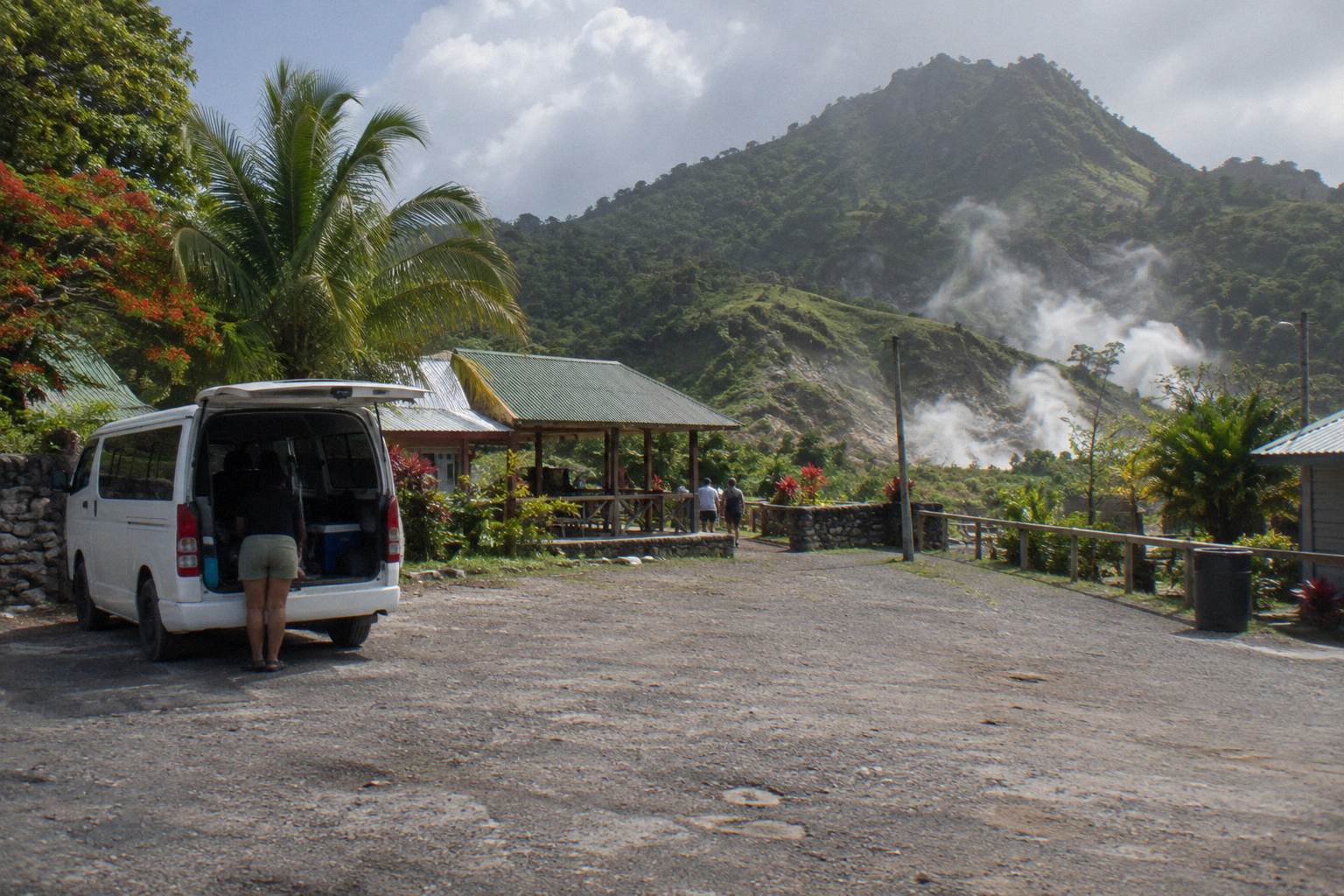
The solo route suits visitors with a rental car, a half-day and no appetite for a packed schedule. The park is about 45 minutes by car from Hewanorra airport and roughly an hour, 42 km, from Castries, on roads that are driveable but winding. Arrive with swimwear, a towel and cash sensibility, pay the gate fee, and self-guide through the bath. What you give up is the commentary, the guaranteed combination with Toraille or Diamond Falls, and the logistics of lunch.
The tour route suits everyone else, which is most people. Cruise passengers on port timing, hotel guests without cars, and travellers who want the waterfall and the lunch handled in one booking all fit the format, and the reviews suggest the format works: the guided options on this page run 4.6 to 5.0. Whatever you choose, book or plan around the calendar: daily 9:00 am to 5:00 pm, closed the first Friday of September.
Common Questions About Taking A Mud Bath
Why Take A Mud Bath At Sulphur Springs?
Because the setting is unrepeatable: warm mineral pools inside a live geothermal field in the Qualibou caldera, where the mud comes straight from the ground. The ritual of applying grey volcanic mud, letting it dry and rinsing in spring water is simple, funny and photogenic, and the town of Soufriere builds a full day around it with waterfalls, gardens and Creole lunch.
How Much Does The Mud Bath Cost On Its Own?
The gate price is US$12 for an adult bath and US$6 for a child, on the SRDF fee schedule effective 1 June 2025. A combined ticket covering both the bath and the volcano tour is US$16 for adults and US$8 for children. Fees are set by the park and can change.
Does The Mud Bath Help Your Skin?
No official source connected to the park makes health or skin-treatment claims, and neither does this site. The reasons to go are experiential: the volcanic setting, the ritual, and the day around it. Anyone promising a dermatological outcome is going beyond what the park itself states.
How Long Does The Mud Bath Take?
The bath itself is a short, self-guided sequence: enter the pools, apply mud, let it dry, rinse. Tour durations of 4 to 8 hours reflect the whole trip, including transfers, the crater drive, waterfall stops and lunch, not time in the bath.
Can You Do The Mud Bath Without A Tour?
Yes. The park sells gate tickets directly, is open 9:00 am to 5:00 pm daily, and sits about 45 minutes by car from Hewanorra airport or roughly an hour from Castries. Tours buy logistics, entrance handling and the combined itinerary rather than access itself.
What Should You Bring To The Mud Bath?
The Saint Lucia Tourism Authority recommends comfortable shoes, swimwear and a towel. Dark swimwear is a sensible choice, since the grey mud can stain pale fabric, and the Authority suggests morning or late afternoon as the best window for a visit.