Is It Okay To Swim In Sulfur Water At Sulphur Springs?
Is swimming in sulfur water at Sulphur Springs in St Lucia okay? What the park runs, what is verified, what is not, and how to book a mud bath tour with the facts in hand.
Yes, bathing in the sulfur water is the whole point of a visit, and thousands of people do it every year in pools the park runs for exactly that purpose. These are managed mineral and mud pools rather than open geothermal water, but since no official source confirms a temperature figure or a medical all-clear, follow staff and signage on the day.
That is the honest version of the answer, and it is worth unpacking, because the question usually comes from someone with a browser tab open on a booking page and a small worry in the back of the mind. The concern is reasonable. Volcanic water sounds like something that should come with a warning label, and the internet is full of confident claims in both directions. Some pages say the water cures everything, others imply it will ruin your swimwear and your silver rings. Almost none of those claims come from the park itself.
So this page sticks to what can actually be sourced. The park is operated by the Soufriere Regional Development Foundation, which sets the hours, the fees and the access rules. The Saint Lucia Tourism Authority describes the experience plainly: you drive into the geothermal zone past bubbling mud pools and steaming vents, then, at the baths, you apply grey volcanic mud and rinse off in warm spring water. Neither source frames the bathing pools as dangerous, and neither frames them as a treatment. They are an attraction, run daily from 9:00 am to 5:00 pm, with one closure a year on the first Friday of September.
What the official pages do not publish, and what this article will not invent, is the temperature of the bathing pools themselves, any time limit, any rule about jewelry, or a list of who should stay out. Those details exist in plenty of second-hand versions online, but repeating them here as fact would be guessing. The park's own staff and signage govern on the day, and they are the right authority for anything specific.
If the plan involves a tour rather than a solo taxi ride, the options below are a good spread: the featured FRAM Tours & Taxi Services mud bath day, a cheaper road circuit from Wow Tours, and the most reviewed trip on the whole island, Edmund Tours Land And Sea by boat.
What Is Actually In The Sulfur Water?
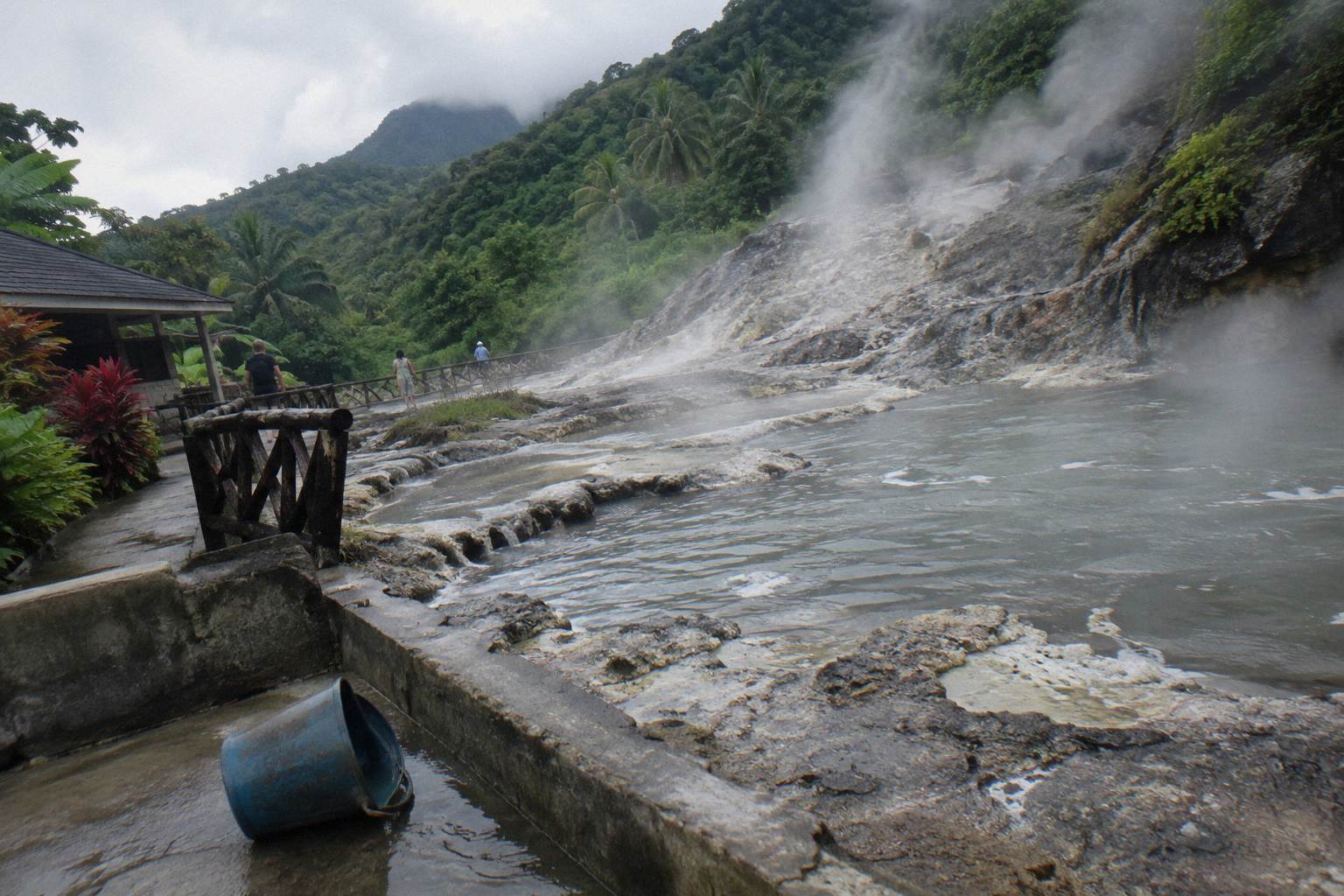
The water at Sulphur Springs is geothermal: rainwater heated deep underground by the same volcanic system that feeds the boiling springs and fumaroles in the crater above the baths. The sulfur is real, the smell is real, and so are the dissolved minerals that give the grey mud its colour and texture. No verified source publishes a chemical breakdown of the bathing pools, so any specific chemistry claim you read elsewhere is someone filling a gap.
The geological setting is the interesting part. Sulphur Springs sits inside the Qualibou caldera, and the last recorded eruption anywhere in Saint Lucia was a phreatic event in the Sulphur Springs area in 1766. The system is very much thermally alive: the boiling springs in the crater run at 70 to 90 °C, and the fumaroles, the steam vents you see and smell on the drive through, reach up to 172 °C. Those figures belong to the geothermal features, not to the bathing water, and keeping the two separate is half the answer to this article's question.
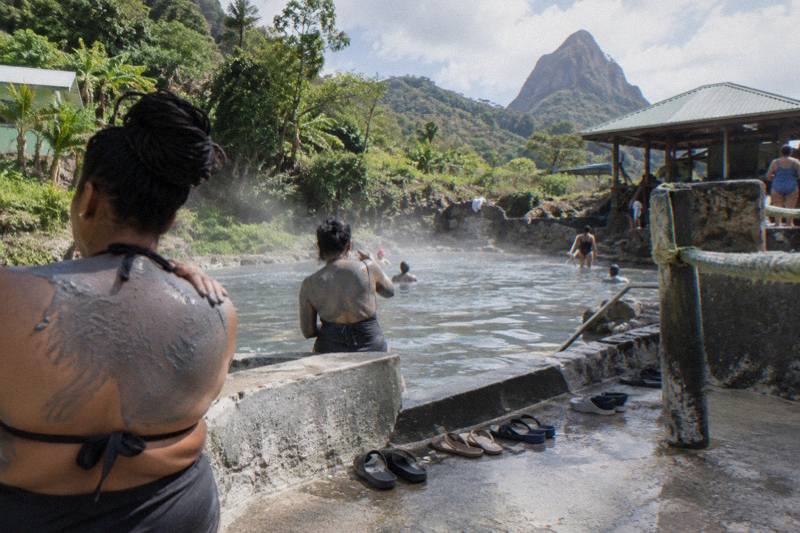
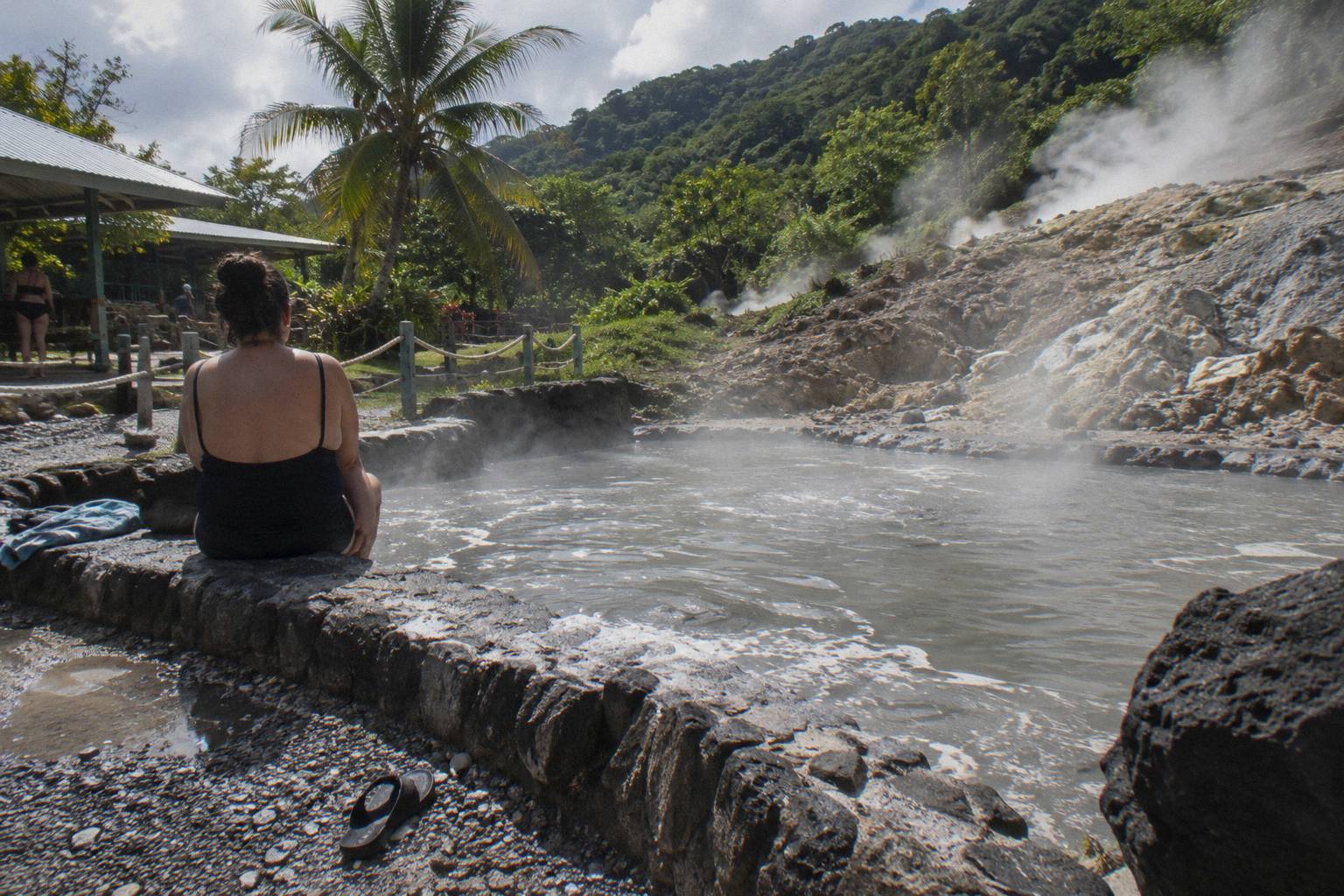
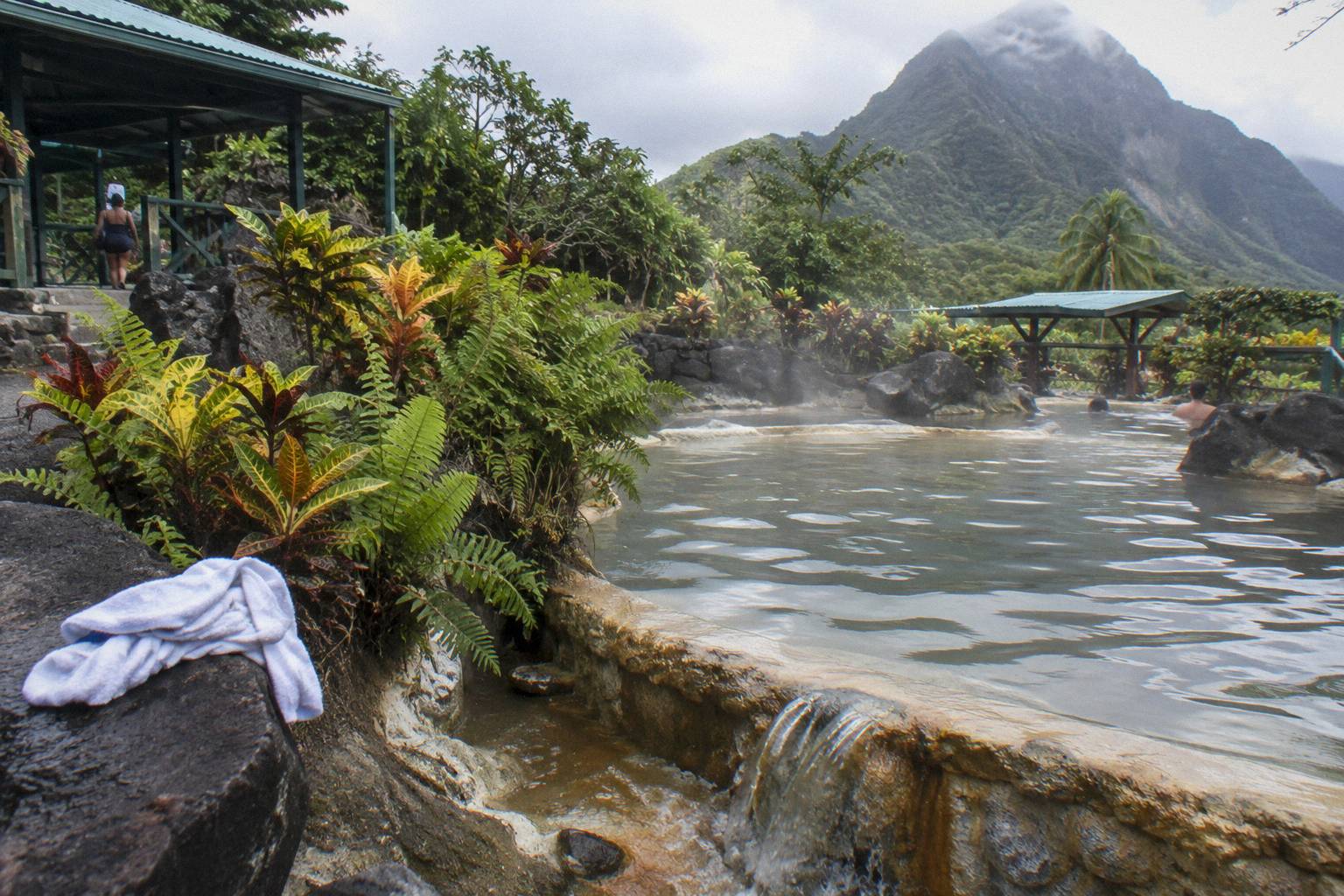
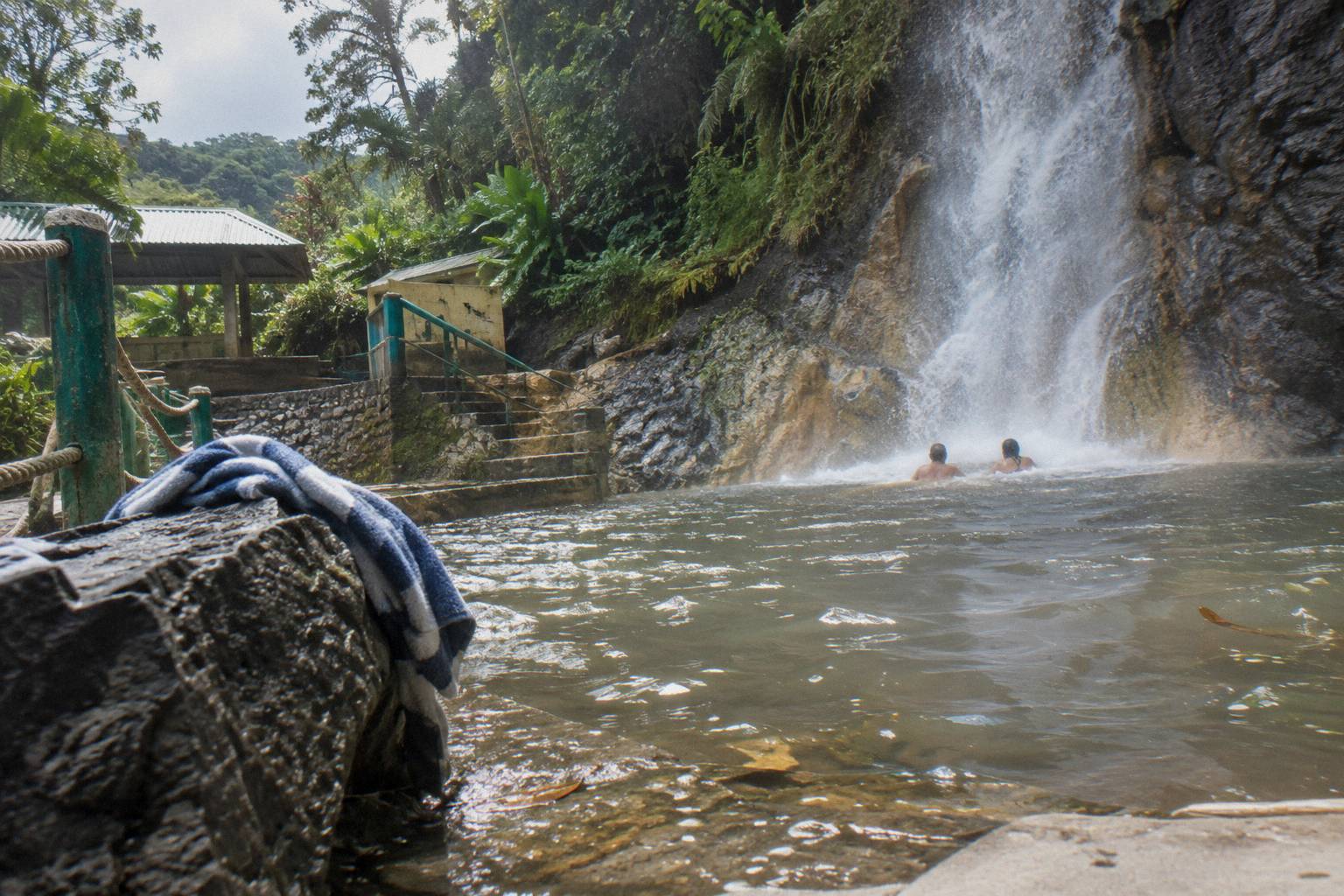
The bathing pools, including the Black Water Pool, are a different proposition from the crater itself. The park has built and manages them as the place where visitors get in. The tourism authority's description of the routine, grey mud applied to the skin, then a rinse in warm spring water, matches what every tour operator on the island describes in their itineraries. Nobody swims in the crater. Everyone bathes in the pools. That distinction is the practical core of the safety question.
The smell deserves its own honest paragraph, because it is the thing people actually remember and the thing some itineraries soft-pedal. Sulfur compounds in geothermal water produce the classic rotten-egg odour, stronger near the vents and the boiling springs, fainter at the pools. Whether it bothers you on the day depends on wind, rain and your own nose, so no promise is made here. If the smell question is the real one behind your search, the site's piece on whether St Lucia smells like sulfur goes into it properly, and whether the mud baths are worth it at all covers the value side of the same hesitation.
One more framing note. The geothermal area lies within the Pitons Management Area, inscribed by UNESCO as a World Heritage site in 2004. That status says a great deal about the landscape and nothing at all about water chemistry, so treat it as context rather than reassurance.
The Bath Routine: Grey Mud, Then Warm Water
The experience runs in a set sequence rather than a free swim: you coat yourself in the grey volcanic mud, let it dry while you sit poolside, then rinse in the warm spring water of the mineral pools. The pools are for soaking and rinsing, not laps, and the whole cycle is short enough to fit inside a half-day tour with waterfall stops either side. Bring swimwear, a towel and comfortable shoes.
That packing list is not folklore; it is what the Saint Lucia Tourism Authority tells visitors to bring. What to wear matters more here than at a beach because the mud is fine, grey and famously persistent, and dark or old swimwear is the standard advice across every operator itinerary. The site's detailed guide on what to wear to the sulfur springs baths covers the wardrobe question in depth, including the footwear choice for the walk between the parking area, the crater viewpoint and the pools.
Tours handle the logistics differently, and the difference is worth knowing before booking. Island Adventures St. Lucia runs the Volcano Experience, 7 To 8 Hours, rated 5 across 533 reviews, from US$135 per person, with buffet lunch, drinks and all fees and taxes in the price, plus hotel and cruise-port pickup. It is a full-day format for people who want the volcano, the baths and a proper meal in one booked block, with free cancellation inside a 24 hour window.
The FRAM Tours & Taxi Services version, the FRAM Rejuvenating Mud Bath, is shorter at 4 to 5 hours, from US$132 per person, rated 4.8 across 338 reviews, and it includes the entrance fee for the mud bath itself, which matters if you have been adding up what the day costs. Hotel and cruise-port pickup are both on the menu, along with snacks, sodas and a local Piton beer on board.
For a different structure again, Treasure tours Ltd. St. Lucia runs the Creole Lunch, Toraille Waterfall tour, from US$100 per person, rated 4.6 across 220 reviews, pairing the baths with the Toraille waterfall and a sit-down lunch, entrance fee, guide, beverages and hotel or port pickup all listed as included. That is the classic combo shape: mud, waterfall, food, done inside 5 to 6 hours.
What The Park Charges And When It Is Open
Sulphur Springs is open 9:00 am to 5:00 pm every day, weekends and holidays included, with a single annual closure on the first Friday of September. The bath alone costs US$12 for adults and US$6 for children at the gate, a volcano tour plus bath combo is US$16 for adults and US$8 for children, and fees are set by the park and can change.
Those figures come from the SRDF visitor schedule effective 1 June 2025, quoted in Eastern Caribbean dollars alongside the US rates: XCD 30 for the adult bath against the US$12, and so on down the table below. Some tour itineraries still quote older gate prices in the US$10 to 15 range; where a tour page and the park differ, the park's own schedule is the one that governs, which is why this table uses it. The wider set of guides lives on St Lucia Mud Bath.
| Option at the gate | Adult | Child |
|---|---|---|
| Mud bath only | US$12 (XCD 30) | US$6 (XCD 15) |
| Volcano tour only | US$10 (XCD 25) | US$5 (XCD 12.50) |
| Combined tour and bath | US$16 (XCD 40) | US$8 (XCD 20) |
Two practical notes sit beside the numbers. First, plenty of tours fold the entrance fee into their headline price, so the gate table matters most to people driving themselves, a comparison this site covers in detail in a tour price versus going alone breakdown. Second, the combined ticket is the one most first-time visitors actually want, because the drive through the geothermal zone and the bath are genuinely different halves of the same attraction.
Getting there is straightforward from either direction. The park is about 45 minutes by car from Hewanorra International Airport in the south, and Soufriere is roughly 42 km, around an hour's drive, from Castries. The southern route passes close to several of the view stops tours use, which is one reason road-based itineraries from the capital run 5 hours or more end to end; the booked duration covers transfers, stops and lunch, not just time in the water.
Temperature, Safety And What No Official Source Confirms
Here is the part most pages fudge: the temperature of the bathing pools is not published in any official source, so no number appears here. Likewise, no verified park page states a time limit, a jewelry rule, changing room details or a list of people who should avoid the water. The honest instruction is simple: the bath is run by the park, so follow staff and signage, and ask a doctor about any personal health question before you travel.
That paragraph will frustrate anyone wanting a definitive yes or no, but inventing reassurance is worse than withholding it. What can be said with sources behind it is structural. The pools exist specifically for bathing, the park operates them daily all year bar one Friday, and the tourism authority actively promotes the mud-and-rinse routine to visitors, telling them to bring swimwear and a towel. An attraction that wanted people kept out of the water would not publish a packing list for getting into it.
What cannot be said is everything person-specific. Pregnancy, sensitive skin, heart conditions, open cuts, recent surgery: these are medical questions, and this site does not give health advice in either direction. The right move for any of them is a conversation with a clinician who knows your history, before you book anything. The site's longer treatment of the question, whether the bath suits sensitive skin, holds the same line for the same reason.
A few widely repeated claims deserve a flag, not because they are false but because nobody official has confirmed them. The silver-tarnish warning, the twenty-minute soak limit, the "avoid if pregnant" signage: each turns up constantly in traveller forums, and none appears in the verified park or tourism-authority material. Treat them as plausible folklore, and check at the gate. Staff answer these questions all day, every day.
The same honesty applies to results. No source here promises softer skin, and no source here promises the smell will not cling to your towel. The site's page on claimed skin benefits of the mud bath looks at what is actually asserted and by whom, and keeps the same discipline.
Going With A Tour Versus Going Alone
Going alone is entirely possible since you can drive to the gate and pay the US$12 bath ticket yourself, but a tour covers the road logistics from Castries or the cruise port, the interpretation at the crater, and usually the entrance fee and lunch, with road tours starting at US$90, boat trips reaching US$537, and most people booking in the middle of that range.
That spread is real and worth seeing side by side. The table below pulls four different shapes of day from the operator line-up: a budget road circuit, the featured FRAM bath day, a private volcano-and-falls trip, and the most reviewed land-and-sea boat tour on the island.
| Tour | Operator | Format | Booked duration | Rating | Price |
|---|---|---|---|---|---|
| Half-Day Island Delight | Barefoot Holidays | Guided group, by road | 5 hours | 4.7 across 27 reviews | From US$90 |
| FRAM Rejuvenating Mud Bath | FRAM Tours & Taxi Services | Guided group, by road | 4 to 5 hours | 4.8 across 338 reviews | From US$132 |
| Private Drive-In Volcano And Mud | H&A Tours Ltd | Private, by road | 5 to 6 hours | 4.9 across 124 reviews | From US$140 |
| Edmund Tours Land And Sea | Edmund Tours St. Lucia | Guided group, by sea | 6 hours 30 minutes | 4.7 across 2,085 reviews | From US$125 |
Read the durations carefully, because the common misreading is assuming a 5 hour tour means 5 hours of bathing. It never does. Booked duration is the whole trip: transfers from your hotel or the port, the crater drive, the bath stop, the waterfall stop and lunch. Time actually in the water is a fraction of that, which is exactly how most people want it, since the mud routine is intense enough that an hour feels complete.
The private option is the one to look at if the sulfur question is really a control question. H&A Tours Ltd runs the Private Drive-In Volcano And Mud, from US$140 per person, rated 4.9 across 124 reviews, with hotel and cruise-port pickup, and the Sulphur Springs Park and Toraille waterfall entrance fees listed as included. A private vehicle means you set the pace at the pools, leave when you have had enough, and skip the group timetable entirely.
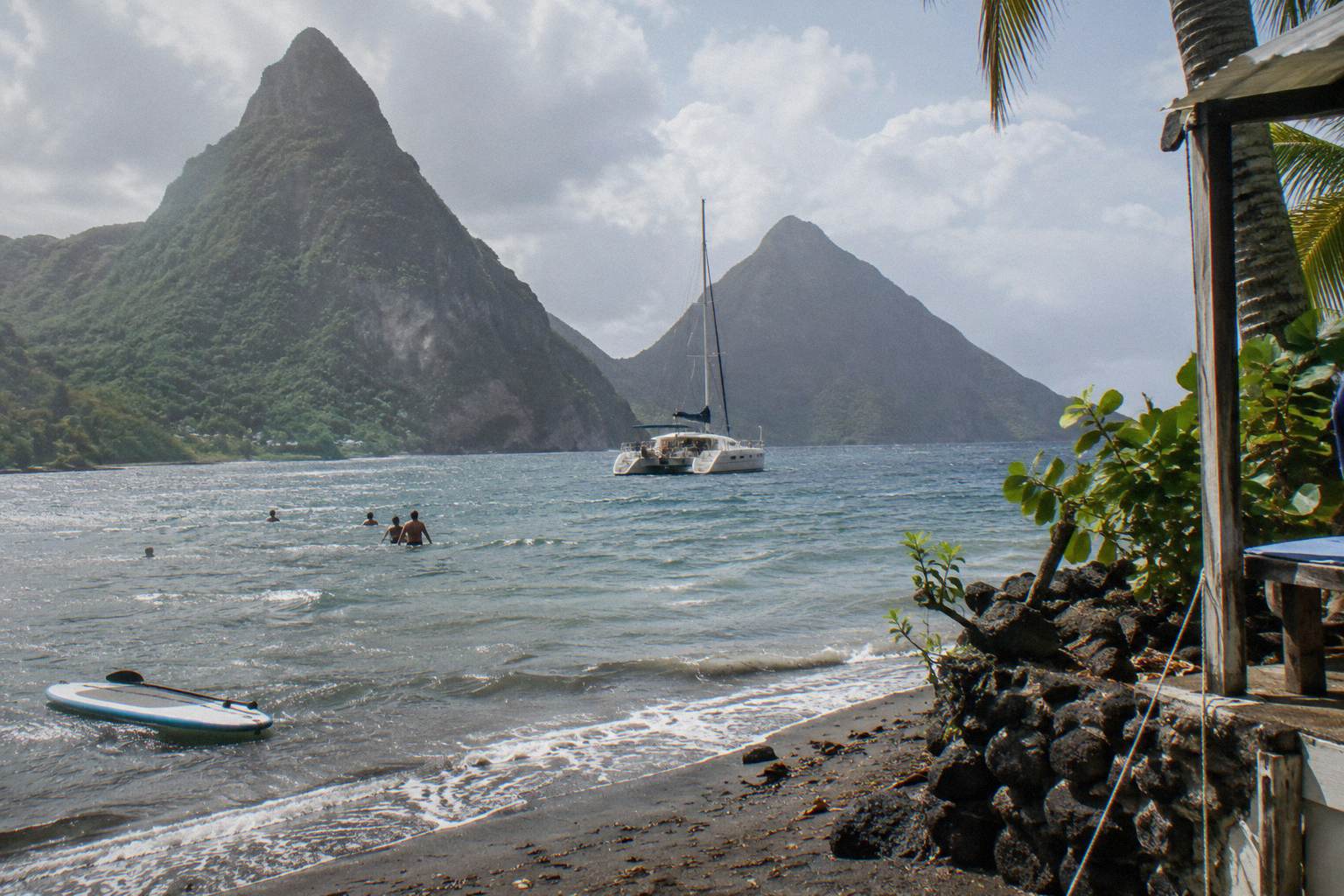
By sea, the shape changes again. Edmund Tours Land And Sea, the island's most reviewed excursion at 2,085 reviews and a 4.7 rating, runs 6 hours 30 minutes from US$125 per person with lunch, drinks, snorkel gear and a bat cave visit included. Boats reach Soufriere from the north in a fraction of the road time, and the day reads more like a coastal adventure with a bath stop in the middle than a volcano field trip.
Cruise passengers have a tighter version of the same decision, and the timing maths is different enough that this site keeps a separate page on doing the bath from a cruise ship. The short version: port pickup exists on many rows, including the FRAM day and the Volcano Experience, but booked durations of 5 hours or more only work on itineraries with generous time in port.
Mistakes That Trip Visitors Up
The recurring errors are all avoidable with a bit of planning: wearing brand-new swimwear into grey mud, budgeting the tour price without checking whether the entrance fee is included, treating the whole booked duration as pool time, and arriving without a towel because a beach day was assumed. One more: expecting an official source to have pre-cleared every health question. It has not, and your doctor, not a blog, is the place for that.
The swimwear mistake deserves its own line because it is the one nobody warns you about until it is too late. The mud is fine, dark and determined. Light-coloured bathing suits have come home permanently grey, and the same goes for good towels, which is why the tourism authority's packing list names both swimwear and a towel as standard kit. Old costume, old towel, cheap flip-flops for the wet walkways: that is the uniform.
The fee mistake is subtler. Some itineraries include the Sulphur Springs entrance, others leave it at the gate. The FRAM day names the mud bath entrance fee in its inclusions; the Half-Day Island Delight from Barefoot Holidays lists entry to Sulphur Springs too; a private option like the H&A day folds in both the park and the Toraille waterfall fees. When a price looks high, read the inclusions before judging it, because the gate table earlier in this article is what the difference amounts to.
The duration mistake affects expectations more than wallets. A 7 to 8 hour booking like the Volcano Experience sounds enormous until you unpick it: transfers each way, the crater drive, the bath, a waterfall, a buffet lunch. People who book a long tour expecting a long soak are the people who write disappointed reviews. People who book it expecting a full day out with a bath in the middle tend to have a better time.
The final mistake is skipping the advance-booking question entirely in high season. The site's page on whether the bath needs booking ahead covers it, and the operating note here is simple: most tours on this page offer free cancellation inside a 24 hour window, which makes booking early nearly costless and arriving hopeful entirely optional.
If the sulfur-water question is now settled and the choice is only which day to book, these three cover the spread of formats and prices.
Common Questions About Swimming In Sulfur Water
Is It Okay To Swim In Sulfur Water At Sulphur Springs?
Yes, bathing in the sulfur water is the intended activity: the park runs managed mineral and mud pools for exactly that purpose, and the tourism authority promotes the grey-mud-and-warm-rinse routine. No official source publishes a pool temperature or a medical all-clear, so follow park staff and signage, and raise personal health questions with a doctor before travelling.
Does The Sulfur Water Have A Temperature?
The geothermal features do, and they are fierce: boiling springs at 70 to 90 °C and fumaroles up to 172 °C. The bathing pools are separate, managed water, and no verified park source publishes their temperature. What the tourism authority confirms is a rinse in warm spring water after the mud, so expect warm rather than hot.
Will The Sulfur Smell Stick To You?
The classic sulfur odour is real and strongest near the vents and boiling springs in the crater. How strong it is at the pools varies with wind and weather, so no promise is made either way. A rinse after the mud and a proper shower back at the hotel handle most of it, and the smell question has its own full page on this site.
Can You Wear A Swimsuit In The Mud Bath?
Yes, swimwear is the standard attire, and the Saint Lucia Tourism Authority lists swimwear and a towel among what to bring. Dark or older swimwear is the practical choice, since the fine grey volcanic mud is notoriously persistent on light fabric.
How Much Does It Cost To Get Into The Baths?
At the gate, from the park schedule effective 1 June 2025, the bath alone is US$12 for adults and US$6 for children, and the combined volcano tour and bath ticket is US$16 for adults and US$8 for children. Fees are set by the park and can change. Many tours include the entrance in their price, so read the inclusions before paying twice.
Do You Need A Tour To Bathe There?
No, you can drive to the park and buy a ticket, though the drive from Castries is roughly an hour each way. A tour buys transfers, a guide at the crater, and usually lunch and entrance fees bundled in, with guided road options from US$90 and private versions from US$140. The choice comes down to transport and how much of the day you want handled.