Do You Wear Clothes In A Mud Bath?
Yes, you wear swimwear in the Sulphur Springs mud bath in St Lucia. Here is the dress rule, what the park and tour operators actually say, and what to pack.
Yes. At the Sulphur Springs mud bath in Soufriere you wear swimwear, and the Saint Lucia Tourism Authority's visitor guidance for the site says exactly that: comfortable shoes, swimwear and a towel if you plan to bathe. Nobody bathes nude here, and there is no rule asking anyone to. The bath itself is a sequence of grey volcanic mud applied to the skin followed by a rinse in warm spring water, all in public, shared pools, so the practical question is not whether to wear clothes but which clothes survive the mud and which ones you should simply leave in the van.
That distinction, swimwear yes, everything else optional, is the one that decides whether your favorite rash guard comes home grey. It also shapes which tour you book. The FRAM Rejuvenating Mud Bath run by FRAM Tours & Taxi Services includes the mud bath entrance fee in its price, so a swimmer in a plain suit can arrive with nothing but a towel and be fully equipped, while a visitor who wants a full day with a waterfall and lunch might prefer the Creole Lunch, Toraille Waterfall tour by Treasure tours Ltd. St. Lucia. The dress code question is really a packing and planning question.
This article walks through the official guidance, what swimwear materials cope best with mineral mud, what happens to fabric after a soak, footwear and the things official pages simply do not publish rules about, and how the fee and booking picture fits around your outfit choice.
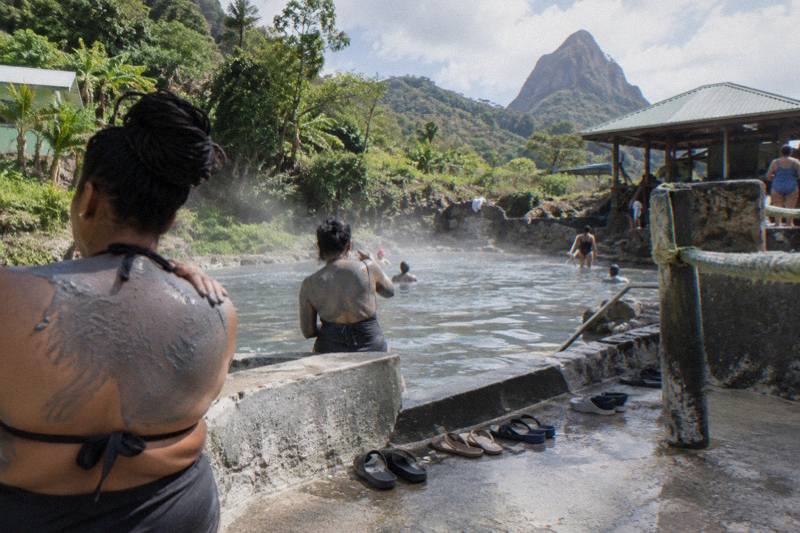
Yes, swimwear is the norm and the official recommendation at the Sulphur Springs mud bath in St Lucia. The Saint Lucia Tourism Authority's page for the site lists swimwear and a towel among the items to bring, alongside comfortable shoes. The bath is a public, outdoor, shared experience, visitors apply grey volcanic mud to their skin and then rinse in warm spring water, and everyone does this in bathing clothes rather than nude or fully dressed.
There is no published rule requiring a specific garment, no dress code sign, no uniform. What exists is guidance and overwhelming visitor practice: a swimsuit or bikini, board shorts, a rash guard if you want coverage, and something to dry off with afterwards. Think of it like a hot spring or a beach with a strong filtering of grit. You would not wade into either in a cotton t-shirt you care about.
Why swimwear specifically, and not ordinary clothes? Two reasons. First, the mud is fine, grey and mineral rich, and it works into fabric fibers, especially loose weaves like cotton and linen, in a way that never fully washes out. Second, the rinse afterwards happens in warm spring water that carries its own mineral load, so anything you wear into the bath goes through two exposures, mud then mineral water. Swimsuit material, nylon, polyester and elastane blends, shrugs both off far better than street clothing.
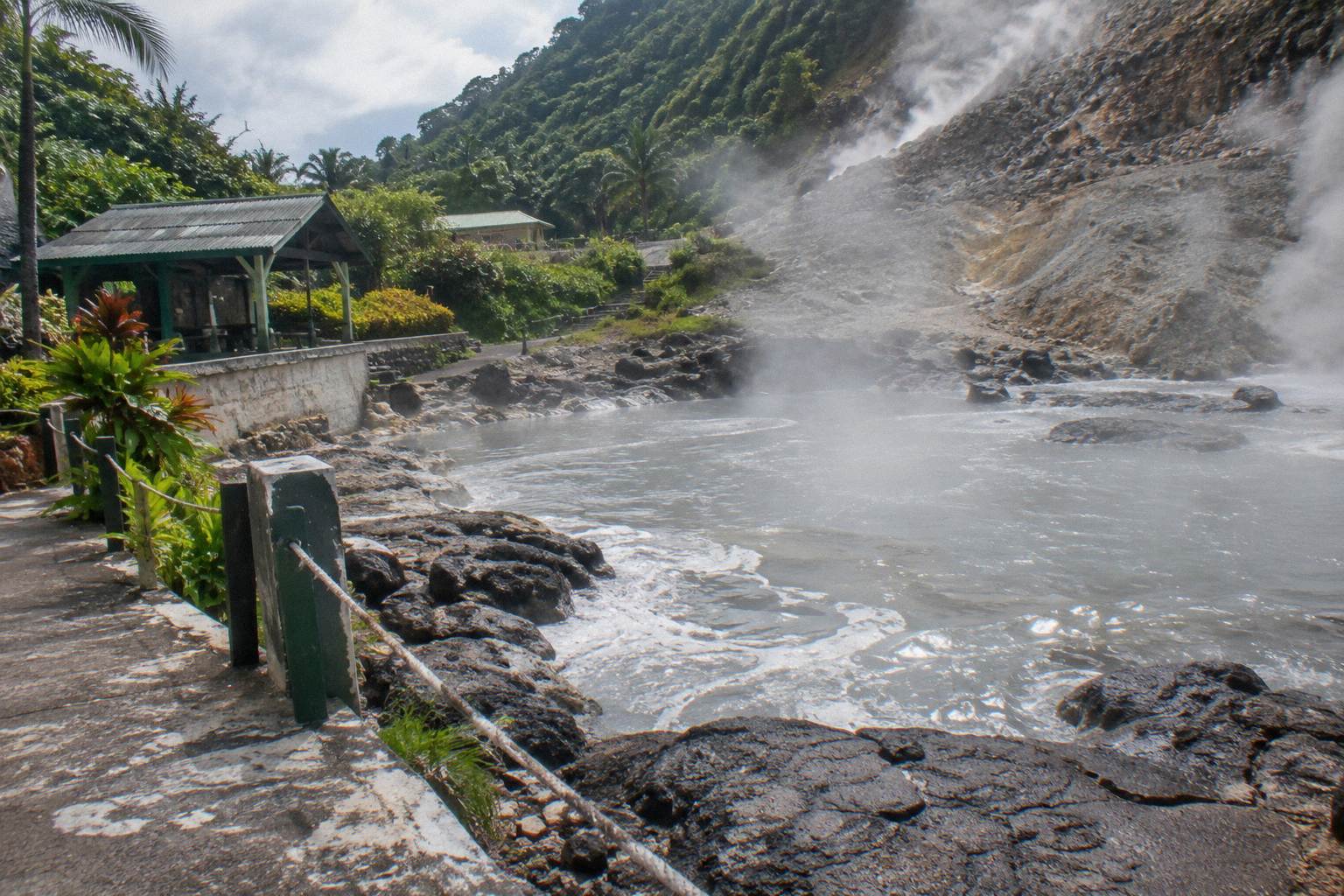
A note on the setting, because it explains the whole dress question. Sulphur Springs sits inside the Qualibou caldera near Soufriere, in the southwest of St Lucia, within the broader Pitons Management Area that UNESCO inscribed as World Heritage in 2004. The park is run by the Soufriere Regional Development Foundation, opens 9:00 am to 5:00 pm daily including weekends and holidays, and closes only the first Friday of September each year. The boiling springs in the geothermal zone run 70 to 90 °C and fumaroles reach up to 172 °C, figures that belong to the volcanic features, not the bathing pools, and the last recorded eruption on the island was in 1766, a phreatic event in this same area. The mud bath pools sit apart from all that heat, but the place is unmistakably a working geothermal field, which is why the dress question has a real answer rather than a shrug.
What The Official Guidance Actually Says To Wear
The Saint Lucia Tourism Authority's visitor page for Sulphur Springs gives a short, concrete list: comfortable shoes, swimwear, and a towel if you are visiting the mud baths, and it suggests morning or late afternoon as the best times to go. That is the full extent of official dress guidance. The park operator's own published material covers hours, rates and geology, not clothing, so anything beyond the authority's three items is visitor practice rather than rule.
It is worth being precise about what is official and what is not, because a lot of confident advice floats around this topic. On the tourism authority's Sulphur Springs page the packing guidance is exactly those three items, plus the timing note. The park operator, the Soufriere Regional Development Foundation, publishes its schedule, its rates and its geology pages. Neither source publishes rules about jewelry, time limits in the mud, medical cautions or changing facilities, so treat any detailed claims you read on those subjects elsewhere as practice and hearsay rather than policy.
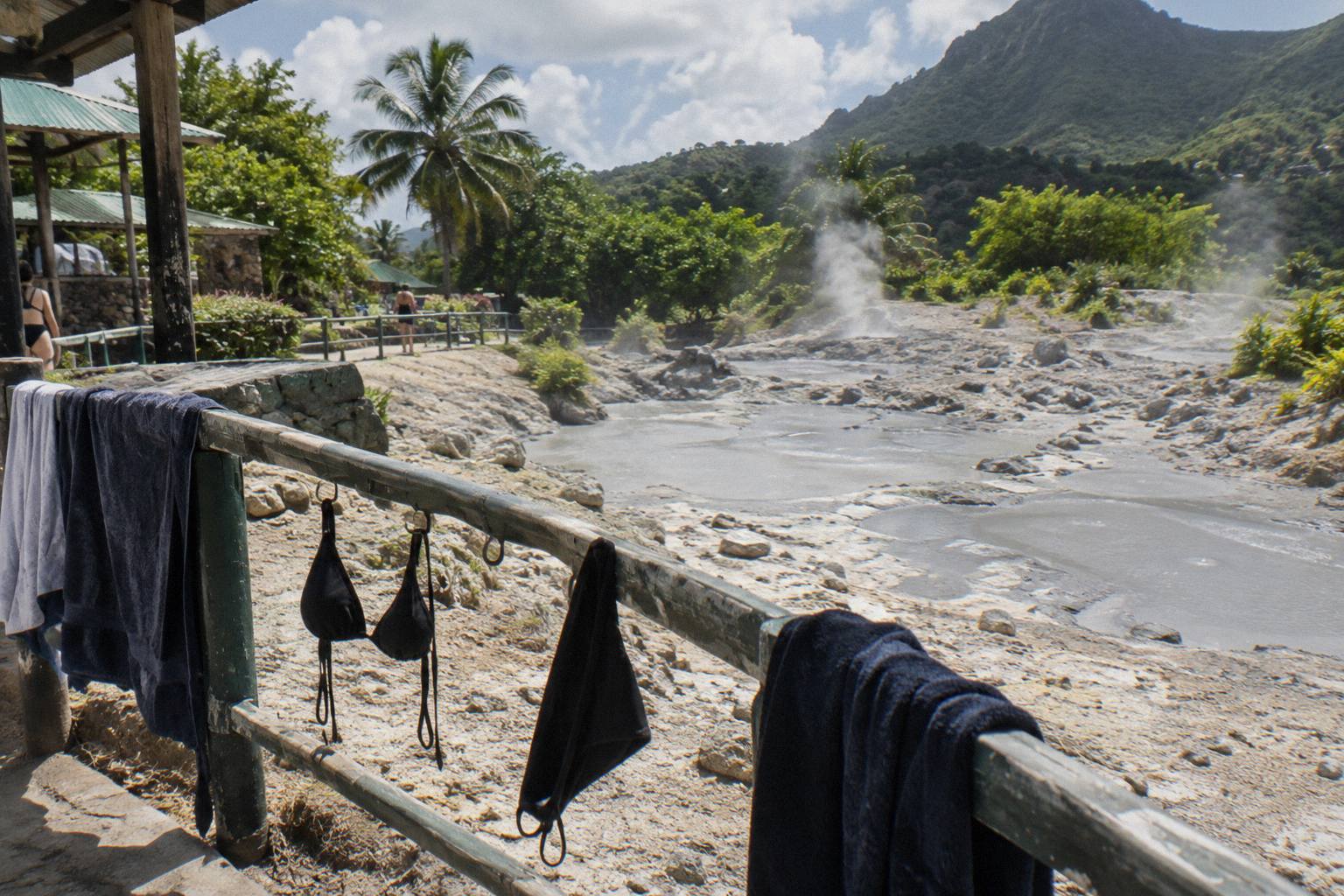
What that means for you: bring swimwear, a towel and comfortable shoes, and everything else is your own judgment. Dark swimwear is the popular practical choice because grey mud shows on pale fabric even after rinsing. A change of dry clothes for the ride back matters more than people expect, because a damp, mineral scented swimsuit under a seatbelt for an hour is nobody's favorite memory.
Tours slot into this neatly. The Volcano Experience, 7 To 8 Hours by Island Adventures St. Lucia is a guided group day with hotel and cruise-port pickup that includes buffet lunch, drinks and all fees, so the packing burden is exactly the authority's three items, nothing more. The FRAM Rejuvenating Mud Bath tour covers the mud bath entrance fee, light snacks and drinks across its four to five hour run, from US$132 per person, with free cancellation within 24 hours, and you can check availability alongside the full tour page here.
Which Fabrics Survive The Mud, And Which Do Not
Synthetic swim fabrics, nylon, polyester and elastane blends, hold up best against volcanic mud and rinse clean; cotton, linen, and anything light colored take a permanent grey tint that laundering does not fully remove. Dark swimwear, board shorts and rash guards are the practical choice. Anything you would be upset to stain should stay in your bag, and a swimsuit you already consider faded is the ideal candidate for the pools.
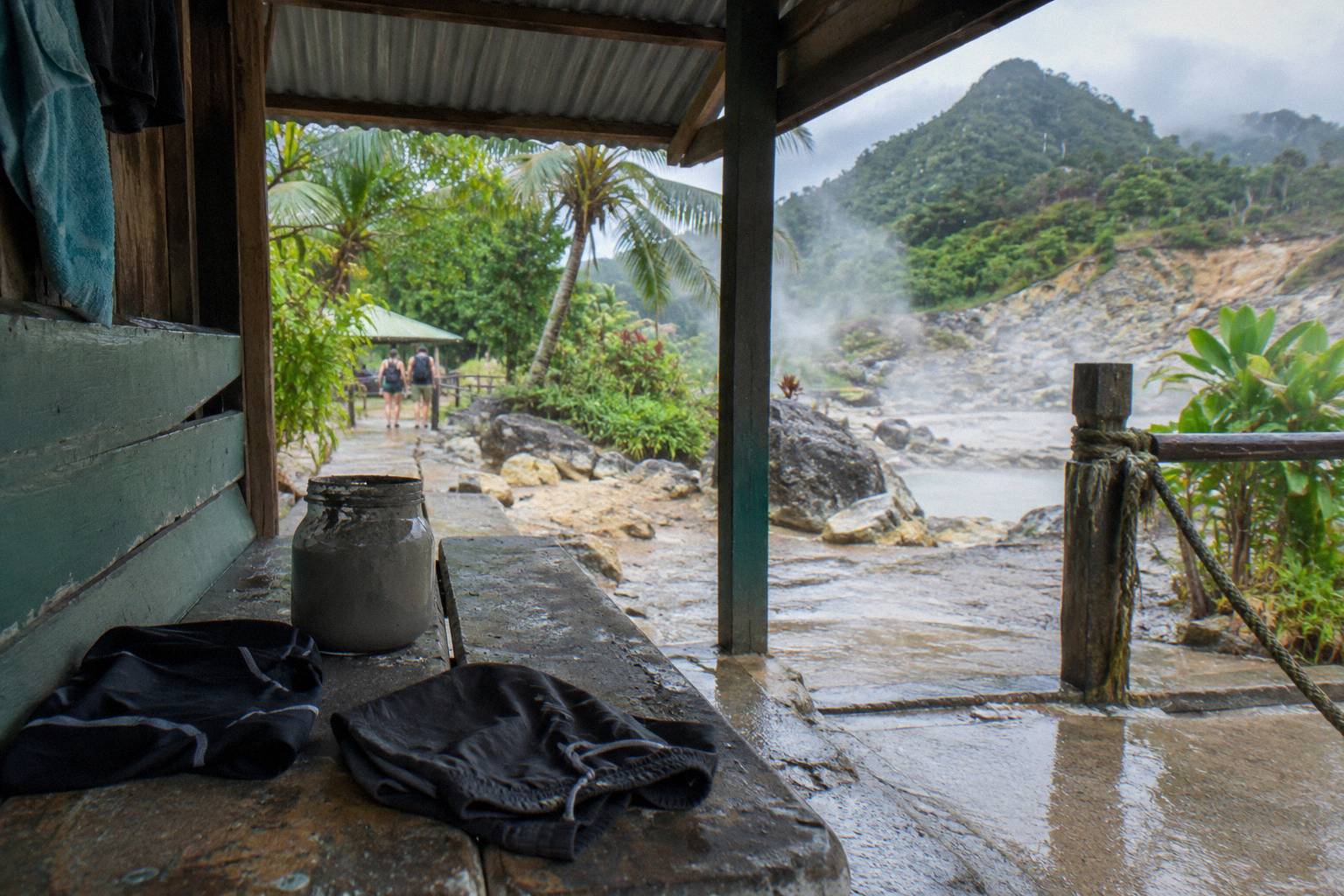
The mud at Sulphur Springs is fine, grey and loaded with minerals from the geothermal field. Mechanically it behaves like a very fine clay slip: it penetrates fabric, dries stiff, and leaves pigment behind in natural fibers. Swimsuit weaves are tight and synthetic, so the mud mostly sits on the surface and rinses away in the warm spring water that follows the mud stage of the bath. Cotton t-shirts, linen cover-ups and light colored bikini fabric are the classic casualties, and the stories about a white suit never recovering are common enough that the safe assumption is simple: it will not.
A planning table helps more than a list here, because the real decision is per garment.
| Item | How it handles the mud | Verdict |
|---|---|---|
| Dark nylon or polyester swimsuit | Mud rinses off tight synthetic weave | Ideal |
| Board shorts (polyester) | Rinse clean, dry fast | Ideal |
| Rash guard (synthetic) | Fine coverage, sheds mud in the rinse | Good, expect faint greying over time |
| White or pale swimwear | Mineral pigment sets in | Expect permanent grey |
| Cotton t-shirt or dress | Mud works into loose weave | Leave it in the bag |
| Linen cover-up | Stains and stiffens when dried | Leave it in the bag |
| Underwear worn as swimwear | Same staining rules, plus discomfort | Skip |
Rash guards deserve a special word, because visitors with sun sensitivity or body-cover preferences often ask whether coverage is compatible with the bath. It is. A synthetic rash guard gives you full arm and torso coverage in the pools, takes the mud and rinse in stride, and fades slightly grey over many uses rather than after one. Visitors who want modest coverage have every practical option here, from board shorts to full-length suits, and nobody at the park treats covered swimwear as unusual.
What Happens To Your Clothes And Towels Afterwards
Expect whatever you wear into the mud bath to come out with a faint grey cast and a mineral smell that survives one or two washes, and expect your towel to stay wet and sandy-feeling for the rest of the day. The rinse pools remove the bulk of the mud, but the pigment and sulfur scent linger in fabric, so bring a plastic bag for wet items and a full change of dry clothes for the drive home.
The sequence at the bath is: apply grey mud, let it dry on the skin briefly, then rinse in warm spring water. The rinse removes mud from skin easily and from tight swim fabric mostly, but "mostly" is the operative word. A first wash at the hotel with ordinary detergent usually finishes the job on swimwear; towels may need two cycles before they smell like nothing again. The sulfur odor is the signature of the whole site, and it transfers to whatever it touches, which is the honest reason the tourism authority's packing list puts a towel on it.
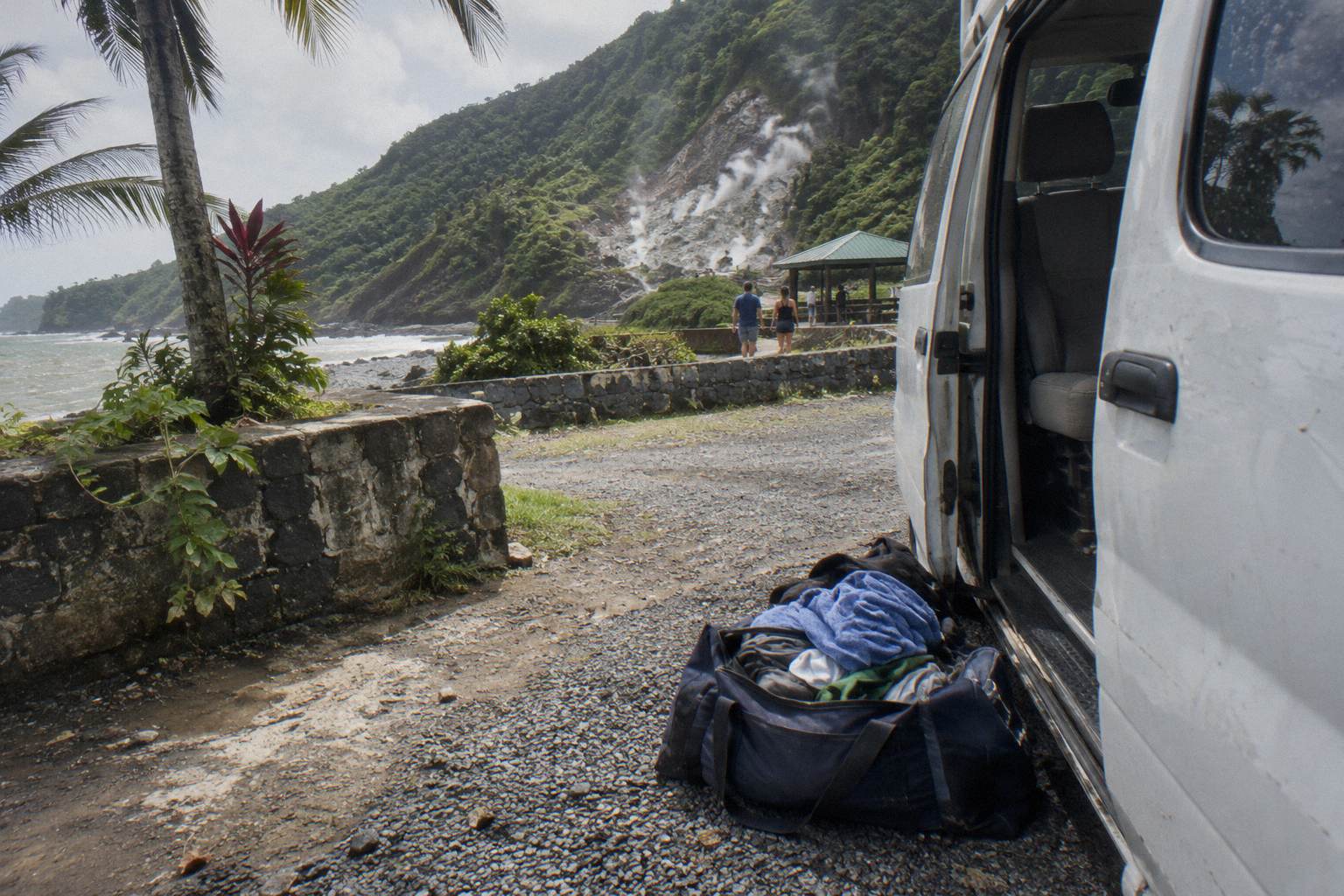
The practical kit, beyond the authority's three items: a dry bag or supermarket bag for the wet swimsuit and towel, a full change of clothes including underwear, and sandals or slip-ons you can shake grit out of. If you are on a tour, the vehicle is your locker substitute for the day; keep the dry change in a separate bag so a leaking wet towel cannot stage a coup over it. Visitors pairing the bath with other stops, waterfall swims, beach time, viewpoint photo stops, end up changing in and out of swimwear two or three times, so a cover-up that you do not mind sacrificing to the mud, an old sundress or a worn t-shirt, earns its place.
This is one of the quiet advantages of the guided tours. The Diamond Baths And Waterfall Combo day by H&A Tours Ltd, a six to seven hour guided trip rated 5.0 across 671 reviews, from US$139 per person with free cancellation within 24 hours, pairs the Sulphur Springs bath with Diamond Falls and a waterfall, meaning two wet stops in one day and a vehicle to stage clothing between them. The same operator's Private Drive-In Volcano And Mud tour covers both the Sulphur Springs Park entrance fee and the Toraille Waterfall fee in its price, so the packing list stays short even when the itinerary is long.
Footwear, Valuables And The Things No Official Rule Covers
Official guidance names comfortable shoes, and that is the only footwear instruction that exists: the geothermal zone is hot, uneven ground, and the walk between parking, pools and viewing areas calls for closed shoes or sturdy sandals, while flip-flops serve only at the pool edge. On jewelry, time limits, medical cautions and changing facilities, the park's official pages publish nothing, so this article will not dress visitor rumor up as rule either.
Start with shoes, because this is the item with real official backing. You drive into the volcanic zone to see the boiling springs and steaming vents, and the ground around the pools and paths is wet, gritty and hot in patches. Comfortable closed shoes are what the tourism authority tells you to bring, and the advice holds for every itinerary, from a solo drive to the park to a full tour day. Water sandals with straps are the popular compromise for people who dislike fussing with laces at a bath.
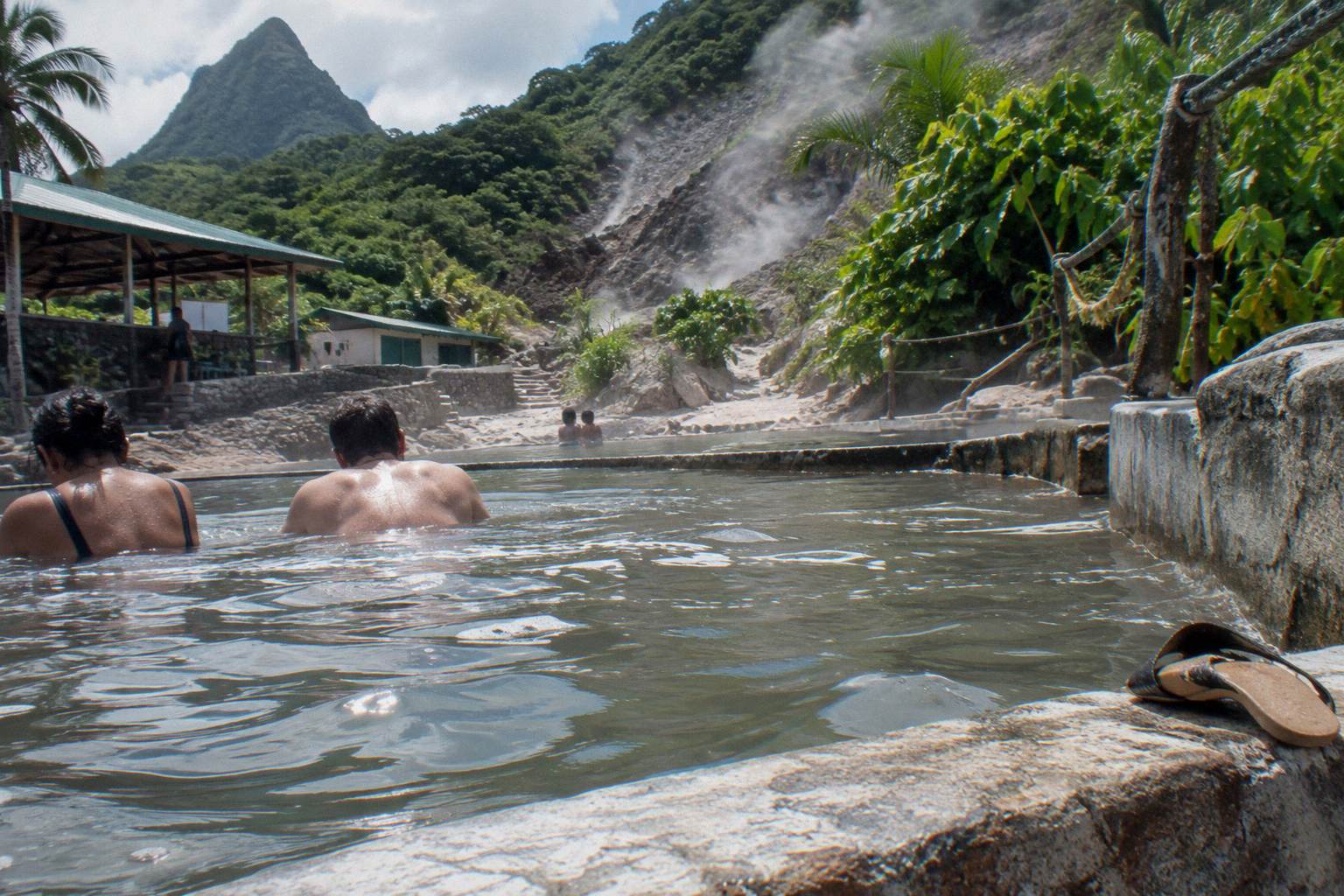
On everything else, honesty is better than invented certainty. There are widely repeated suggestions about removing silver jewelry before bathing, about limiting time in the mud, and about who should skip the bath. None of that appears on the park operator's or the tourism authority's pages, so the responsible position is: leave valuables in your accommodation or vehicle as ordinary travel practice, and direct any health question to the park on the day or to your own medical advice. The authority's guidance is the complete published standard, and it is a short one.
Tours handle some of this for you. The Wow Tours Island Drive by Wow Tours, a five to seven hour guided island tour from US$92 per person with hotel pickup and free cancellation within 24 hours, keeps an air-conditioned vehicle with you all day, which is where bags, dry clothes and shoes live while you are in the pools. The most reviewed trip on the island, Edmund Tours Land And Sea by Edmund Tours St. Lucia, rated 4.7 across 2,085 reviews from US$125 per person, runs the mud bath stop by sea with lunch and drinks included, and its boat similarly doubles as gear storage. If your anxiety about the dress-and-stuff logistics is really an anxiety about where to put things, a guided day answers it structurally.
Going Alone Versus Booking A Tour, In Fees And Clothing
Going alone is far cheaper: gate entry to the bath is US$12 per adult and US$6 per child, the volcano tour is US$10 per adult and US$5 per child, and a combined ticket is US$16 per adult and US$8 per child, whereas tours bundling transport, guiding, often entrance fees, food and drink start at US$90 per person, the cheapest being the Half-Day Island Delight by Barefoot Holidays at US$90.
Whether that gate price or a bundled tour is the better deal depends on what the bundle removes from your day. For a clothing-focused visitor the calculation is blunt: going alone means driving yourself about an hour from Castries or roughly 45 minutes from Hewanorra airport, parking, carrying your towel and change of clothes yourself, and paying the gate fee in cash or card at the window. A tour means someone else drives the hairpins, your bag rides in the vehicle, and on many trips the entrance fee is already inside the price you paid.
| Option | What it costs | What the price covers |
|---|---|---|
| Bath entry, walk-up | US$12 adult, US$6 child | Pool and mud bath access only |
| Volcano tour entry, walk-up | US$10 adult, US$5 child | Guided geothermal zone access |
| Combined entry, walk-up | US$16 adult, US$8 child | Both of the above |
| FRAM Rejuvenating Mud Bath | from US$132 per person | Guided 4 to 5 hour day, mud bath entrance fee, snacks and drinks |
| Half-Day Island Delight | from US$90 per person | Guided 5 hour road day, Sulphur Springs entry, hotel pickup and drop-off |
| Volcano Experience, 7 To 8 Hours | from US$135 per person | Guided 7 to 8 hour day, buffet lunch, drinks, all fees and taxes |
The pattern to notice: the guided road tours cluster between US$90 and US$140 per person, and several of them quietly absorb the very entrance fee that the walk-up visitor pays at the window. The FRAM Rejuvenating Mud Bath tour spells it out, its inclusions name the Sulphur Springs mud bath entrance fee directly. The Half-Day Island Delight includes entry to Sulphur Springs too. When a tour does not list an entrance fee, assume you pay it at the gate on top.
For a fuller treatment of the money side, the guide on how a tour price compares with going alone breaks the arithmetic down stop by stop, and the piece on what to bring to the baths covers the packing angle in depth.
Mistakes That Trip People Up At The Mud Baths
The recurring errors are wearing valued clothing into the pools, arriving with no towel or no dry change for the ride back, wearing flip-flops across the geothermal zone, and assuming a tour price includes the entrance fee when it does not. Each of these is a five minute fix at the planning stage and a genuinely unpleasant discovery on the day. Visitors also routinely underestimate how long swimwear stays damp and mineral scented afterward.
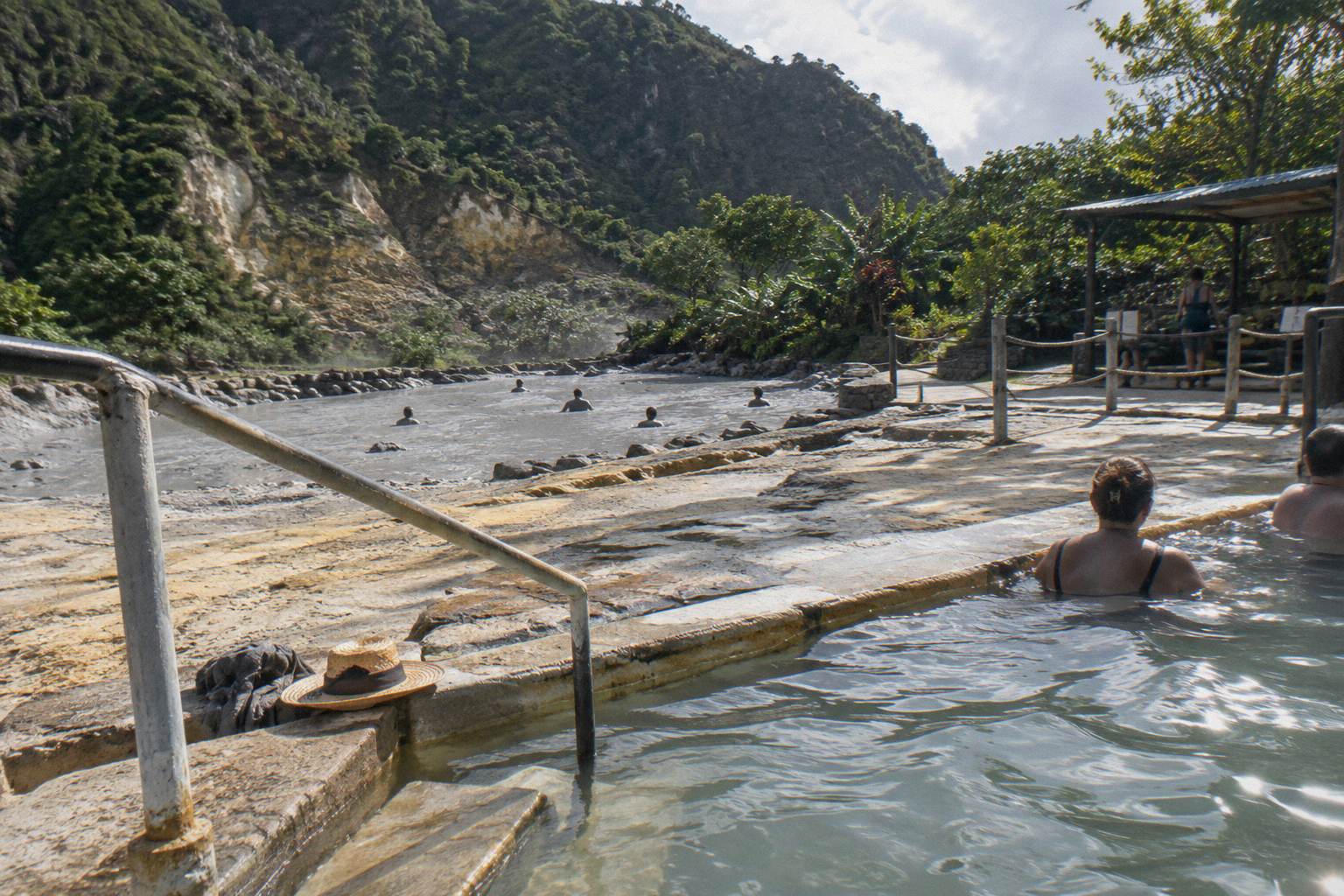
The white bikini is the classic. Every season a handful of visitors learn that grey volcanic mud is a pigment, not a dirt, and that "it will wash out" is a hope rather than a plan. The fix costs nothing: pack the suit you already consider past its best. The second error, no towel, is a direct read of the authority's guidance ignored, since swimwear and a towel are named items on the official list, and the park is not a shop. Third, footwear: the drive-in volcano zone and the paths around the pools are uneven and hot in places, and comfortable shoes are the one clothing item the official guidance leads with.
The fee assumption deserves its own sentence. Tour inclusions differ operator to operator, so the mud bath entrance fee is inside the price on some trips and payable at the gate on others, and this article's table is the honest split. Checking the inclusions line on the booking page before you pay is the whole defense.
Timing is the softer mistake. The tourism authority suggests morning or late afternoon as the best windows, and midday sun plus a hot spring is a combination that catches people out. Tour itineraries largely make this decision for you, which is a point in their favor, and the guide on the best time of day for the mud bath goes deeper on it.
One clothing adjacent trap remains: arriving from a cruise ship with a tight port window and a full day's itinerary. Mud, rinse, dry and change takes real minutes, and a tour whose booked duration spans seven or eight hours, like the Volcano Experience, 7 To 8 Hours by Island Adventures St. Lucia, is booking the whole day, transfers, stops and lunch, not hours at the baths. Cruise passengers should read the dedicated page on doing the mud bath from a cruise ship before committing.
The Short Version, And Where To Go Next
Wear dark, synthetic swimwear, bring a towel and comfortable shoes, pack a dry change plus a bag for wet items, and leave anything you love out of the mud; the same rules apply whether you arrive at the gate alone or on a guided day with fees and lunch bundled, and the sections below walk through the packing details the official three-item guidance leaves out.
For readers whose next question is the smell, the skin angle, or the pairing with a waterfall, the site's guides on what to wear at the springs and the broader questions around the sulphur smell in Soufriere pick up where this one stops. St Lucia Mud Bath exists to answer exactly this cluster of small practical questions before you book, so the day itself is all mud and no surprises.
Common Questions About Mud Bath Clothing
Do You Wear Clothes In A Mud Bath?
Yes, swimwear. The Saint Lucia Tourism Authority's guidance for Sulphur Springs lists swimwear and a towel among what to bring, and the shared, outdoor pools make bathing clothes the universal practice. Nobody bathes nude and no rule asks anyone to.
Will The Mud Ruin My Swimsuit?
Dark synthetic swimwear rinses clean and survives repeated visits with only faint greying. White or pale fabric, cotton and linen take a permanent grey tint from the mineral mud. Wear a suit you would not mourn.
Can I Wear A Rash Guard Or Board Shorts For Coverage?
Yes. Synthetic rash guards and board shorts work well in the mud and rinse, and covered swimwear is a common sight at the pools. Visitors wanting modest coverage have full practical options.
Do I Need To Bring A Towel?
Yes. A towel is on the official packing list from the tourism authority, and the park does not operate as a shop. Bring a plastic bag for the wet towel and swimsuit afterwards, plus a dry change for the ride back.
What Shoes Should I Wear?
Comfortable closed shoes or sturdy sandals, per the official guidance. The geothermal zone and paths around the pools are uneven and hot in patches, so flip-flops belong only at the pool edge.
Does A Tour Price Include The Entrance Fee?
It depends on the operator. Some tours, such as the FRAM Rejuvenating Mud Bath trip and the Half-Day Island Delight, include the Sulphur Springs entrance fee in the price, while others leave it payable at the gate. Check the inclusions on the booking page before you pay.